
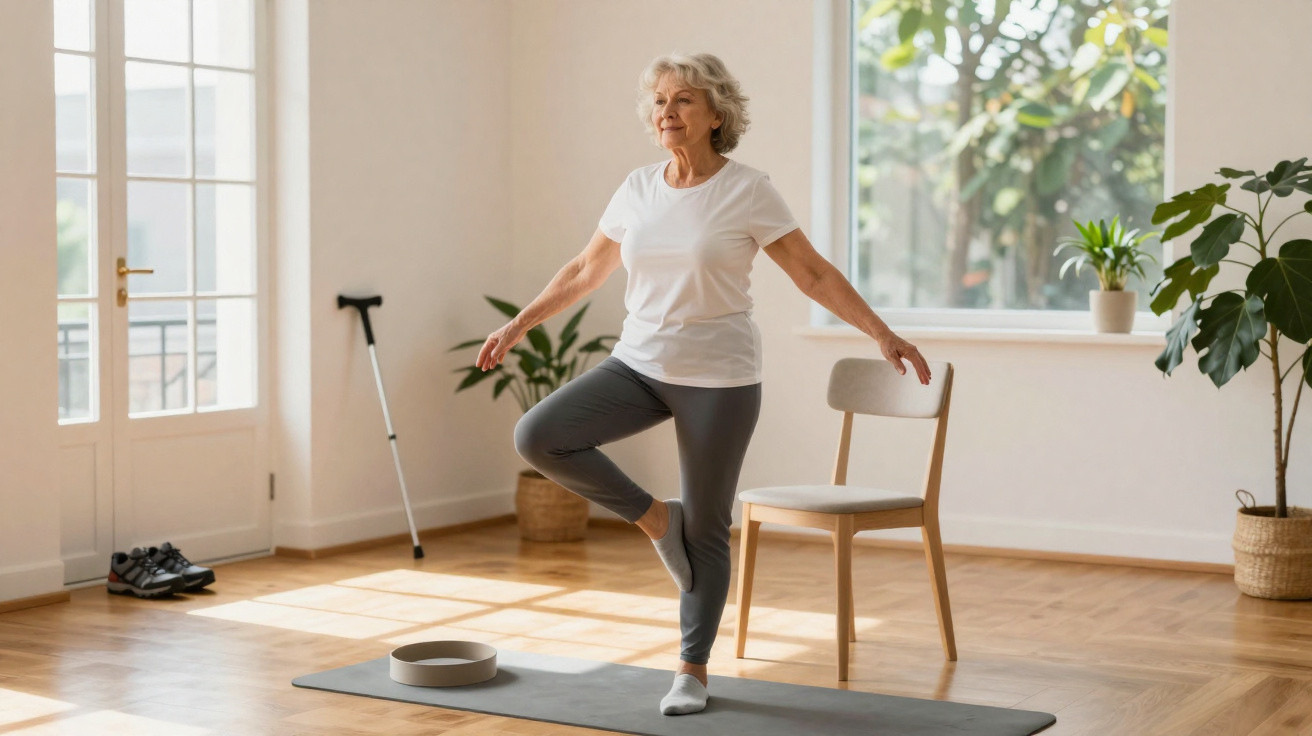
Physical exercises for older adults play an essential part in preserving independence, mobility and quality of life after the age of 65. Recent scientific research indicates that balance-focused activities can markedly lower the likelihood of falls, which are among the leading causes of injury in this age group. As well as making movement safer, these exercises strengthen motor coordination and build confidence when carrying out everyday tasks.
Why does balance decline after 65?
As people grow older, the body systems involved in controlling posture and movement undergo natural changes. Vision, the vestibular system in the inner ear, and joint awareness become less effective, making it harder to remain stable.
This shift can interfere with everyday actions such as walking, standing up from a chair or climbing stairs. For this reason, specialists advise targeted exercises that activate these functions and help people retain their independence for longer.
What are the benefits of physical exercises for older adults?
Research shows that regularly doing balance-oriented activities brings meaningful improvements in physical stability and reaction time. These improvements can lower the risk of accidents and support a safer daily routine.
The main benefits identified by specialists include:
- Greater control of movement during daily activities.
- A lower risk of falls and injuries.
- Improved motor coordination.
- More confidence when walking and moving around.
- Preservation of autonomy and independence.
Which exercises help improve balance?
Studies show that exercises performed with secure support can deliver excellent results for people aged over 65. They engage different systems involved in bodily stability while allowing progress to be made gradually.
To put this into practice straight away, physical education professional @Aurélio Alfieri has prepared a quick, safe workout that uses only a chair for support. It is designed to strengthen the legs and prevent falls. Watch the full video and follow the steps at home:
Is walking every day enough to prevent falls?
Walking remains one of the most recommended activities for overall health. It helps improve circulation, build muscle strength and maintain physical fitness. However, specialists warn that walking on its own does not specifically train every mechanism involved in balance.
That is why combining walking with exercises aimed at postural control provides more comprehensive results. When practised regularly and with suitable guidance, these workouts improve physical stability and help older adults sustain a more active, safe and independent life. Science confirms that investing in balance-focused activities is one of the most effective approaches for reducing falls and protecting quality of life as people age.



Comments
No comments yet. Be the first to comment!
Leave a Comment