
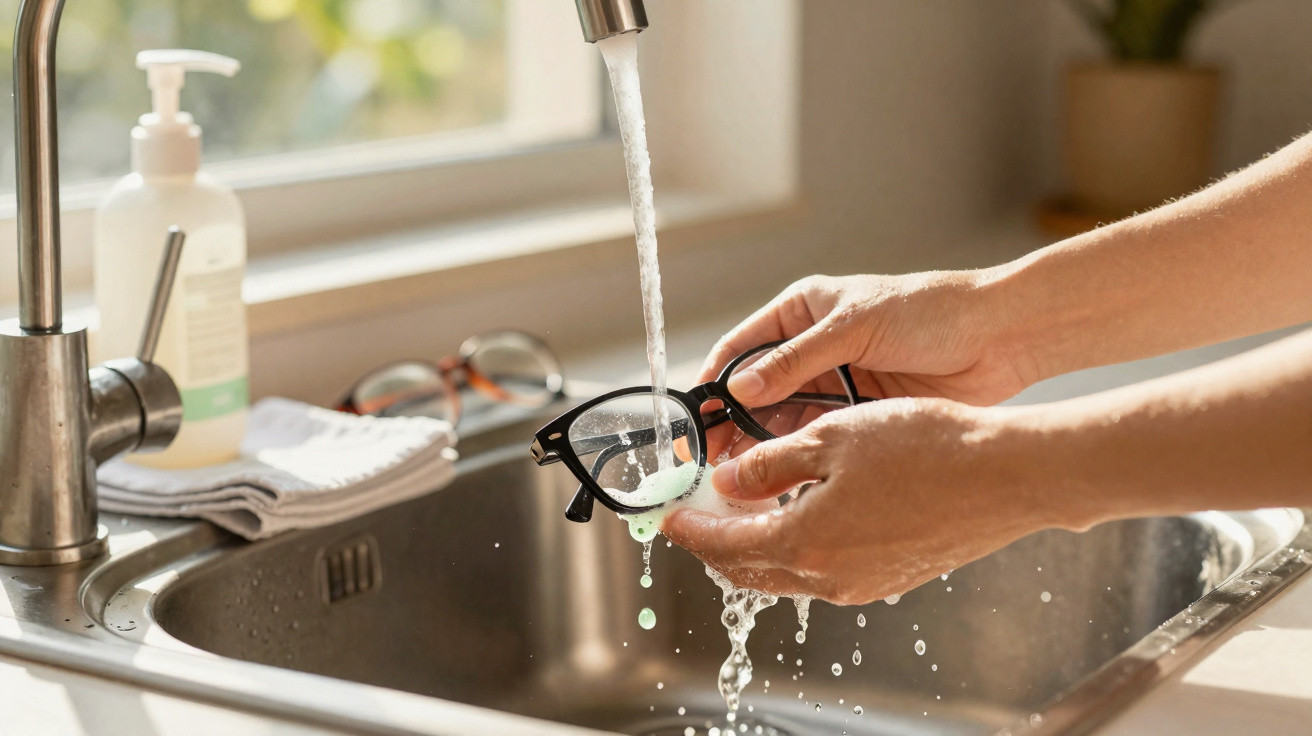
Wearing glasses every day can take its toll on vision and concentration.
There is welcome news for tired eyes and tight budgets: a minimalist, highly accessible approach is gaining ground in homes and among some opticians.
Clear vision is an everyday priority
Sebum, dust and tiny droplets quickly build up on lenses. The problem goes beyond simple discomfort. Marked lenses increase glare, worsen eye strain and force the eyes to make repeated tiny focusing adjustments. This can lead to headaches, reflex tearing and lower productivity. A brief but effective clean can transform the day.
“A simple, consistent and gentle method extends the life of lens coatings and keeps vision sharp, without dedicated purchases or disposable consumables.”
The glasses-cleaning tip changing habits
Forget scented wipes and cloths that soon become saturated. The current trick comes down to three steps: lukewarm water, one drop of washing-up liquid and controlled drying. It needs neither expensive accessories nor harsh products. Wearers who use it report clearer results, fewer night-time halos and lenses that become dirty less quickly, thanks to a discreet residual surfactant film that is compatible with most modern coatings.
Why it works
Washing-up liquid contains surfactants. These bind to skin oils, lower water’s surface tension and carry away particles. When used sparingly, properly diluted and thoroughly rinsed, it does not damage anti-reflective, hydrophobic or oleophobic layers. Lukewarm water loosens deposits without softening the frame adhesives. Careful drying prevents limescale marks and microscopic scratches.
The 30-second method
- Run the lenses and frame under a gentle stream of lukewarm water (20–30 °C) to remove grit and dust.
- Put a tiny drop of mild washing-up liquid onto clean fingertips.
- Gently clean the front and back of both lenses, their edges, the bridge and the nose pads for 10 to 15 seconds.
- Rinse generously until every trace of foam and soapy film has gone.
- Allow the glasses to drain for a few seconds, then dry them straight away.
- To dry without a cloth, gently dab with very soft unprinted paper, or leave them to air-dry in a clean area.
“Three key points: little product, no hot water, a long rinse. Everything else follows.”
Which washing-up liquid to use
Choose a neutral formula with no strong fragrance, moisturising lotion or abrasive agents. Avoid strengthened “disinfectant” or “ultra-degreasing” products containing solvents. One drop is enough for a pair of glasses. Where the water is very hard, use even less product and rinse for longer to prevent white marks.
What to avoid when cleaning glasses
Household products to leave out
- Rubbing alcohol, acetone and ammonia: these may damage anti-reflective and hydrophobic coatings.
- Neat vinegar or limescale removers: their acidity can attack certain coatings.
- Scented multi-purpose wipes: greasy additives leave a film that attracts dust.
Habits that scratch lenses
- Rubbing dry lenses with clothing, a tissue or kitchen roll: trapped abrasive particles make scratches almost inevitable.
- Using excessively hot water: protective films can lift and acetate may warp.
- Pressing hard on the lenses: this can twist the frame and misalign the temples.
Alternatives and special situations
This technique meets 90 % of everyday requirements. Other circumstances call for different options, including mineral dust from the beach or DIY work, paint splashes, anti-fog spray in humid settings, or a deep clean for a frame with heavily soiled nose pads.
| Method | Effectiveness on grease | Risk to coatings | Cost per use | Time |
|---|---|---|---|---|
| Washing-up liquid + lukewarm water | High | Low if thoroughly rinsed | Very low | 30–45 s |
| Dedicated optical spray | High | Very low | Medium | 30 s |
| Ready-to-use wipes | Medium | Varies by brand | High | 20 s |
| Ultrasonic cleaner | Very high | Low with short cycles | High initial cost | 3–5 min |
| Dry clothing/kitchen roll | Low | Very high | None | 10 s |
When microfibre is still useful
The title promises “no wipes or cloths”. This tip genuinely means they are unnecessary during cleaning. For use on the move, though, a clean microfibre cloth washed without fabric conditioner still has a role: a quick emergency clean, a lint-free finish or extra drying after rinsing. Replace it every six months and wash it separately at 40 °C so that it does not trap residues.
Coated and anti-fog lenses
Modern coatings, including AR, hydrophobic and oleophobic treatments, tolerate a well-rinsed drop of washing-up liquid. The residual film may reduce fogging temporarily, although the effect is limited. For a long-lasting solution when wearing a mask, cooking or playing sport, optical anti-fog spray is more reliable. Always test a small area first if your lenses have particularly sensitive photochromic or mirror coatings.
Look after the frame too
- Nose pads: Rub them with soapy fingertips; a soft-bristled brush will remove stubborn build-up.
- Hinges: Rinse away salt from perspiration, then dry them to reduce corrosion on the screws.
- Acetate temples: Keep them away from hot water and dab them dry to avoid water marks.
- Rimmed lenses: Run a fingertip around the rim groove to release trapped dust.
Practical information to go further
Frequency: In urban environments, a proper wash with washing-up liquid once or twice daily is sufficient. Rinse with lukewarm water more often after exposure to dust or sand. If you alternate between contact lenses and glasses, clean your glasses before every night-time drive: reducing halos makes a real difference.
Budget: A 500 ml bottle will last for several years of glasses cleaning, while a pack of 30 wipes costs ten to twenty times more per use. The benefit is not only financial: there is less waste, no lingering fragrance and no sticky film.
Risks and solutions: If marks remain after drying, either too much product was used or the rinse was insufficient. Start again using half the amount. Have very hard water? Finish with a rinse of demineralised water, or dry without rubbing by standing the glasses upright, then use a clean microfibre cloth for a final touch if needed.
Edge cases: Paint, glue and industrial aerosols adhere strongly. Do not scrape them off. First wash the glasses as described, then ask an optician for a quick assessment. A short ultrasonic bath in-store can often lift the residue without affecting the coatings.
“Few actions, many benefits: lukewarm water, one drop, a thorough rinse. Your eyes gain comfort and your lenses gain years.”



Comments
No comments yet. Be the first to comment!
Leave a Comment