
Across human history, a range of infectious illnesses have held the title of the "most deadly disease" affecting people.
Over the past century alone, humanity has faced numerous pandemics, including COVID, HIV and several influenza outbreaks. Some, such as tuberculosis, have continued for centuries and remain present today. Others are widely regarded as diseases confined to the past.
Bubonic plague through history
Before the 20th century, bubonic plague was the leading contender for the most-deadly-disease mantle in Europe and neighbouring regions. Three significant pandemics of the disease took place over the past 1,500 years.
The first ran from the fifth to the seventh century. It killed roughly 15 million people across the Mediterranean basin and had a severe impact on the Byzantine, Sasanian and Roman empires.
A far greater second outbreak, known as the Black Death, swept through 14th-century Europe. More than 50 million people died from the disease, representing around 50% of Europe’s total population.
The third pandemic spread worldwide during the 19th and 20th centuries, claiming another 30 million lives globally, with many of these deaths occurring in China and India.
From the 1960s, however, reported cases fell sharply and bubonic plague stopped being widely viewed as a modern disease. A recently reported case in the US has nevertheless renewed attention in the illness.
While it is now rare in much of the world, bubonic plague persists in geographical pockets and may spread through communities when the necessary conditions coincide.
How bubonic plague spreads
Bubonic plague, often simply called plague, results from infection with the bacterium Yersinia pestis. This pathogen causes three forms of plague, each primarily affecting a different area of the body: pneumonic plague mainly affects the lungs, septicaemic plague primarily affects the blood, and bubonic plague is chiefly found in the lymph nodes.
Although one form can develop into another as an infection progresses, the type a person develops is generally determined by the route through which they became infected.
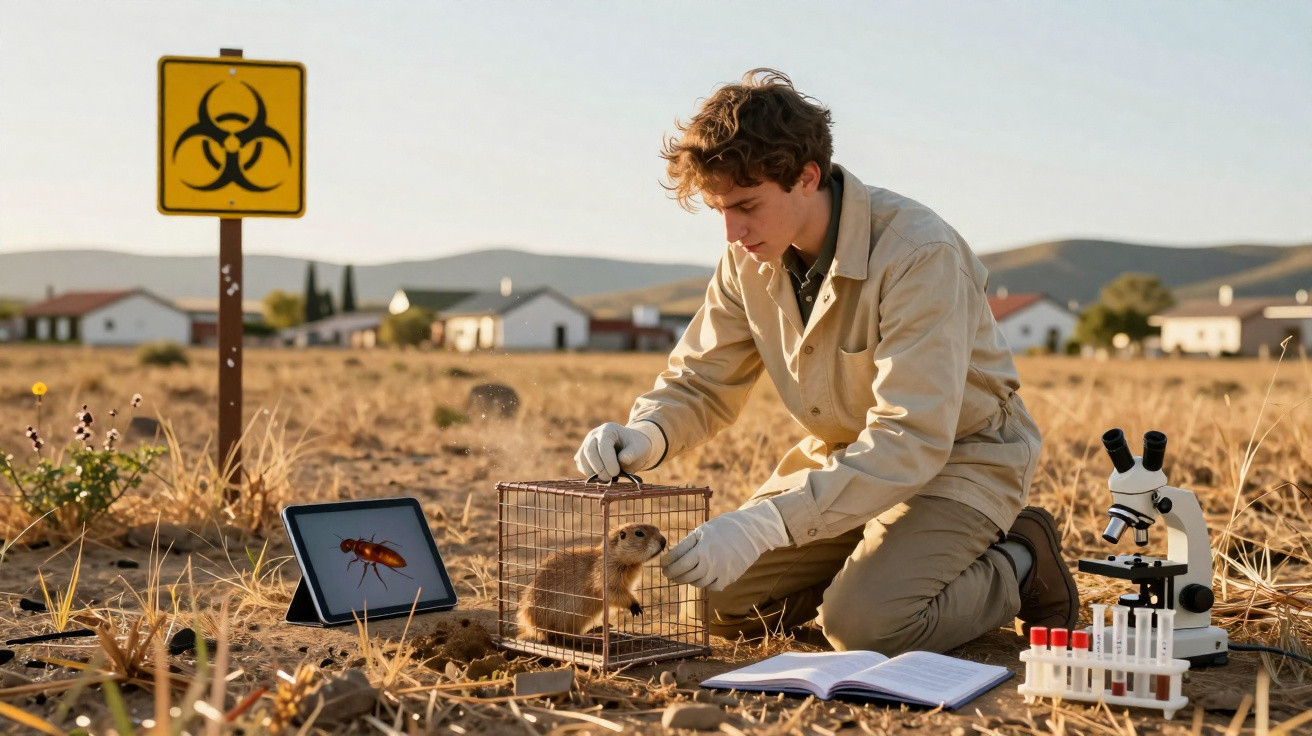
Bubonic plague is the form of Y pestis infection transmitted by fleas living on small animals, especially rodents including house and field rats. Such rodents act as bacterial reservoirs: they experience few or no symptoms, yet can transmit the bacteria to other hosts, humans included.
Rodents pass the infection to people through fleas. After biting rats, these insects can jump to and bite a person, introducing the plague bacterium into their lymphatic system. The bacteria then move through this system into the lymph nodes, where infection takes hold.
The key symptom of bubonic plague is enlarged lymph nodes, commonly around the neck, groin, thighs and armpits. Known as buboes, these swollen nodes may cause nearby tissue to blacken and die. They can also rupture and discharge the pus they contain.
Fever, headaches and vomiting are among the other symptoms. The pathogen can also reach other parts of the body, including the lungs and blood, leading to other forms of plague. Bubonic plague is fatal in 30-60% of cases, while pneumonic and septicaemic plague are invariably fatal without treatment.
Why was this disease so prominent centuries ago, yet seldom discussed today? The answer lies in the essential combination of a vector (flea), a reservoir (rodent) and the bacterium (Y pestis) occurring together in close proximity to people.
Prior to the 19th century, disease was generally believed to spread through miasmas, or harmful forms of air. Only after the 1880s did people recognise that microscopic organisms moving between humans, animals and the environment could cause disease.
Bubonic plague under control
As understanding developed, sanitation improved across many areas of the world. This separated rodents from people and disrupted the cycle of plague transmission. The development of antibiotics, particularly fluoroquinolones from the 1960s onwards, reduced plague cases further by making effective treatment available for every form of the disease.
Cases of plague still occur today in particular hotspots, principally in Asia, Africa and South America. The Democratic Republic of Congo, Peru and Madagascar report the highest numbers of cases.
Madagascar alone records dozens of cases each year, and experienced larger outbreaks in 2014 and 2017, with the latter involving over 2,000 cases. Its dense forests support large rodent populations, and human contact with these ecosystems drives these contemporary outbreaks.
Plague is unlikely ever to be eradicated. Its complicated transmission network involving fleas, rodents and humans makes it almost impossible to identify, manage and treat every component.
Nevertheless, appropriate animal handling, keeping natural reservoirs separate from people, and prompt, effective treatment are reducing plague case numbers every year, raising hopes that cases could become negligible.
Conor Meehan, Associate Professor of Microbial Bioinformatics, Nottingham Trent University
This article has been republished from The Conversation under a Creative Commons licence. Read the original article.






Comments
No comments yet. Be the first to comment!
Leave a Comment