
Those cardboard tubes that are usually thrown away without a second thought may become the most practical item in your bathroom once the paper has run out.
Every day, millions of toilet paper rolls are binned across the UK and US, even though they can be useful around the home, in the garden and for children’s activities. Viewed differently, this unremarkable waste becomes a surprisingly versatile tool for everyday living.
Why toilet paper rolls suddenly matter
As more households seek to reduce waste and lower energy bills, the modest toilet paper roll has become a quiet emblem of inexpensive, low-tech change. Although recyclable, the cardboard tube can be used several times before entering the recycling system: as a small planter, cable organiser, compost addition, fire starter or craft supply.
Toilet paper rolls are renewable, biodegradable and recyclable, and they bridge two worlds at once: eco gesture and everyday practicality.
Unlike plastic household products, cardboard tubes decompose naturally and work well in domestic recycling collections and compost heaps. This makes them appealing to anyone hoping to send less to landfill without purchasing new “eco-products”.
From bin to resource: the environmental angle
Toilet paper manufacturing continues to carry a considerable environmental impact, including water use and transport. However, its cardboard core presents a modest way to reduce that impact by prolonging its use before recycling or composting it.
Cardboard is rich in carbon. Gardeners distinguish between “brown” materials, which provide carbon, and “green” materials, which provide nitrogen. Toilet paper rolls clearly belong in the “brown” group and can balance fresh kitchen waste.
Shredded cardboard tubes help stabilise compost, reduce smells and produce a looser, easier-to-work soil amendment.
At schools and community centres, the same tubes can become affordable educational resources. They provide a tangible way to teach recycling, decomposition and circular economy concepts. Children can observe the transformation directly, which often leaves a stronger impression than abstract climate slogans.
Turning toilet paper rolls into compost gold
How to use toilet rolls in your compost
For homes with a compost bin or a small garden, adding toilet paper rolls can form part of an easy routine:
- Squash the tube flat, then cut it into rings or strips.
- Combine the pieces with food waste such as fruit peel and coffee grounds.
- Do not include glossy or plastic-coated sections, including certain printed labels.
- Keep the compost damp rather than saturated, and turn it regularly.
This combination encourages decomposition while helping to stop compost becoming excessively wet and compacted. Within a few weeks or several months, depending on moisture and temperature, the cardboard largely breaks down and leaves behind a darker, friable material that feeds the soil.
| Use | Preparation | Main benefit |
|---|---|---|
| Compost ingredient | Cut into small pieces, mix with food scraps | Balances carbon/nitrogen, reduces odours |
| Seed starter | Cut in half, fill with soil, place in tray | Biodegradable pot that plants can grow through |
| Fire starter | Fill with lint or paper, tie or fold ends | Replaces chemical firelighters |
Seed starters for tiny spaces
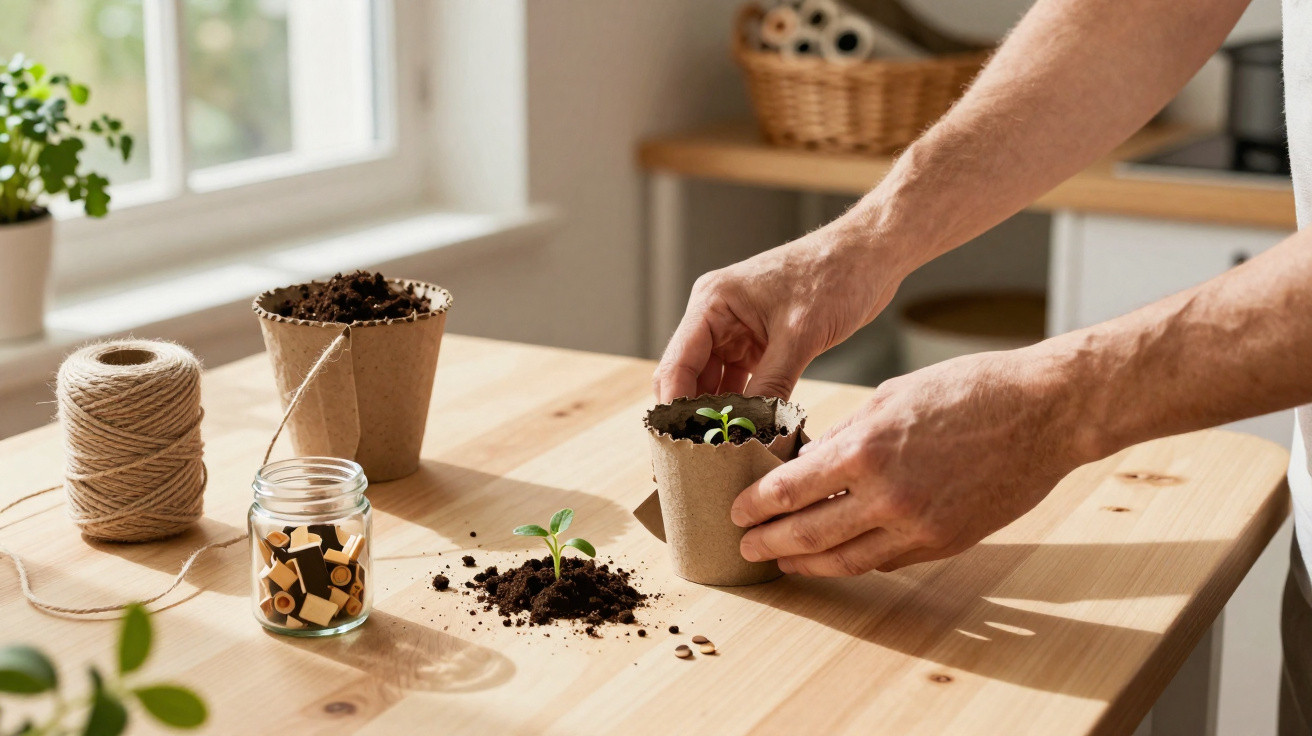
Urban gardeners already turn toilet rolls into small pots for seedlings. Halve a tube, cut four short slits into one end and fold them inwards to form a base, then add seed compost. Arrange several tubes in a tray or box before sowing the seeds.
Once roots have formed and the seedling is ready, the entire tube can be planted in the ground or placed in a larger pot. Underground, the cardboard softens and roots grow through it. This reduces transplant shock and removes the need for plastic seed trays.
For balconies and window sills, cardboard seed pots offer a cheap way to test gardening without investing in equipment.
DIY tricks that actually work at home
Organisation hacks with zero budget
Toilet paper rolls are useful beyond the garden, helping to control everyday clutter. Their cylindrical shape and firm structure make them suitable for cables, drawers and wardrobes.
- Cable management: Put phone chargers, USB leads and headphone wires inside a tube to prevent tangling. Mark each tube with a pen.
- Drawer dividers: Place several tubes upright in a box to organise pens, make-up brushes, small toys or screws.
- Wrapping paper helper: Fit a cut-open tube around a roll of gift wrap to stop it unrolling in the cupboard.
These ideas may seem simple, but they can interrupt the instinct to buy a plastic organiser and help curb impulse purchases.
All-natural fire starters
The tubes can also serve as simple firelighters for barbecues, fireplaces and wood-burning stoves. Pack a tube with tumble-dryer lint, sawdust or shredded paper, then fold or tape its ends closed. Position it beneath small kindling before lighting it.
Cardboard fire starters avoid paraffin blocks and chemical smells, while giving a second use to dryer lint and paper scraps.
As with any item used near an open flame, households should take care: keep these fire starters somewhere dry, out of children’s reach and well away from heat sources. The aim is to reduce waste, not to add a fire risk to an overcrowded shelf.
Why kids, teachers and parents like them
Crafts that cost almost nothing
Teachers, youth workers and parents already understand the appeal: hand a child a cardboard tube, paint and glue, and it can occupy an entire afternoon. The roll’s shape lends itself to animals, rockets, binoculars, pencil pots, garlands and miniature castles.
For families aiming to reduce screen time without paying for craft kits, these tubes provide a basic material for imaginative play. They can also prompt discussions about where materials originate and what happens after we dispose of them.
Transforming a “boring” tube into an object gives children a direct, physical experience of reuse, far from abstract environmental talk.
Plenty of creators post step-by-step projects on video platforms, but no artistic ability is required to begin. Basic paints, old magazines for cutting up, tape and scissors can already make dozens of activities possible.
How many rolls do you actually generate?
A straightforward calculation reveals how much usable material is sitting in household bins. Depending on habits and the brand used, a three-person household may use about six to eight toilet paper rolls each week. Over a year, that amounts to more than 300 rolls.
If just half of those tubes are given another purpose before being recycled, one home alone keeps more than 150 objects out of the general waste stream. Apply that across a block of flats or an entire street, and it begins to resemble a quiet, everyday change in behaviour.
Health, hygiene and what to avoid
The cardboard core generally leaves the factory clean, but it is then stored in a bathroom setting. For most craft projects, composting and fire starters, this is not usually a particular concern, as the material will be handled, hands can be washed or it will be burned.
Adults should supervise projects for very young children who still put objects in their mouths, and tubes should be kept away from sinks and damp corners where mould can develop. If a tube becomes spotted, smells musty, or feels soft and wet, it belongs directly in the recycling bin or compost heap rather than in craft materials.
Homes that use scented or heavily dyed toilet paper may choose to compost or recycle the tubes instead of using them for toys involving direct contact, simply to reduce exposure to additives. Plain cardboard is suitable for more uses.
Beyond toilet rolls: thinking in “second use” mode
The rising interest in cardboard tubes reflects a wider shift: before discarding packaging and ordinary objects, many people now consider whether they have a “second use”. Glass jars become food storage containers, tins become plant pots and shoe boxes become document storage.
Toilet paper rolls are among the easiest items to reuse. Being lightweight, plain and easy to cut, they make low-risk reuse experiments possible. Once a household is comfortable making a seed pot or cable holder from a tube, that way of thinking often expands to longer-lasting objects.
For people seeking a greener routine without major spending, these cardboard cylinders can provide a modest practice ground. The action may appear small, but it develops habits: pausing before throwing something away, asking “what else could this do?”, and recognising value where the bin once seemed the only answer.




Comments
No comments yet. Be the first to comment!
Leave a Comment