
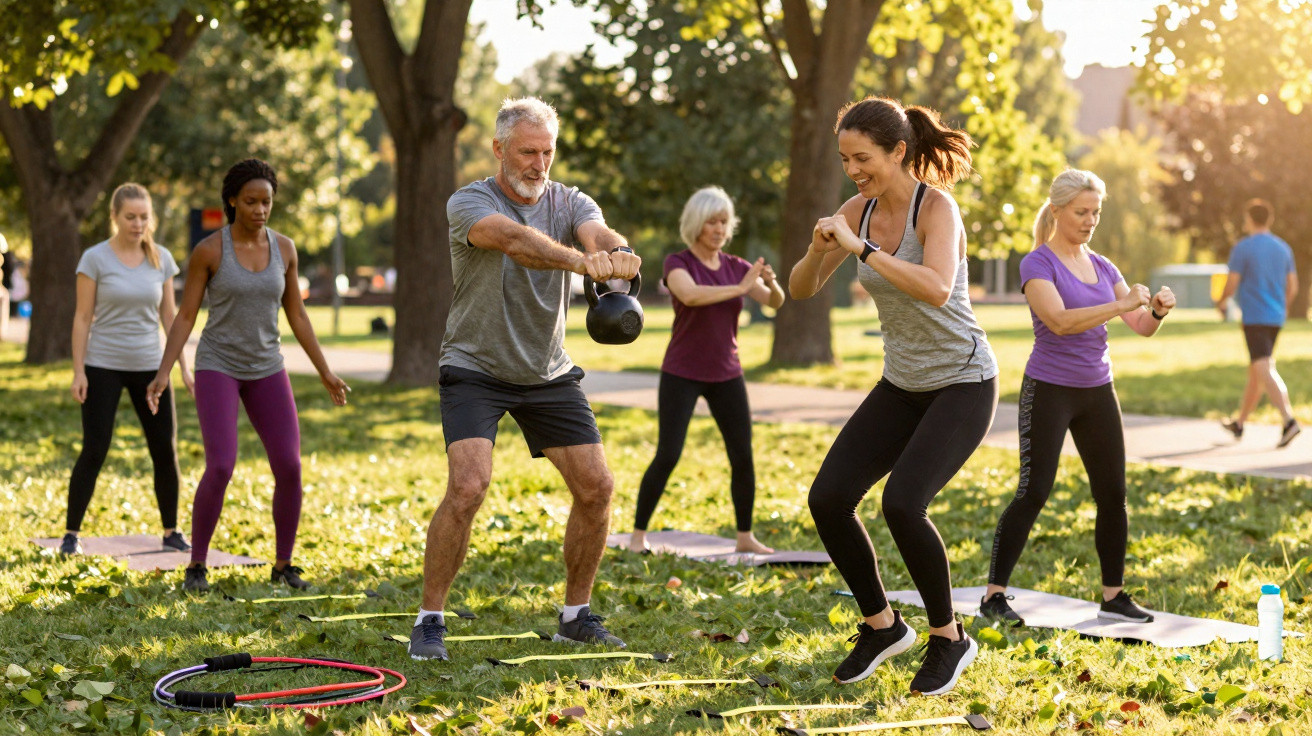
Increasing research suggests that it is not simply the amount of exercise that matters, but above all how varied our movement is. The body responds sensitively to different stimuli – and this interplay may be an important key to a long, energetic life.
Why variety in training is so effective
The human body adapts remarkably quickly to repetitive demands. Anyone who has only been jogging, or only doing strength training, for years is certainly developing one strong area, but neglecting others. This can quietly build up risks for cardiovascular disease, metabolic problems and musculoskeletal complaints.
“Varied movement challenges the heart, muscles, joints and nervous system in different ways – and that is precisely what appears to have a positive influence on lifespan.”
Research in sports medicine and nutrition science repeatedly indicates that a combination of endurance exercise, strength training and active everyday movement is linked with lower mortality. On average, people who vary their activity patterns throughout the year have better blood markers, greater muscle mass and more stable blood sugar levels.
What studies specifically show
Long-term studies involving tens of thousands of participants reach similar conclusions: people who exercise regularly tend to live longer. The findings become particularly interesting when researchers ask not only, “How much exercise?”, but also, “Which forms of activity and how varied are they?”
- People combining training types (endurance + strength) had a substantially lower risk of heart attack and stroke.
- Moderate activities that changed frequently reduced, among other things, the rate of type 2 diabetes.
- Older people who took part in varied forms of movement remained independent for longer and fell less often.
One further finding is that there is no need to train at maximum capacity every day. Moderate intensity, performed regularly and in as many different forms as possible, seems especially effective. Those who train extremely hard only on isolated days may increase calorie expenditure, but miss many of the long-term adaptation effects.
Which types of exercise complement each other well
For more years of life with a good quality of life, a well-planned trio of endurance, strength and mobility is often enough. These three pillars cover the body’s most important systems.
Endurance training: an engine for the heart and metabolism
Endurance exercise strengthens the heart and lungs while improving the body’s ability to use oxygen. Common activities include:
- brisk walking or Nordic walking
- jogging or gentle interval running
- cycling, including on an exercise bike
- swimming or aqua fitness
Studies associate regular endurance exercise with lower levels of “bad” LDL cholesterol, improved blood pressure and more stable body weight. Consistency matters more than speed.
Strength training: protection against muscle loss
Without resistance, the body loses some muscle mass with every passing year. This loss contributes to frailty, excess weight and a higher risk of falls in later life.
Targeted strength training can slow this process considerably – and may even reverse it in part. Useful options include:
- traditional machine-based training at a gym
- bodyweight exercises such as squats, press-ups and lunges
- workouts using resistance bands or kettlebells
“The more muscle mass that is retained into older age, the more robustly metabolism, hormonal balance and bone structure respond.”
Mobility and coordination: the frequently overlooked third pillar
Stretching, mobilisation and balance work do not directly improve maximum strength or fitness, but they help joints, tendons and the nervous system remain resilient. Typical forms include:
- yoga or Pilates
- deliberate, slow stretching after exercise
- balance exercises, such as standing on one leg or practising on unstable surfaces
People who incorporate these elements into everyday life can ease muscular tension and reduce the risk of overuse injuries and falls.
How much variety does the body really need?
The good news is that nobody needs to be a professional athlete. According to observational studies, even a mixed weekly routine with a manageable time commitment can produce substantial effects.
| Day of the week | Example activity | Duration |
|---|---|---|
| Monday | brisk walking or gentle jogging | 30–40 minutes |
| Wednesday | full-body strength training (at home or at the gym) | 30 minutes |
| Friday | cycling or swimming | 30–45 minutes |
| Saturday | brief mobility, stretching and balance work | 15–20 minutes |
Those who are already more active can adjust the intensity and volume. The crucial point is not to repeat precisely the same programme all the time. The body responds particularly strongly when it is regularly presented with slightly new challenges.
Why constant repetition has its limits
Many people follow almost identical sessions for years: the same jogging route, the same pace and the same weights. At some stage, performance progress plateaus and the health benefits level off.
Repetitive demands also raise the risk of overuse injuries. Irritation of the Achilles tendon, knee or lower back is common. Switching to other forms of movement from time to time spreads the stress across different structures and gives affected areas time to recover.
“Anyone who varies their training gains a double benefit: more stimulus for adaptation and less wear from monotonous strain.”
Everyday activity, nutrition and recovery: the underestimated partners
New research no longer views exercise in isolation. Everyday habits, diet and sleep all directly contribute to a long life. A varied mix of movement works better when the wider conditions support it.
- Everyday movement: take the stairs instead of the lift, walk short journeys and take active breaks at work.
- Nutrition: a protein-rich diet supports muscle building, while sufficient micronutrients promote recovery.
- Sleep: people who sleep too little build muscle more slowly and recover less effectively.
Together, these factors create a network of beneficial effects: less abdominal fat, calmer blood pressure, better insulin sensitivity, stronger bones and a more capable immune system.
Practical advice for different age groups
Younger adults
This stage of life is an opportunity to establish a broad foundation. It is worth trying as many sports as possible, including team sports, climbing, dancing and functional training. People who introduce variety early are more likely to find a mix they enjoy over the long term – and are therefore more likely to stick with it.
People aged 50 and over
From around the mid-fifties, natural muscle loss accelerates and joints become more sensitive. A combination of moderate endurance work, low-impact activities such as cycling or swimming, and regular strength training is particularly valuable at this stage.
Short daily sessions of balance and coordination work can greatly reduce the risk of falls. Just 5–10 minutes of standing on one leg or walking along an imaginary line creates measurable changes in the nervous system.
Risks and sensible limits
Greater variety does not mean training randomly, ever more often and ever more intensely. People who begin intensive sessions without prior training, or change sports every week without allowing themselves time to get accustomed to them, risk injury.
A sensible approach is to introduce new stimuli in small steps: shorter distances, lighter weights and longer rests. People with existing conditions such as heart problems, high blood pressure or diabetes should agree training plans with doctors or qualified professionals. Studies show that exercise also offers enormous benefits for these groups – provided it is planned and appropriately paced.
What variety feels like over the long term
Many people who devoted their entire lives to a single sport describe interesting changes after switching to a more varied routine: they feel more alert, sleep better, cope more easily with everyday demands and experience less pain. Motivation often increases too, because training feels less monotonous.
Anyone who views their movement routine as a modular system can adapt it flexibly to stressful periods at work, family life or fluctuations in health. This flexibility is likely to be one reason why a variable activity style is so strongly associated in studies with more years of life and a better quality of life.






Comments
No comments yet. Be the first to comment!
Leave a Comment