

The woman sitting at the café table hardly appears to be “optimizing her life”. Bent over a chipped mug, with her phone turned face down, she slowly swirls her tea as the city thunders beyond the window. Every so often, she lifts her gaze-not to look for a notification, but simply to stare into space for a moment. From the outside, very little seems to be going on. There is no bold resolution, no 30-day challenge, no miraculous routine lifted from a wellness influencer’s feed.
She is only allowing her nervous system five peaceful minutes between emails.
On most days, long-term well-being does not show up with fanfare. It arrives through small, almost imperceptible decisions like these.
The everyday decisions your future self notices
Browse wellness content for long enough and you will encounter sweeping claims: new programmes, extreme makeovers and striking before-and-after images. But people who truly age well, remain reasonably even in their moods and retain a little brightness in their eyes often lead lives that look... fairly ordinary. They walk regularly. Rather than doomscrolling, they ring a friend. On most evenings, they make uncomplicated food at home.
There is nothing grand about the answer. It is the dull, repeatable behaviour that steadily accumulates away from anyone’s attention.
A doctor I once interviewed described a patient in her late 70s. On paper, there was nothing remarkable: she was a former school secretary, widowed, and living on a modest pension. Her kitchen worktop had no tower of supplements, and she followed no extreme eating plan. Her routine was what made the difference.
Each day, she walked to the same bench in the park. She did her shopping on foot. Her meals contained broadly the same combination of vegetables, grains and straightforward protein. Twice weekly, she played cards with her neighbours. Her blood results were unexceptional. According to the doctor, her life expectancy chart “looked like someone had quietly been taking care of her for decades”. No individual habit accounted for it; the overall pattern did.
That is the curious part of long-term well-being: it seldom depends on a single “hack”. Bodies and minds react to patterns rather than one-off events. One doughnut will not ruin you, and one salad will not rescue you. What matters is the rhythm built into your days-the automatic behaviour your exhausted self continues to follow.
Choosing to walk rather than drive once, having water before coffee, or switching off Netflix one episode sooner can each seem insignificant. Given time, those apparent “nothings” quietly alter your baseline.
Micro-habits that carry the weight
When well-being is reduced to its essentials, three controls matter more than most: the way you move, the way you sleep and the way you ease stress. You do not need an immaculate plan; you need one dependable, small lever in every area.
For movement, choose an action that is almost impossible to miss. Take a ten-minute walk on every lunch break. Do squats while the kettle boils. Stretch during a programme’s closing credits. You are not preparing for a marathon. You are showing your body, “We move. Every day. No drama.” That is the sort of signal your cells retain.
Sleep tends to unravel in subtler ways. It begins with “just one more episode”, the blue light of a phone a few inches from your face, or a glass of wine that seems harmless until waking at 3 a.m. tells a different story. There is also the laptop in bed, allowing emails to spill into your final half-hour of the day.
One woman I spoke with eventually overcame years of anxiety in the middle of the night without beginning with meditation or supplements. Instead, she adopted a firm “bed is for sleep only” rule. No scrolling. No work. She put her phone charger in the hallway and bought an inexpensive alarm clock. The first few nights were difficult. Within two weeks, she was falling asleep more quickly than she had for years. One modest boundary created a substantial ripple.
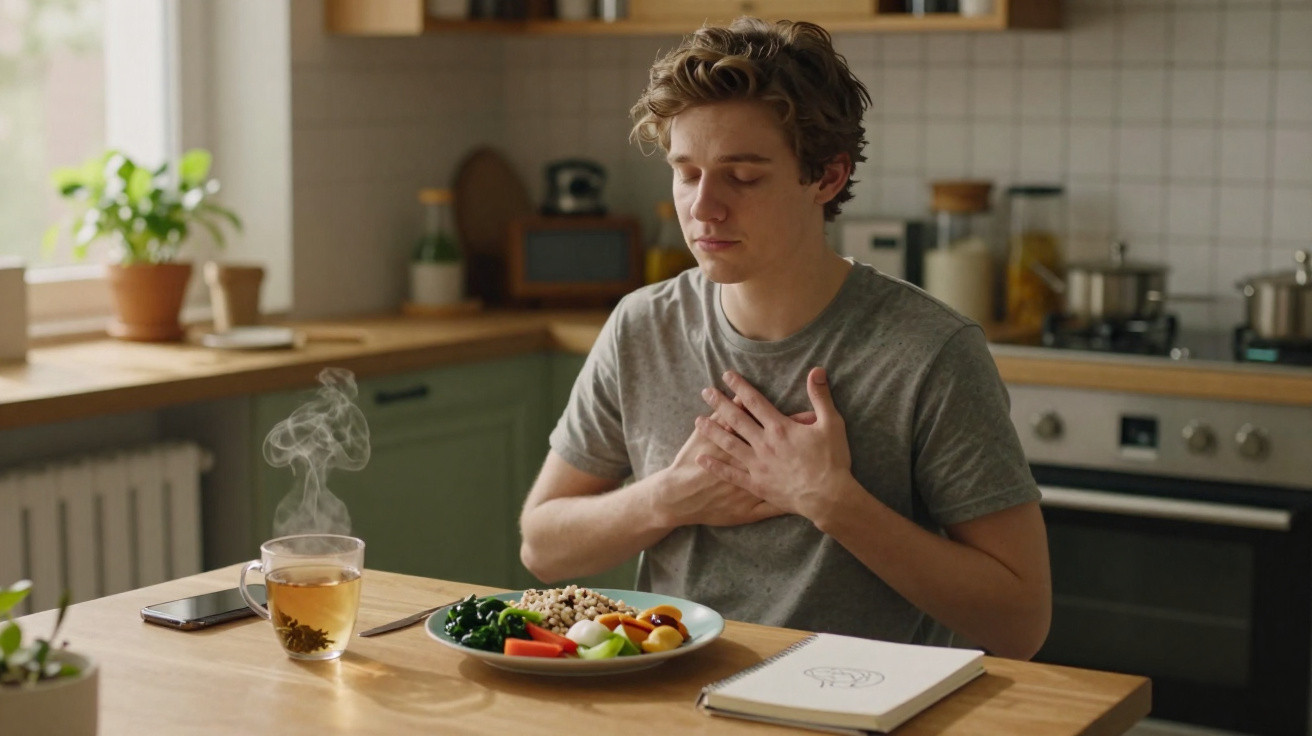
Stress is more complicated, because life doesn’t stop throwing curveballs. What can transform things is the stress-release mechanism you default to. Some people turn to sugar, others to their partner’s throat, and others to their phone. A different response can be practised: three deep breaths at the window, five minutes walking round the block, or a quick brain dump scribbled on paper.
Let’s be honest: no one genuinely manages this every day. However, people who rebound more rapidly after setbacks usually keep at least one small ritual like this available. It is not spiritual; it is mechanical. You are providing your nervous system with a short exit route, so that pressure does not remain locked inside.
Food, screens and the generosity of modest expectations
If there is one part of daily life in which people quietly gain or lose years of quality living, it is food. The issue is not the occasional indulgent brunch, but what you usually eat on a Tuesday evening. One practical method is to create one or two “lazy healthy meals” that you can put together automatically. For example: roasted vegetables, beans or lentils of some sort, and a fried egg on top. Or a large salad with leftover chicken and bread.
Make them often enough that they become your default when you are tired. Then your hardest day does not automatically end in frozen pizza and three chocolate bars.
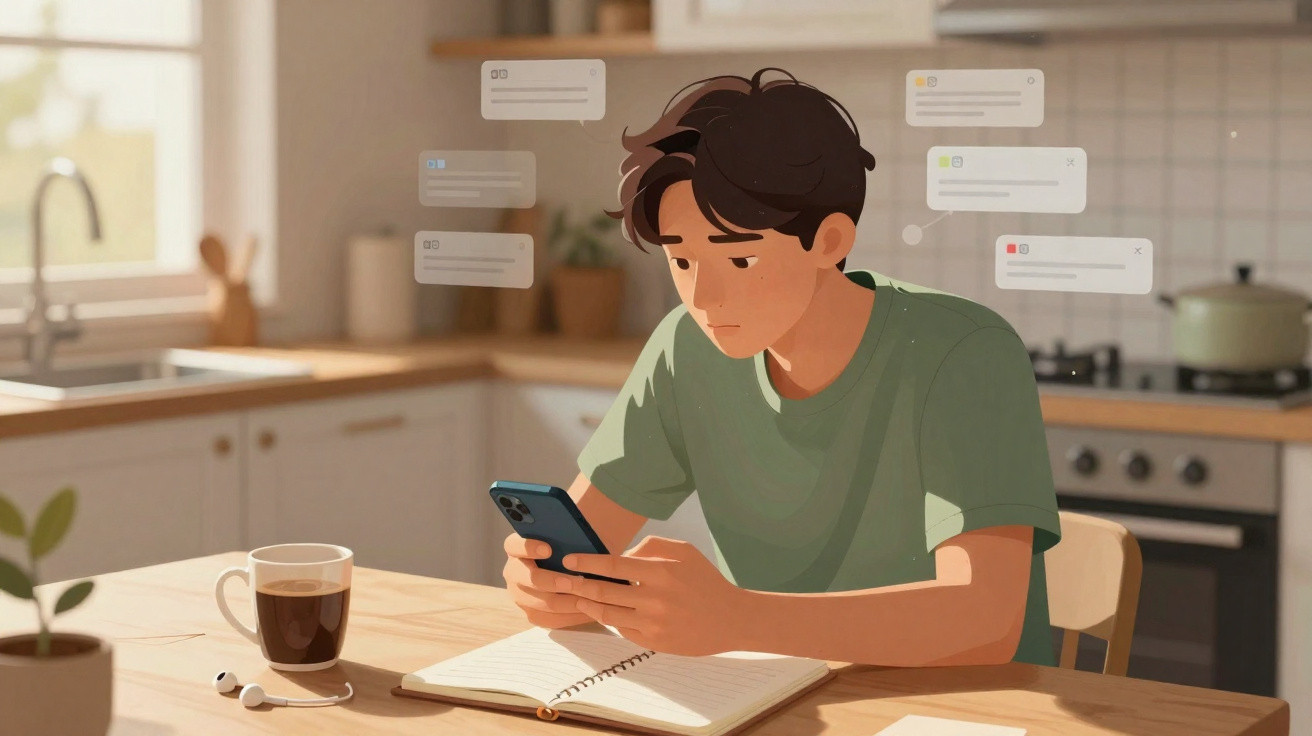
Screens are another area where routine choices subtly influence mood. Most people do not realise how frequently they open a social app; they only know they “never have time”. One easy adjustment is to place all addictive apps inside a folder on a second screen. Keep a reading app, notes or your camera on the home screen instead.
You will still open Instagram. But it will not open you. That one additional swipe gives your brain a chance to decide rather than simply react. If you slip back into doomscrolling, it does not mean you are broken. It only means you are human in 2026.
Sometimes the most radical act of self-care is dropping the fantasy of a perfectly balanced life and aiming for “a bit better than yesterday” instead.
- One plate rule: Fill half the plate with vegetables, one quarter with protein and one quarter with carbohydrates. It is straightforward, repeatable and works with any cuisine.
- Screen curfew: Create a “digital sunset” 30–60 minutes before sleep, even if it is only on two nights each week. Your sleep will notice.
- Move-by-default: Use the stairs when the lift is right there. Leave the bus one stop early. Small, unexciting and effective.
- Check-in question: Ask yourself once a day, “What do I need right now: food, water, rest, or connection?” Then respond truthfully.
- Low-bar rituals: Have one glass of water on waking and do one stretch before bed. That is all. More can always be added later.
The quiet art of creating a life that does not burn you out
There is an odd modern expectation that well-being should become a separate project. There are trackers on your wrist, macros in an app and podcasts in your ears explaining how far behind you are. Yet older people who appear truly content rarely talk about a “system”. They mention Sunday lunches, dog walks, gardens, coffee with neighbours and music.
Their well-being is woven into their lives rather than attached around the edges.
Perhaps the real change is not to pile on more habits, but to lower the threshold and increase consistency. Make one small daily commitment that remains manageable even when you are in your worst mood: drink water, get daylight in your eyes before midday, reply to that friend’s message, or walk round the block.
There will be no fireworks, and nobody will cheer. Still, your nervous system gradually changes its script from “life is a constant emergency” to “I’m basically okay, even when today is messy”.
We all know the moment: you promise that tomorrow will be different, only for tomorrow to arrive looking remarkably like today. Perhaps the solution is to stop waiting for another kind of tomorrow and gently reshape the today you actually have. Make one tiny decision at a time, repeating it until it feels boring.
That boredom is where long-term well-being lives. Once you start paying attention, you may find that you are already getting more right than you realised.
| Key point | Detail | Value for the reader |
|---|---|---|
| Micro-habits matter | Small, repeatable actions involving movement, sleep and stress relief influence long-term health | Identifies where to direct energy without remaking your entire life |
| Defaults beat willpower | “Lazy healthy meals” and straightforward screen or sleep boundaries become natural routines | Lessens guilt and dependence on motivation |
| Lower bar, more consistency | Selecting small, realistic promises each day creates a stable base over time | Supports a sustainable lifestyle rather than brief bursts of effort |
FAQ:
- Question 1 What is one daily choice with the greatest effect on long-term well-being?
- Answer 1 If you begin with only one, target regular sleeping and waking times. Maintaining a broadly similar timetable, including at weekends, steadies hormones, mood, appetite and energy in a way that strengthens every other habit.
- Question 2 How can I create habits when I am already exhausted and overwhelmed?
- Answer 2 Halve your ambition, then halve it once more. Pick an action requiring fewer than two minutes: drink water upon waking, step outdoors for 60 seconds of daylight, or stretch during one advert break. Small successes restore trust in yourself.
- Question 3 Must I track everything through apps and wearables?
- Answer 3 No. Technology is useful for some people, while others experience it as stressful. Try simple, human check-ins instead: How did I sleep? How is my mood? How am I moving? If tracking makes you anxious, it is undermining your well-being.
- Question 4 What about days when everything falls apart and I do none of this?
- Answer 4 Such days belong to a long-term life. The important thing is not perfection but the speed of your reset. Ask: “What’s the smallest thing I can do tomorrow that nudges me back on track?” Then do only that, and let go of self-criticism.
- Question 5 How long does it take before these small daily choices make a real difference?
- Answer 5 Some changes, such as improved sleep or brief walks, can affect how you feel within one or two weeks. More profound gains-metabolic health, resilience and emotional balance-develop over months and years. Consider it quiet compound interest for your future self.




Comments
No comments yet. Be the first to comment!
Leave a Comment