
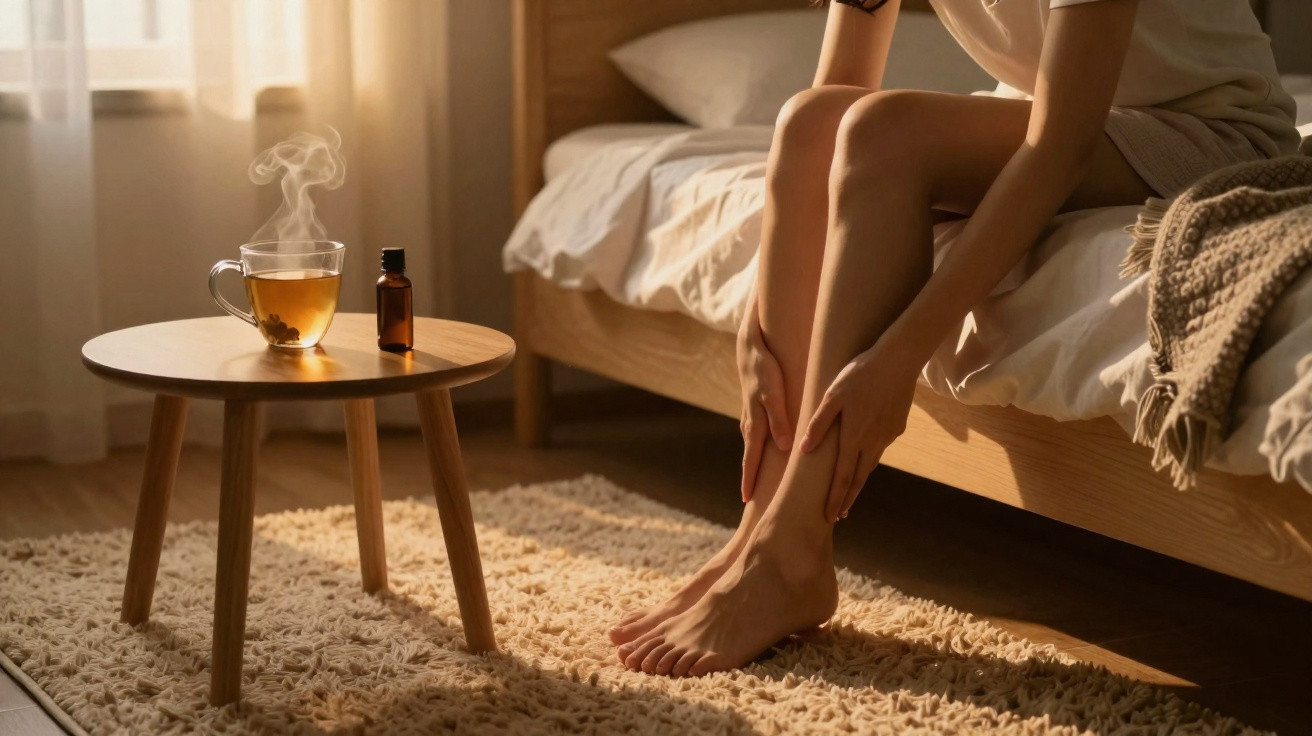
Every night, shortly after the lights are switched off, millions of people tuck their feet beneath the duvet and experience the same jolt: ice-cold toes, ankles that never properly heat up, and that peculiar combination of numbness and pins and needles.
The rest of the body may be snug, yet the feet can feel as though they are resting on a stone slab. Most people reach for thicker socks, turn up the heating or add another blanket. Far fewer pause to consider what their feet may be signalling about circulation. That nightly coldness carries a quiet physical message, one that many of us choose to overlook.
A woman awake at 2 am in a small Manchester flat knows none of this. Lying on her side with her knees drawn up and the duvet pulled high, she still feels as if her toes have been stored in the fridge. Her partner snores softly beside her, his legs stretched into the cooler air, while she rubs the soles of her feet together like matchsticks. The bedside clock glows. She has tried bed socks, a hot water bottle and a heavier duvet. Nothing makes much difference. Her feet remain cold, her mind begins to race, and she scrolls through her phone in the dark, entering the same four words countless people search: “Why are my feet cold?”
Cold feet that never warm up: more than an irritation
Those affected by cold feet at night often present it as a harmless little quirk, almost a running joke. “My feet are frozen again, sorry!” they might say while trying to tuck them beneath someone else’s legs. Behind the humour lies a more persistent problem: a nightly suggestion that blood is not reaching where it needs to, when it needs to. The rest of the body can feel comfortably warm. The room is not freezing. But the toes seem to tell another tale. It can be an unexpectedly isolating feeling, lying awake in the dark with feet that seem detached from the rest of you, almost as if they belong to somebody else.
It is no help that cold feet are remarkably widespread. UK surveys indicate that a sizeable proportion of people, particularly women, report chilly toes in bed without receiving a clear diagnosis. On social media, the hashtag “coldfeet” appears beneath videos of people wearing two or three pairs of socks simply to sleep. A London GP says she hears one sentence repeatedly each week: “My feet just never warm up at night.” During a busy NHS day, it may be dismissed as a minor concern, labelled “probably poor circulation” and left there. Often, that is where the discussion stops, even when the sensation continues.
Cold feet sit on an uncomfortable boundary between an everyday nuisance and a possible warning sign. The temperature of the extremities is closely associated with blood flow. If the blood vessels in the legs constrict too much, or blood becomes sluggish after prolonged sitting, less warmth reaches the toes. Nerves may also send faulty signals, creating a burning-cold feeling even when the skin is not especially cold to touch. Your body is managing core temperature, posture, stress and even hormones. At night, that delicate balancing act can shift just enough to leave your feet in the cold.
The night-time circulation tip most people overlook
Here is the simple advice many people miss: carry out a deliberate, feet-first circulation routine before bed. It does not require an expensive device or a spa-style treatment. It is simply ten minutes in which your lower legs receive attention. Begin with something almost comically basic: rotate your ankles and toes in wide, relaxed circles, then point and flex your feet until you notice a gentle stretch in the calves. Follow this with a brief self-massage over the arches and around the ankles, moving upwards towards the knees. The intention is to encourage blood downwards and then back upwards before you remain still for hours.
Most of us move directly from sofa to bed. The television goes off, the phone is put on charge, the lights are switched out, and the body stays in the same position it held on the couch. Blood has been quietly gathering in the legs throughout the evening. Veins are already working hard to return it to the heart against gravity. A short circulation ritual gives that system a helpful prompt before asking it to continue through the night. It is not dramatic, and it will not transform ice cubes into burning coals. Still, many people who give it a go notice a modest but genuine difference: feet that feel less lifeless, more present and less disconnected from the body.
This straightforward approach often breaks down in ordinary life. People hear “stretch your legs, massage your feet”, agree with it, and then forget it after the next TikTok scroll. We are exhausted, we are in a hurry, and we simply want to fall into bed and disappear. Yet changing the temperature of your feet is not always a matter of buying thicker socks or raising the boiler by another degree. It may involve helping your blood vessels learn a different pattern, gradually, night after night. Let’s be honest: nobody really does this every day. However, those who do it, even only a few times each week, often describe the understated pleasure of getting into bed and discovering that their toes are already warm.
How to warm cold feet by improving blood flow
Picture your feet as the distant end of a long river that can sometimes become sluggish. To warm them from within, you want that river to keep moving rather than sitting still. Sit on the edge of the bed or on a chair. Raise one leg and make ten slow circles with the foot, then reverse direction. Next, point and flex your toes ten times in a controlled, unhurried way, until a faint warmth develops in the calf. Do the same with the other leg. Then rest one foot on the opposite thigh and use your thumbs to apply pressure along the arch, heel and each toe, always moving the pressure upwards towards the ankle.
If you are prepared to add one more stage, end with one minute of leg pumping. Lie on your back with both legs raised against a wall or headboard, then gently bend and straighten the knees and ankles as though marching in slow motion. This can help move blood that has been collecting in the lower legs, before encouraging fresher, warmer blood to return as you lower your legs again. Some people prefer to put on a lightweight pair of breathable socks afterwards to retain the warmth they have created. Not thick, sauna-like socks, but a light layer that says: the work is done, now keep the heat in.
People commonly run into similar problems. Some massage too firmly and create tender spots. Others perform the movements too quickly, turning what should be a soothing routine into a small workout. Others expect a miracle after one evening and decide “it doesn’t work”. Cold feet that have troubled you for months are unlikely to be resolved in ten minutes. Gentle regularity, rather than toe boot camp, is the aim. One further point: if you have diabetes, severe varicose veins or diagnosed circulation problems, speak with a healthcare professional before attempting deep massage. Your skin and blood vessels may require another form of care, and applying too much pressure is not advisable.
What reassures many people is the combination of science and relief behind this type of routine.
“When you move the ankles and massage the lower legs, you’re effectively using the muscles as a pump,” explains one vascular specialist in Birmingham. “That pump helps push blood back towards the heart, which improves the turnover of warm, oxygen-rich blood down to the toes. It’s simple physiology, but most of us underestimate how powerful small movements can be at night.”
- Keep it gentle: prioritise comfort over pain or intense stretching.
- Look out for warning signs: sudden coldness on one side, colour changes or pain warrant medical advice.
- Combine it with the basics: a slightly warmer room, dry socks, and reducing nicotine and late caffeine can support improved circulation.
Cold feet as a nightly signal from your body
We have all experienced the point at which we realise that a “small” symptom has quietly been influencing our evenings. Cold feet may sound insignificant on paper. In the dark, when you are alone with your thoughts, they can determine whether you drift off or remain awake and frustrated. When your toes stay icy regardless of how many blankets you add, it is difficult not to feel slightly let down by your own body. Whether real or imagined, that sense of betrayal helps make this such an unexpectedly emotional subject. It is not merely a reading on a thermometer; it is about feeling comfortable in your own skin at the close of the day.
Viewing cold feet through the lens of circulation changes the narrative. Rather than thinking, “my body is broken”, it becomes “my blood flow needs some help”. That may still involve seeing a GP, particularly if your feet change colour, become painful when you walk, or one side is noticeably colder than the other. It may mean checking blood pressure, anaemia, thyroid function or even your footwear. But there is also value in the quiet, unglamorous habits developed at home: moving more during the day, loosening tight socks or waistbands, and spending five peaceful minutes each night reminding your legs and feet that they are still part of the whole.
Many people who adopt a simple circulation ritual do not describe it in medical language at all. Instead, they describe a feeling of returning to their body after spending a day largely in their head. Holding a cold foot in both hands and sensing it slowly warm as the blood begins to move can feel surprisingly grounding. You may still need thicker socks. You may still arrange that appointment you have postponed for too long. Yet somewhere between the ankle rotations and the gentle pressure of your thumbs, a fine boundary emerges between discomfort and care. That small boundary is often what people remember, and what they later share with someone else unable to sleep because their feet feel like ice.
| Key point | Detail | Benefit for the reader |
|---|---|---|
| Circulation and cold feet | Icy feet at night are often connected with reduced blood flow to the toes. | Understand that the issue is not “all in your head”, but relates to how blood circulates. |
| 10-minute ritual | Combine ankle movements, gentle stretches and self-massage before sleeping. | Provides a straightforward method to try tonight, with no equipment or cost. |
| Warning signs | Pain, colour changes or a marked difference between the two feet. | Know when to seek medical support rather than managing the issue alone at home. |
FAQ:
- Why are my feet always cold at night even with socks on? Often because blood flow to the toes is reduced when you have been sitting still for hours, and thick socks do not address the underlying circulation issue.
- Can poor circulation in the feet be dangerous? It can be, especially if you notice pain when walking, colour changes, wounds that heal slowly or one foot much colder than the other – these symptoms should be checked by a doctor.
- How long does the circulation routine take to work? Some people feel a gentle warmth after the first session, but it usually takes days or weeks of regular practice to notice a clear, lasting change.
- Are there medical conditions linked to cold feet? Yes: peripheral arterial disease, diabetes, anaemia, low thyroid function and Raynaud’s phenomenon can all be involved, so persistent symptoms deserve proper medical advice.
- Is it safe to use hot water bottles or electric blankets for cold feet? Generally yes if you have normal sensation in your feet, but people with diabetes or nerve problems should be careful to avoid burns and stick to mild, controlled warmth.






Comments
No comments yet. Be the first to comment!
Leave a Comment