
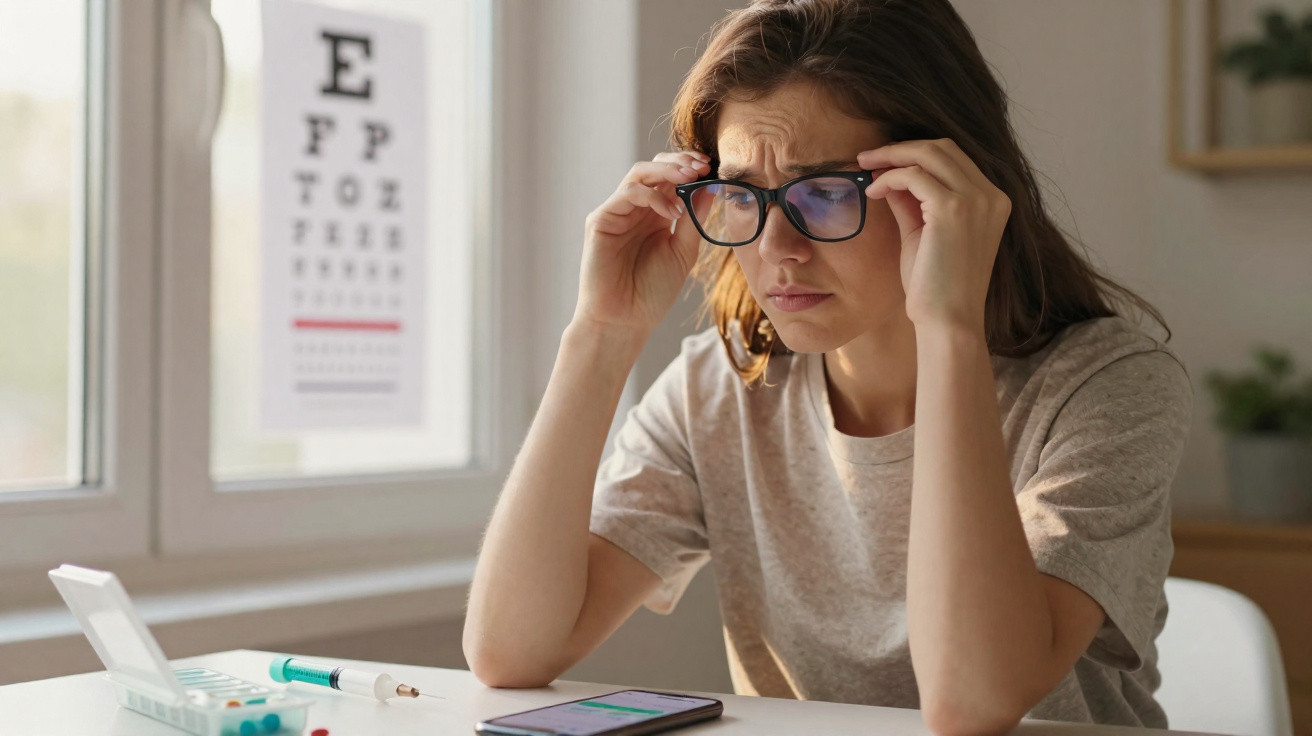
Once promoted as “miracle” slimming injections, certain diabetes medicines now used for weight loss are facing new scrutiny from eye specialists.
As injectable weight-loss medicines become increasingly popular, two significant studies have prompted troubling questions about an uncommon yet severe possible side effect: sudden and, in some cases, permanent sight loss.
Ozempic’s journey from diabetes medicine to slimming trend
Ozempic, Wegovy and Rybelsus were not created as cosmetic weight-loss products. These semaglutide-based medicines were initially licensed to help people with type 2 diabetes manage their blood glucose levels.
They work by imitating GLP-1, a hormone produced in the gut. GLP-1 prompts the pancreas to release insulin, delays digestion and sends strong fullness signals to the brain. As a result, people commonly feel satisfied sooner and stay full for longer.
For many patients, this produces considerable weight loss alongside improved blood pressure, cholesterol and blood glucose control. For people living with obesity or diabetes, these changes may mean fewer heart attacks and strokes, as well as a longer and healthier life.
Social media, however, reshaped that medical narrative. Images labelled “Ozempic face” and “skinny jabs” soon spread across TikTok and Instagram. Demand rose sharply among people who were not necessarily at high risk or substantially overweight.
Behind the hype, researchers began to notice a faint but worrying pattern in the eye clinic waiting rooms.
What the latest eye studies really indicate
A rare condition with an alarming nickname
The central concern is a condition with a complex name: non-arteritic anterior ischaemic optic neuropathy, or NAION. Eye specialists sometimes describe it as a “stroke of the eye”.
NAION occurs when blood supply to the optic nerve - the connection carrying visual signals from the eye to the brain - falls suddenly. The nerve fibres are deprived of oxygen and may die rapidly.
People commonly wake with sudden, painless loss of vision in one eye. They may experience blurred areas, a dark spot or a shadow affecting part of their visual field. In many instances, the resulting damage cannot be reversed.
NAION is uncommon, affecting only a few people per 100,000 each year. Its rarity means that even a small safety signal can attract attention during medicine monitoring.
The Massachusetts study: semaglutide risk seems greater
Among the most widely discussed studies is research from Massachusetts Eye and Ear Hospital. Scientists tracked more than 16,000 patients with diabetes or obesity between 2017 and 2023.
They compared people using semaglutide with those receiving other treatments, recording the number who went on to develop NAION during the study period.
The team found that NAION appeared more often in those using semaglutide: roughly four times higher risk in people with diabetes, and more than seven times higher in people with obesity.
This finding does not establish that semaglutide itself directly causes NAION. Those prescribed semaglutide may differ from other patients in various respects, including disease severity and lifestyle factors. Nevertheless, the study’s scale and the apparent strength of the association concerned both specialists and regulators.
Swedish and Australian findings suggest a similar pattern
A separate study involving researchers from Sweden’s Karolinska Institutet and the University of Melbourne examined a large population of patients taking GLP-1 medicines, including semaglutide.
They found that NAION was still exceptionally rare, affecting approximately 0.04% of treated patients. However, the risk seemed slightly higher than among comparable people who were not using these medicines.
Diabetes itself complicates the picture, as it increases the likelihood of NAION. A 2013 meta-analysis published in PLOS ONE found that people with diabetes had a 64% greater risk of NAION, even without weight-loss injections.
This makes it hard to separate the risk linked to the underlying illness from any risk potentially associated with the medicine. Fast changes in blood glucose during treatment may contribute in susceptible people, although the exact mechanism remains unclear.
Regulators respond as doctors consider the balance of risk
European regulators have already taken action. In June 2025, the European Medicines Agency included NAION in semaglutide’s official list of “very rare” side effects and advised patients to stop treatment immediately if they develop sudden changes in their vision.
Safety sheets now stress: any abrupt loss of vision, even in one eye and without pain, is an emergency that should halt injections until checked.
This creates a familiar clinical dilemma for doctors and patients. Semaglutide may reduce heart disease risk, improve diabetes management and enable substantial, often life-changing weight loss. Set against those benefits is an extremely rare but potentially serious threat to sight.
Who may be at greater risk?
Eye specialists identify several factors that may increase the likelihood of NAION:
- Obstructive sleep apnoea
- High blood pressure
- Diabetes with long-standing vascular damage
- Earlier visual difficulties or previous NAION in the other eye
- Optic nerve anatomy that is less favourable, sometimes known as a “crowded” optic disc
- Smoking and high cholesterol
People with these characteristics may already have impaired microcirculation - the network of very small blood vessels supplying the nerves and retina. There is concern that a medicine affecting blood flow, blood pressure or fluid shifts might push a vulnerable system beyond its limit.
What patients taking Ozempic and similar medicines should look out for
For most patients, it would not be sensible to stop a highly effective medicine because of a very rare side effect. Instead, specialists are advocating more focused monitoring.
Doctors now encourage patients on GLP-1 drugs to treat their eyes the way they treat their hearts: as organs needing monitoring when major metabolic changes are underway.
Clinicians often suggest the following practical measures:
- Arrange a baseline eye examination, including an assessment of the optic nerve, before starting or soon after beginning a GLP-1 medicine.
- Tell your ophthalmologist or optometrist that you are taking semaglutide or a comparable treatment.
- Seek urgent assessment if you wake with fresh blind spots, sudden blurring or a dark curtain across part of your vision.
- Maintain regular monitoring of blood pressure, cholesterol and sleep apnoea.
Long-term research is also in progress. One ongoing study is following around 1,500 patients for five years to establish more precisely how semaglutide affects the structure of the retina and optic nerve, and whether specific patterns can predict future problems.
Understanding GLP-1 medicines and eyesight
How GLP-1 treatments could affect the eye
Researchers are still developing possible explanations for an association between GLP-1 agonists and NAION. Several potential mechanisms are under discussion:
| Proposed factor | Possible effect on the eye |
|---|---|
| Rapid blood sugar changes | May temporarily disturb blood flow or pressure in the tiny vessels supplying the optic nerve. |
| Fluid balance shifts | Weight loss and hormonal changes could alter pressure in and around the eye. |
| Existing vascular damage | Diabetes-related injury to small vessels may magnify the effect of an additional stressor. |
| Individual anatomy | A naturally crowded optic disc may provide less room for swelling, forcing fibres into crisis. |
None of these explanations has been proven conclusively. The eye is particularly sensitive to small changes in circulation, while diabetes, obesity, sleep apnoea and potent metabolic medicines together create a complicated clinical picture.
Real-life scenarios: when caution is crucial
Consider a middle-aged man with type 2 diabetes, high blood pressure and loud snoring that suggests sleep apnoea. His doctor prescribes Ozempic, and over several months his weight and blood glucose improve. One morning, he notices a blurred patch in his left eye on waking but has no pain. Assuming that he is simply tired, he waits. When he eventually sees an eye specialist, the damage is permanent and his vision cannot be recovered.
Now consider the same man after being warned about possible eye risks. He has a baseline eye examination, receives treatment for sleep apnoea and understands that any sudden visual change needs urgent attention. At the first appearance of a shadow in his sight, he stops the injections and seeks emergency assessment. The result may still be uncertain, but the opportunity for earlier intervention is much greater.
Balancing benefits, risks and long-term approaches
For people with severe obesity or inadequately controlled diabetes, semaglutide and related GLP-1 medicines can be life-changing. Reducing strain on the heart and blood vessels generally also supports eye health, as diabetic eye disease is closely connected to overall vascular wellbeing.
The key issue is not simply whether these medicines should be used, but how they can be prescribed sensibly. This includes recognising people with a vulnerable optic nerve, reducing the speed of weight loss where appropriate, and coordinating care among endocrinologists, GPs and eye specialists.
People considering GLP-1 treatment may wish to ask their doctor: “Do I have any known eye conditions?”, “Should I see an ophthalmologist before starting?” and “What warning signs mean I should stop the injections and call you?”. Straightforward answers to these practical questions matter more than viral before-and-after images.
Ultimately, rapid weight loss has physiological effects. Some are positive, including lower blood pressure. Others, such as a small increase in the possibility of sudden sight loss, call for open discussion, careful monitoring and informed decisions by both doctor and patient.






Comments
No comments yet. Be the first to comment!
Leave a Comment