
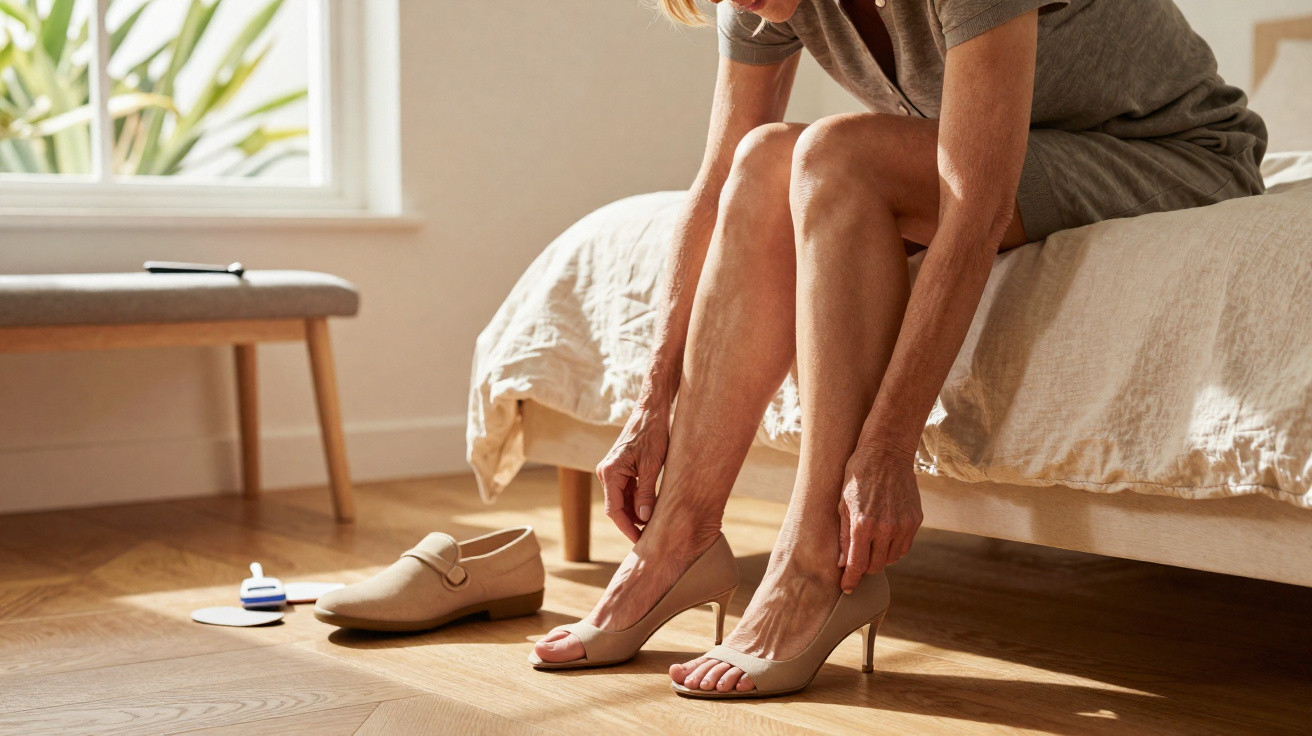
The day my favourite loafers let me down, I was in the supermarket, looking at the tinned tomatoes. My right foot was on fire, my left little toe felt as though it had been caught in a door, and shoes I had worn for ten years had abruptly become instruments of torture. I had not put on weight. I had not completed a marathon. I had simply reached 60 a few months earlier.
I walked home barefoot, carrying my shoes, like a child who had lost a wager.
That evening, I arranged every pair in the hallway: wedding pumps, walking sandals, trainers and winter boots. I could no longer get into half of them without flinching. Something had changed - not the shoes, but me.
Nobody had ever told me that after 60, feet stop adapting to shoes. From then on, the shoes need to adapt.
When your feet quietly change shape after 60
What is odd is how undramatic this shift can be. There is no obvious first day or second day. Instead, your dependable trainers feel “a bit tight” one morning; then, a year later, you are taking off your socks at 4 p.m. because your toes are pleading for relief.
You might assume the leather has shrunk or that the brand has altered its sizing. You blame hot weather, your socks or too much walking. Anything except the clear reality: your foot is no longer the foot you had at 45.
Bones splay out. Arches lower slightly. The cushioning fat pads beneath the heel become thinner. Almost without notice, feet flatten and broaden, until shoes you had accommodated for decades seem to be penalising you for getting older.
I spoke to a retired headteacher, aged 68, who had always taken pride in her elegant, narrow size 37 shoes. She recalled going to buy a new pair “for comfort” and leaving the shop with wide-fit size 39s. She cried in the car, not so much out of vanity as disbelief.
Her experience is repeated everywhere. A podiatry clinic in Paris reported that over half of its new patients aged over 60 arrive in shoes that are at least one size too small. It is not because they enjoy being in pain, but because they are still purchasing “their” size from ten or 20 years ago.
After 60, feet may lengthen by up to half a size and broaden by a full size. Nobody mentions that in birthday cards.
This is a structural change, rather than simply a case of “I walked too much yesterday”. Collagen becomes less elastic. Ligaments slacken. The arch that once kept everything held firmly together gradually relaxes and spreads. Previous pregnancies, physically demanding work on your feet or years in inexpensive shoes can make it happen more quickly.
The body quietly rearranges itself. Our clothes, and our sense of identity, do not necessarily keep pace. We hold on to old assumptions: “I’ve always been a size 38” or “I’m not the wide-fit type”. As a result, we force a new foot into an outdated idea.
The key difference is this: before 60, feet are more likely to mould themselves and put up with some pressure. After 60, that tolerance declines. What once felt “a bit tight but fine” can become a corn, bunion or knee pain three months later. The cost is delayed, but it still comes.
Learning to dress the feet you actually have now
The first useful step is almost childishly simple: measure your feet again, both of them. Do it while standing, at the end of the day when they are a little more swollen. Put a sheet of paper against a wall, draw around each foot and measure both the length and width.
Then do the supposedly forbidden thing: disregard the size number fixed in your memory. Trust what today’s tape measure tells you. That is where you really need to begin.
Think of shoe fitting in the same way as choosing spectacles. When your eyesight changes, you do not debate it with the optician; you accept the new prescription. Shoes after 60 are much the same, only nearer the floor. You’re not betraying your younger self by changing size. You’re caring for the body that carried you to this age.
The most common error is stubbornness presented as loyalty. We remain attached to a particular shape, heel height or brand, almost as though changing any of them means admitting, “I’m getting old”. The heel that looked stylish at 50 may become a quiet adversary at 65, yet we retain it because it seems woven into our style.
There is also the mistaken belief that comfort means “ugly shoes”. We endure stiff loafers, narrow ballet flats or pointed occasion shoes at weddings, then say that walking is difficult “at our age”. Honestly, hardly anyone discards uncomfortable shoes the moment they begin to hurt. We convince ourselves that we will “break them in”.
After 60, breaking in the shoe is no longer the foot’s responsibility. The shoe must accommodate the foot’s new geography.
“After 60, the question isn’t ‘What size did I always wear?’ but ‘What do my feet look and feel like this year?’,” a podiatrist in Lyon told me. “The people who age best are the ones who accept to renegotiate their relationship with their shoes.”
- Pick soft, flexible uppers that make room for toes rather than confining them.
- Seek out a roomier toe box that lets toes spread, particularly if bunions or other deformities are beginning to appear.
- Choose a modest 2–3 cm heel rather than a completely flat sole, to support the arch without pitching you forwards.
- Try on shoes late in the day and walk around the shop for at least a few minutes, rather than taking only two steps.
- Alternate between pairs: one for longer walks, one for home and one for occasions, so the pressure points are regularly varied.
Living with changing feet without shrinking your life
Beneath this discussion about shoes lies a more subdued worry: if walking becomes painful, life may begin to contract. You go out less often. Markets, museums and city breaks start to feel “too tiring”. Gradually, the world becomes smaller because every step demands more.
Recognising that your feet have changed is not merely a practical matter. It helps safeguard your freedom to move. Mobility means dignity, independence and spontaneity. Poorly fitting shoes are like a door unexpectedly shutting. A well-fitting pair is like someone quietly holding that door open for several more years.
The conversation we seldom have is that ageing requires us to update our equipment as regularly as we attend medical check-ups: spectacles, hearing aids, mattresses and, yes, shoes. Not to remain young, but to keep moving.
| Key point | Detail | Value for the reader |
|---|---|---|
| Feet change shape after 60 | Arches relax, feet widen and sometimes lengthen | Helps explain sudden discomfort and ends self-blame |
| Old shoe size becomes unreliable | Measuring feet again and trying wider models | Reduces pain, blisters, and long-term joint problems |
| Shoes affect independence | Comfortable, adapted shoes support walking and balance | Protects mobility, social life, and daily autonomy |
FAQ: feet and shoes after 60
- Do feet really keep growing after 60? They do not “grow” as they do during adolescence, but they may lengthen and widen as ligaments loosen and arches drop slightly. The bones spread, making the footprint larger even when you have not gained weight.
- Should I throw away all my old shoes? No. Begin with pairs that hurt within 30 minutes of walking, and retain those that remain neutral or comfortable. Insoles or heel grips can also help adapt some older pairs, rather than requiring you to replace everything immediately.
- Are wide-fit shoes always the solution? Not necessarily. Some people need greater depth rather than width, while others require softer materials or lower heels. Wide-fit shoes can help with bunions and crowded toes, but the shoe’s overall shape and flexibility matter just as much.
- How high can my heels be after 60? A low 2–3 cm heel is often preferable to an entirely flat sole. Above 4–5 cm, pressure on the forefoot rises sharply and balance becomes more difficult, so reserve higher heels for very brief periods.
- When should I see a podiatrist? If pain persists, you develop new calluses or visible deformities such as bunions, or you have begun avoiding walking because of your feet, seeing a podiatrist can transform daily life. They can assess your gait, recommend shoes and prescribe custom insoles when necessary.






Comments
No comments yet. Be the first to comment!
Leave a Comment