
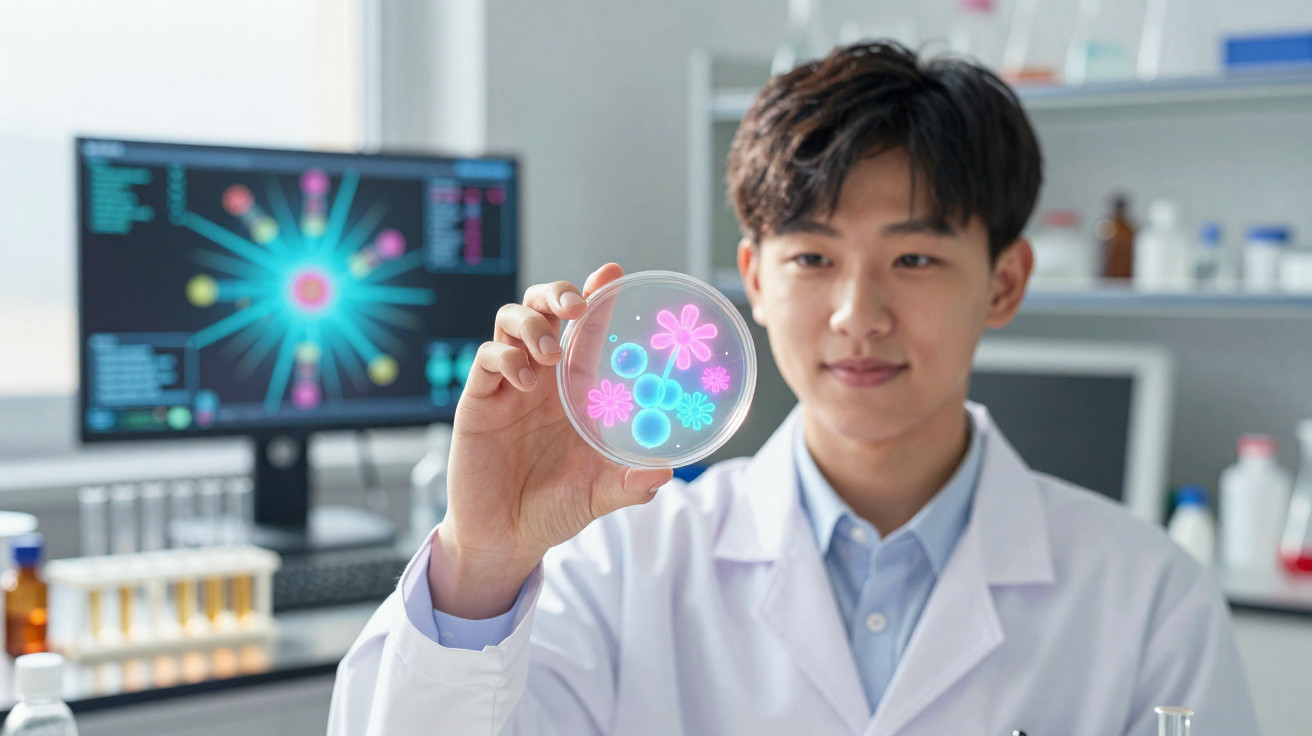
New research indicates that human cells may be effectively ‘recharged’ by replacing their internal batteries - the microscopic power stations known as mitochondria. The finding could offer broad benefits for healthcare and medical treatment.
The stores of mitochondria within most cells naturally decrease in number, become slower and deteriorate as we age. When they no longer operate at full capacity, they can play a role in diseases affecting areas from the heart to the brain.
Nanoflowers boost mitochondria in stem cells
In the new study, scientists at Texas A&M University used specialised flower-shaped particles, known as nanoflowers, to collect harmful oxygen molecules. This activated genes that raise the number of mitochondria in human stem cells.
Made from molybdenum disulfide, the nanoflowers were engineered with minuscule holes, allowing them to work like sponges that absorb stressful reactive oxygen species in targeted tissue. The researchers found that removing these molecules prompted the expression of genes that substantially increased mitochondrial production in the experiment’s stem cells.
Stem cells are naturally able to pass mitochondria to other cells. However, under these laboratory conditions, they had far more power stations available to share than usual, strengthening the recharging effect for surrounding cells.
Replacing damaged cells’ internal batteries
Most importantly, the energy-enhanced stem cells were able to pass their mitochondria to neighbouring cells that were old or damaged. It is closer to a battery replacement than a recharge, but it could allow cells that have ceased functioning to become active again.
"We have trained healthy cells to share their spare batteries with weaker ones," says biomedical engineer Akhilesh Gaharwar.
"By increasing the number of mitochondria inside donor cells, we can help aging or damaged cells regain their vitality – without any genetic modification or drugs."
In the video below, recipient cells (green) receive new mitochondria (red) from healthy stem cells. (Courtesy of Dr. Akhilesh K. Gaharwar)
The team reports that around two times more mitochondria were transferred than would ordinarily be expected. Smooth muscle cells, which occur in the heart, increased by three- to four-fold. For heart cells subjected to harmful chemotherapy, treatment significantly improved the survival rate.
Potential treatments and future testing
The researchers say the method might rejuvenate cells in many parts of the body - near the heart in cases of cardiovascular disease, for instance, or injected directly into muscle to treat muscular dystrophy.
"It's pretty promising in terms of being able to be used for a whole wide variety of cases, and this is just kind of the start," says geneticist John Soukar.
"We could work on this forever and find new things and new disease treatments every day."
Although the results are highly encouraging, the researchers acknowledge that the work remains at an early stage. The present study supports the potential for nanoparticles to improve mitochondrial transfer, but the next task is to make the technique work in animals and humans.
Future trials should reveal more about where the beneficial stem cells could be implanted within the body, as well as which dosage would be safe and suitable. Researchers must also examine the process’s long-term effects.
"This is an early but exciting step toward recharging aging tissues using their own biological machinery," says Gaharwar.
"If we can safely boost this natural power-sharing system, it could one day help slow or even reverse some effects of cellular aging."
The research was published in PNAS.




Comments
No comments yet. Be the first to comment!
Leave a Comment