
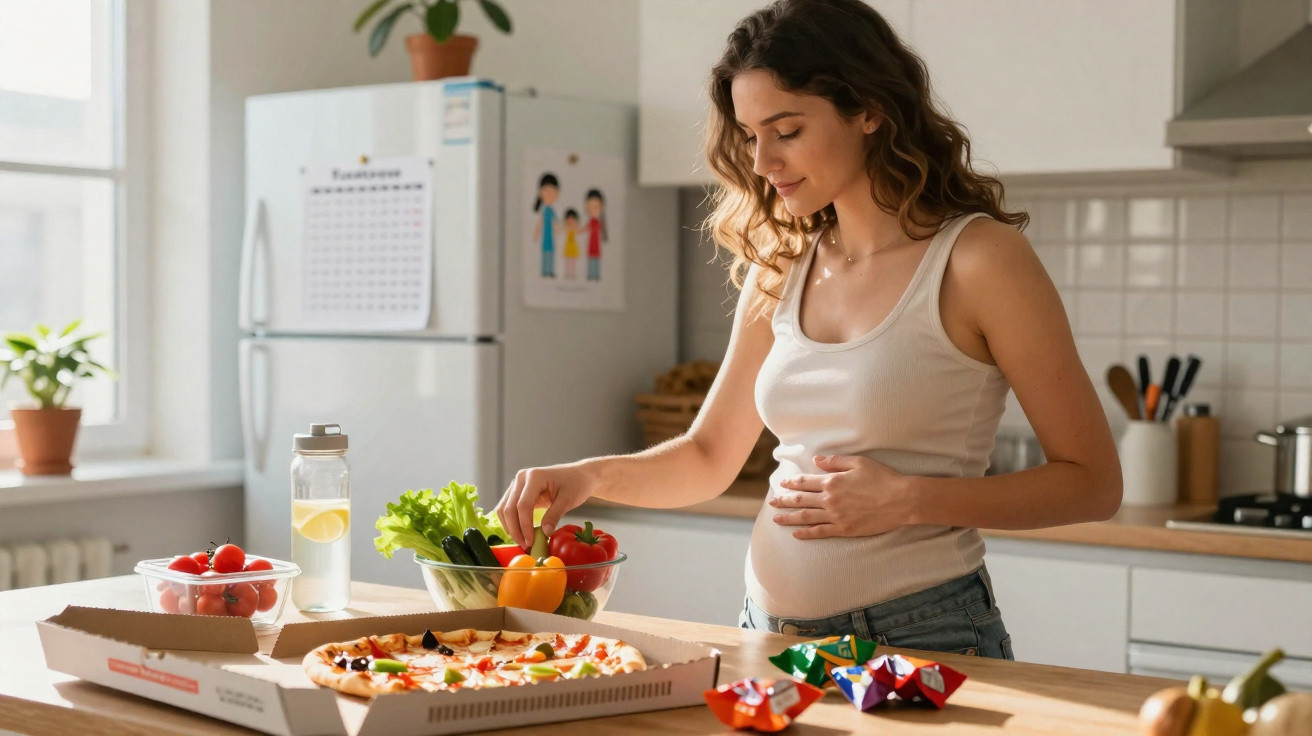
A major international research project suggests that highly processed foods measurably reduce the chances of becoming pregnant. More strikingly, the effects appear not only in statistics but also in the quality of early embryos – at the very start of new life.
What researchers really mean by “ultra-processed”
The research is based on the NOVA classification, which groups foods according to the extent of their industrial processing. In this context, “ultra-processed” does not simply mean food that has been cooked or frozen.
Typical foods in this category include:
- Frozen ready meals and instant noodles
- Sugary drinks, including fizzy drinks and energy drinks
- Packaged snacks such as crisps, cheese puffs, chocolate bars and biscuits
- Reformed meat products, chicken nuggets and breakfast cereals containing numerous additives
- Part-baked rolls and sliced white bread with lengthy ingredient lists
These products tend to have several features in common: extensive industrial processing, highly refined ingredients, numerous additives, and high levels of sugar or fat. At the same time, they generally provide few vitamins, minerals and fibre.
The study shows: the greater the share of ultra-processed foods in everyday diets, the lower the chances of pregnancy.
Large cohort, clear pattern: fertility falls measurably
The team led by Celine H. X. Lin and Romy Gaillard examined data from several thousand women of reproductive age. Over a number of years, participants recorded their food intake in detail. Medical information was also available, including data on assisted reproduction treatment.
The analysis revealed a clear pattern. Women with the highest intake of heavily processed products became pregnant less often than those whose diets were based more on fresh, minimally processed foods. The association remained even after researchers accounted for established influencing factors, including:
- Age
- Body mass index (BMI)
- Smoking
- Education level and socioeconomic status
This brings diet itself into focus as an independent factor. Particularly notable is the gradual nature of the effect: there is no “magic threshold” at which everything suddenly changes. Each additional proportion of ultra-processed products in the diet further reduces the likelihood of pregnancy.
The researchers deliberately describe this as a “robust association”. In other words, the data are consistent, but cannot by themselves prove a direct cause-and-effect relationship. What is clear, however, is that the direction of the association aligns with many other findings from nutrition and reproductive medicine.
What is already visible in the laboratory: early embryo development
One particular strength of the study is that some of the analysed information came from in vitro fertilisation (IVF) cycles. In this setting, specialists can assess embryo quality directly in the laboratory, before implantation in the womb.
This is precisely where an alarming signal emerged: on average, patients with a high consumption of ultra-processed foods had embryos of lower quality. Assessments included:
- How regularly and reliably cells divide
- Whether the embryo’s structure and development appear unremarkable
- How likely the embryo is thought to be to continue developing successfully
This observation indicates that the impact may not begin only at implantation or during later stages of pregnancy. It may already affect egg maturation and the very first cell divisions after fertilisation.
The early embryo stage reacts extremely sensitively to the environment within the mother’s body – and that directly includes what she eats each day.
Possible biological mechanisms: how food reaches the egg
The study itself can only point towards possible mechanisms rather than establish them conclusively. However, several explanations are plausible and widely discussed in the scientific literature.
Chronic inflammation and metabolic stress
Heavily processed products often contain large amounts of rapidly available carbohydrates, saturated fats and salt. This combination can encourage low-level, persistent inflammation in the body. Such inflammation may disrupt the sensitive hormonal balance that is crucial for ovulation, egg maturation and implantation.
There is also what is known as oxidative stress: an imbalance between harmful oxygen radicals and the body’s own protective systems. Eggs are especially sensitive to this type of strain. Damage to genetic material or cellular structures can limit their ability to develop.
Missing protective nutrients – too little of what helps
People who eat large quantities of ready-made products generally consume less fruit, vegetables, pulses and unprocessed wholegrains. This can mean lower intake of:
- Vitamins such as folate, vitamin C and vitamin E
- Plant compounds with antioxidant properties
- Fibre, which can benefit blood sugar control and the gut microbiome
- High-quality fats, including omega-3 fatty acids
These nutrients are considered important for stable hormonal signalling, good blood flow to the ovaries and egg quality.
Substances from packaging and additives
Another concern centres on so-called endocrine disruptors. These are substances that may interfere with hormonal processes. They can originate, for example, from certain plastics, coatings, plasticisers and some additives.
Ultra-processed products in particular often come into contact with substantial amounts of packaging, are heated intensely or stored for long periods. Traces of potentially problematic substances may therefore enter the food – and subsequently the bloodstream of people who consume these foods regularly.
Fertility as a social responsibility – not just a private issue
In many Western countries, ultra-processed foods now account for more than half of daily calorie intake. At the same time, the proportion of couples experiencing difficulty conceiving is rising. Professional bodies estimate that around one in six couples struggle to become pregnant.
Against this backdrop, the new study has political significance. It identifies a possible lever affecting millions of people – and one that can genuinely be changed. Genetics and age cannot be altered, but shopping and cooking habits can.
Health experts therefore call for:
- Clearer labelling of heavily processed products
- More practical nutritional guidance in gynaecology practices and fertility clinics
- Measures that make fresh food more affordable and easier to access
For women and couples hoping to have a child, this provides an additional reason to examine their own diets critically – long before a pregnancy test is involved.
What people affected can do in practice
Nobody needs to eat completely “clean” overnight. Even small, consistent changes can substantially reduce overall exposure and improve the intake of important nutrients.
Practical starting points include:
- Replacing soft drinks with water, tea or unsweetened juice spritzers
- Cooking at least one meal each day using fresh ingredients
- Swapping crisps and biscuits in the snack drawer for nuts, fruit or plain yoghurt
- Leaving products with extremely long ingredient lists on the shelf when shopping
- Replacing ready-made sauces and dressings with simple combinations of oil, vinegar, herbs and spices
The key point is not strict avoidance, but shifting the balance. Anyone who noticeably increases the proportion of fresh, minimally processed food can substantially reduce the force of the potential risk.
Fertility begins long before trying for a baby
One central message from the researchers is that egg health is not created only in the month when a couple starts trying to conceive. It develops over years and is influenced by diet, stress, physical activity, environmental factors and hormonal status.
Those planning to have children in a few years’ time can strengthen the foundations now through simple, lasting eating habits. This also includes avoiding major weight fluctuations and sharp swings in blood sugar, as both can place strain on hormonal balance.
Ultimately, the study does not offer a rigid rule, but a clear wake-up call: our convenient, industrially shaped food system has side effects that may extend beyond blood results or waistlines. It may interfere with one of the most sensitive areas of the body – the ability to create new life.





Comments
No comments yet. Be the first to comment!
Leave a Comment