
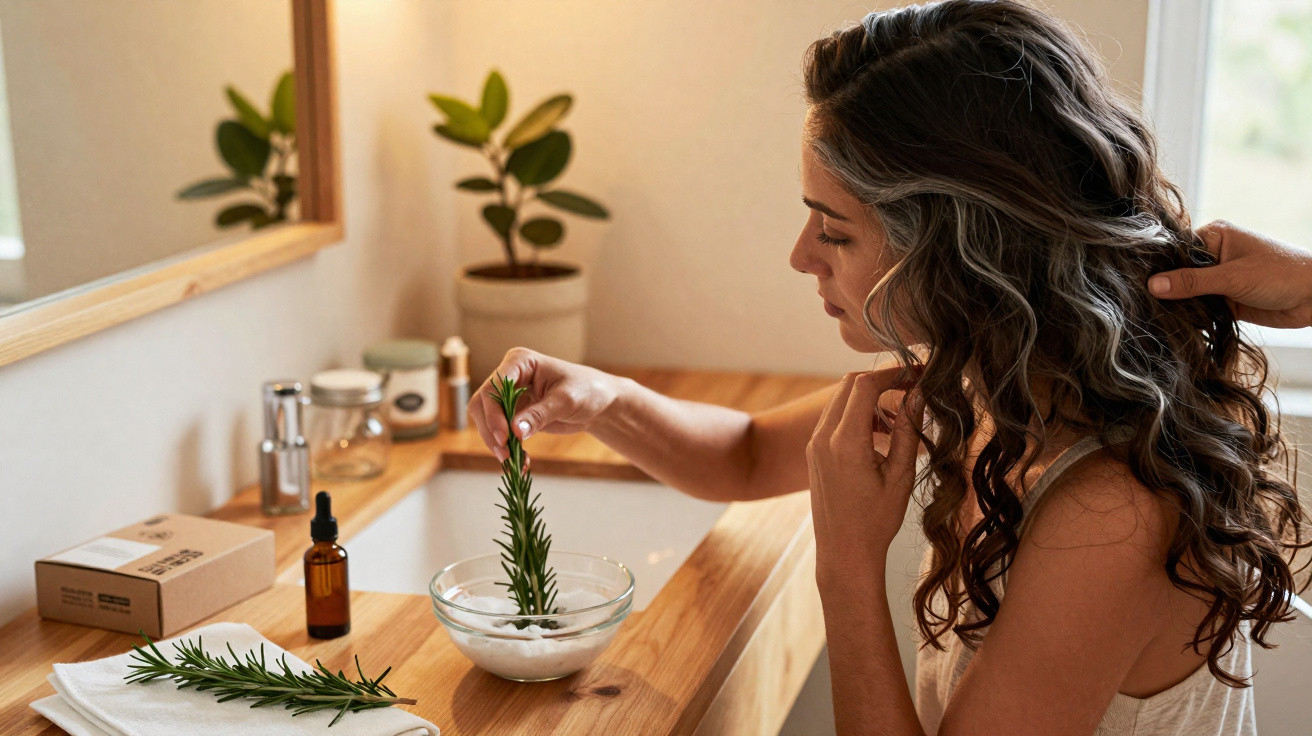
Combining rosemary with bicarbonate of soda has become a home remedy used chiefly to strip excess oil and build-up from hair. It also appears in content claiming it can strengthen strands or darken grey hair. Rosemary contains antioxidant compounds and is being studied for use in hair formulations, but there is no proven evidence that a homemade infusion works against white hair. Bicarbonate of soda, meanwhile, cleans intensely because it is alkaline – a property that can also dry out the hair fibre and irritate the scalp.
What is a rosemary and bicarbonate of soda mixture used for on hair?
Its most credible effect is cleansing. Bicarbonate of soda may help lift oil and residue left by styling products, while a rosemary infusion adds fragrance and plant compounds to the mixture. As a result, some people use the combination as an occasional rinse when their hair feels weighed down.
That is not the same as saying the remedy encourages growth or restores hair pigmentation. Effects linked to this type of home use include:
- More intensive removal of oil and surface residue;
- A feeling of a cleaner scalp;
- Rosemary’s distinctive scent;
- A possible temporary reduction in the weighed-down appearance of hair;
- No evidence that it reverses grey hair.
Can rosemary genuinely strengthen hair and make it grow?
Research has examined rosemary oil and extracts in relation to hair growth, but those studies use specific preparations and concentrations. They do not show that boiling sprigs of the herb and applying the water to the scalp delivers the same result. Some people may use an infusion as a homemade cosmetic, but persistent hair loss or the development of bald patches requires investigation into the cause.
Why does bicarbonate of soda require more care than rosemary?
Bicarbonate of soda is alkaline, whereas hair and the scalp naturally have a more acidic environment. Frequent applications may increase friction between strands, promote dryness and leave the cuticle rougher, especially on bleached, curly, dry or chemically treated hair.
Overly harsh cleansing can also remove lipids that help protect the hair fibre. Signs that the method is not working well include:
- Hair that feels rough or is difficult to detangle;
- A noticeable increase in frizz;
- Stinging or itching on the scalp;
- Redness after application;
- More brittle strands after repeated use.
Can the mixture darken grey hair?
There is no robust evidence that rosemary and bicarbonate of soda make melanocytes produce pigment again in strands that have turned white with age. The circulating recipe suggests boiling rosemary sprigs in water, adding bicarbonate of soda and using the cooled preparation as a rinse, but any visible change is likely to be subtle and unpredictable rather than comparable with the effect of hair dye.
- White hair mainly results from reduced melanin production;
- Bicarbonate of soda does not reactivate the cells responsible for pigmentation;
- A rosemary infusion does not act as a permanent dye;
- Light-coloured strands may react differently in appearance to plant residue;
- Products formulated for colouring provide more predictable results.
Occasional use is not the same as making the mixture part of a routine
Anyone choosing to try a preparation containing rosemary on hair should first test it on a small area and stop using it if stinging, itching or redness occurs. Bicarbonate of soda requires even greater caution: its cleansing power does not mean it is suitable for frequent application, and shampoos formulated for deep cleansing offer far greater control over pH and concentration.
The mixture became popular because it brings together two inexpensive ingredients with a seemingly straightforward explanation, but its benefits need to be viewed in the right proportion. Rosemary has cosmetic and scientific interest in specific formulations, while bicarbonate of soda can remove residue precisely because it is alkaline. The same mechanism that leaves hair feeling clean also explains why excessive use may lead to dryness, frizz and irritation rather than stronger strands.






Comments
No comments yet. Be the first to comment!
Leave a Comment