
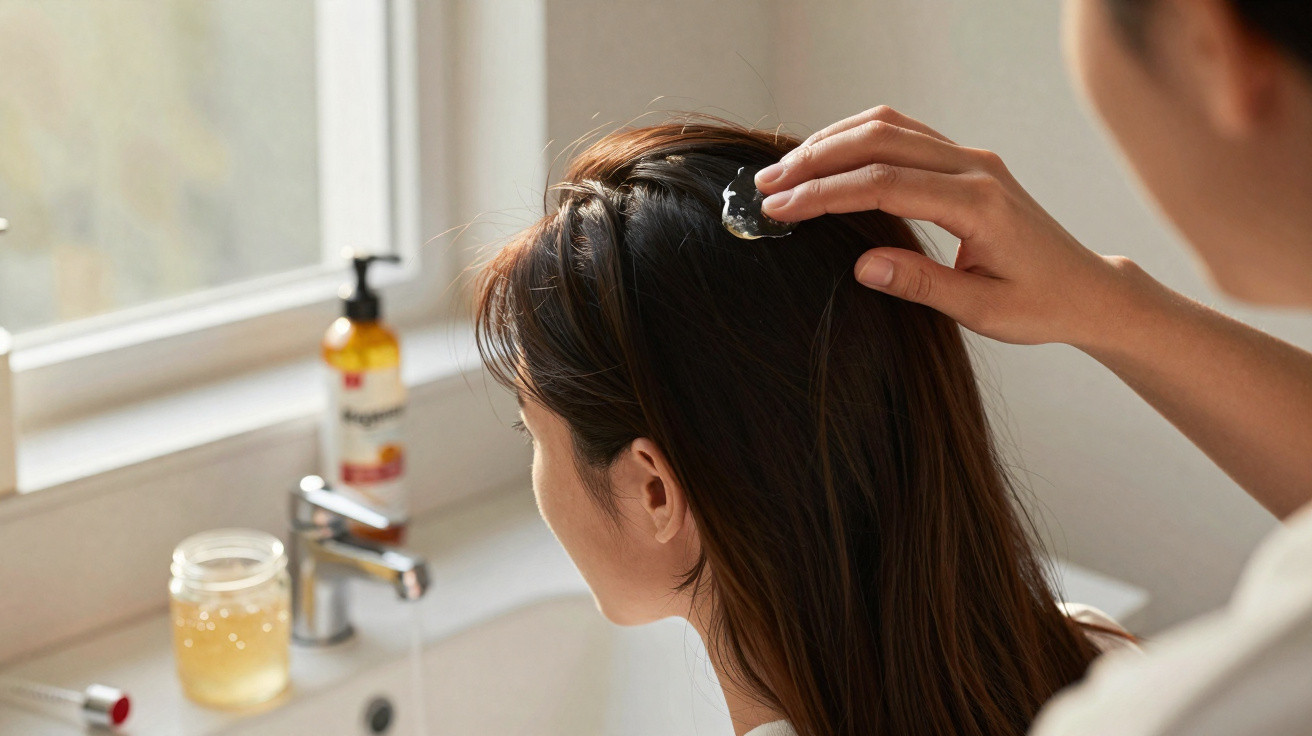
Researchers in the United Kingdom and Pakistan came across the effect by chance while investigating wound healing. Now, millions of people with hereditary hair loss are hoping for a straightforward new treatment: a gel based on a “magical” sugar which, in animal tests, has performed on a par with established treatments such as minoxidil.
How a wound-healing experiment became a hair-growth project
The research began at the University of Sheffield in the United Kingdom and COMSATS University Islamabad in Pakistan. The team was studying deoxyribose, a sugar found in every body cell as a building block of DNA.
Their initial aim was to establish whether the sugar could aid the healing of skin injuries. The researchers treated small wounds in mice with a deoxyribose-containing gel. They then observed something no one had anticipated: fur grew back markedly faster around the treated areas than in untreated regions.
“The sugar that keeps our genetic information stable appears to prompt hair follicles to restart – at least in mice.”
This incidental finding was striking enough for the researchers to launch a separate investigation into hair loss.
Deoxyribose gel tested in mice with hormone-related hair loss
For the dedicated hair study, the team used an established model: male mice in which testosterone triggers typical genetically determined hair loss, comparable with androgenetic alopecia in humans.
The animals’ backs were shaved before different groups received daily topical treatments. These included a gel containing deoxyribose and a minoxidil solution, the active ingredient used in well-known products such as Rogaine.
Key observations at a glance
- Rapid regrowth: Within roughly 20 days, mice treated with the sugar gel had regrown substantially more fur than untreated comparison areas.
- Thicker, stronger hairs: Individual hairs were longer and appeared denser, while the fur-covered areas visibly filled in more quickly.
- Performance comparable with minoxidil: In the assessment, the deoxyribose gel performed similarly to minoxidil, the current standard active ingredient for hair loss.
- Little additional benefit from combining treatments: A mixture of sugar gel and minoxidil was not significantly more effective than either treatment on its own.
The results were published in the specialist journal Frontiers in Pharmacology in 2024 and attracted noticeable interest in hair-loss research. This was not because they suggested a miracle cure, but because they pointed to a biologically plausible mechanism.
What may be driving the effect
The precise process within the hair follicles is still unknown. However, initial analysis of the treated skin samples has provided clues. Under the microscope, one feature stood out in particular: areas treated with deoxyribose gel developed more blood vessels and more skin cells.
This is highly likely to increase blood flow around the hair roots. That is where the hair papilla sits, supplying the hair with nutrients.
“The better the blood supply to the hair root, the thicker the hair becomes and the longer it remains in the growth phase.”
The principle is already familiar from minoxidil, which widens blood vessels in the scalp. Deoxyribose may produce a similar outcome through another route, perhaps by stimulating cells to form new blood vessels. That has not yet been confirmed, but the available data point in this direction.
Why hair loss remains difficult to treat
Genetically determined hair loss, medically known as androgenetic alopecia, affects an estimated 40 per cent of the global population. It is considerably more common in men, although many women are affected too. Typical patterns range from a receding hairline and thinning at the temples to a sparse crown.
At present, two medicines are particularly prominent:
| Treatment | Effect | Limitations |
|---|---|---|
| Minoxidil | Extends the growth phase and encourages new hair growth | Does not work for everyone; scalp irritation and uneven results are possible |
| Finasteride | Blocks the conversion of testosterone and slows hair loss in many men | Risk of sexual side effects and mood changes; not licensed for women |
There are also more demanding and costly options, including hair transplants. Many affected people would therefore welcome an easy-to-use, well-tolerated alternative in gel or spray form.
Where the sugar gel could help in future
If deoxyribose proves effective in humans, researchers see several potential applications:
- Hereditary hair loss: A possible additional option, especially for patients who cannot tolerate minoxidil or do not notice an effect from it.
- Hair loss after chemotherapy: A supportive measure to speed up hair regrowth once treatment has finished.
- Alopecia areata: Autoimmune patchy hair loss, in which local growth stimulation could be helpful.
No one can yet say responsibly whether any of these applications will become realistic. So far, the evidence comes only from experiments in male mice. Translating the findings to humans is the crucial next stage.
What is planned next
The researchers themselves are tempering excessive expectations. They clearly describe the work as early basic research, even though the graphs and photographs from the animal study look impressive.
Further experiments are now planned, including studies involving female mice and different hormonal settings. Before the gel can be used in people, several questions need answers:
- How high can the sugar concentration be without irritating the skin?
- How long must the gel remain on the skin to produce sustained hair growth?
- Could unexpected side effects occur with long-term use, such as inflammation or nodule formation?
- Do the effects differ substantially between men and women?
Only once these issues have been addressed in animal experiments and initial small-scale studies in people could a larger clinical programme begin.
What people affected by hair loss should take from this now
For anyone counting hairs on their pillow each morning, this study does not yet change day-to-day life. No one should start applying pure sugar to their scalp or experimenting with homemade gels. Deoxyribose occurs naturally in the body, but that does not automatically mean that high doses applied to the skin are harmless.
A structured approach makes more sense:
- See a dermatologist early rather than waiting for years.
- Establish whether the problem is genuinely genetically determined hair loss or whether a nutrient deficiency, stress or a thyroid disorder could be responsible.
- Assess existing treatments such as minoxidil or finasteride realistically, considering both their effectiveness and side effects.
- When new active ingredients emerge, look for properly reviewed studies and licences rather than social-media trends.
Why a “simple” sugar is so intriguing
The appeal of deoxyribose as an active ingredient extends beyond the question of hair. The sugar is a fundamental component of DNA, and the body has known it for millions of years. Researchers therefore hope it may have a favourable safety profile when moderate quantities are applied locally to the skin.
The approach also opens up a broader perspective. If a standard component of the body can stimulate blood vessels and cells in the hair follicle, other naturally occurring molecules may merit closer attention. Here, the dividing line between an “active ingredient” and a “building material” becomes blurred.
In practical terms, a successful sugar gel would offer another advantage: it could theoretically be made as a simple topical treatment, comparable to a light cream or foam. Anyone who has spread sticky solutions or strongly scented tinctures over their scalp every day will know how much everyday acceptability can determine whether a therapy succeeds.
However, several years and multiple generations of studies are likely to pass before a deoxyribose gel reaches the bathroom shelf. For now, the newly published data demonstrate one thing above all: research into hair loss is far from finished. Even a “simple” sugar can become a source of hope when examined closely enough.






Comments
No comments yet. Be the first to comment!
Leave a Comment