
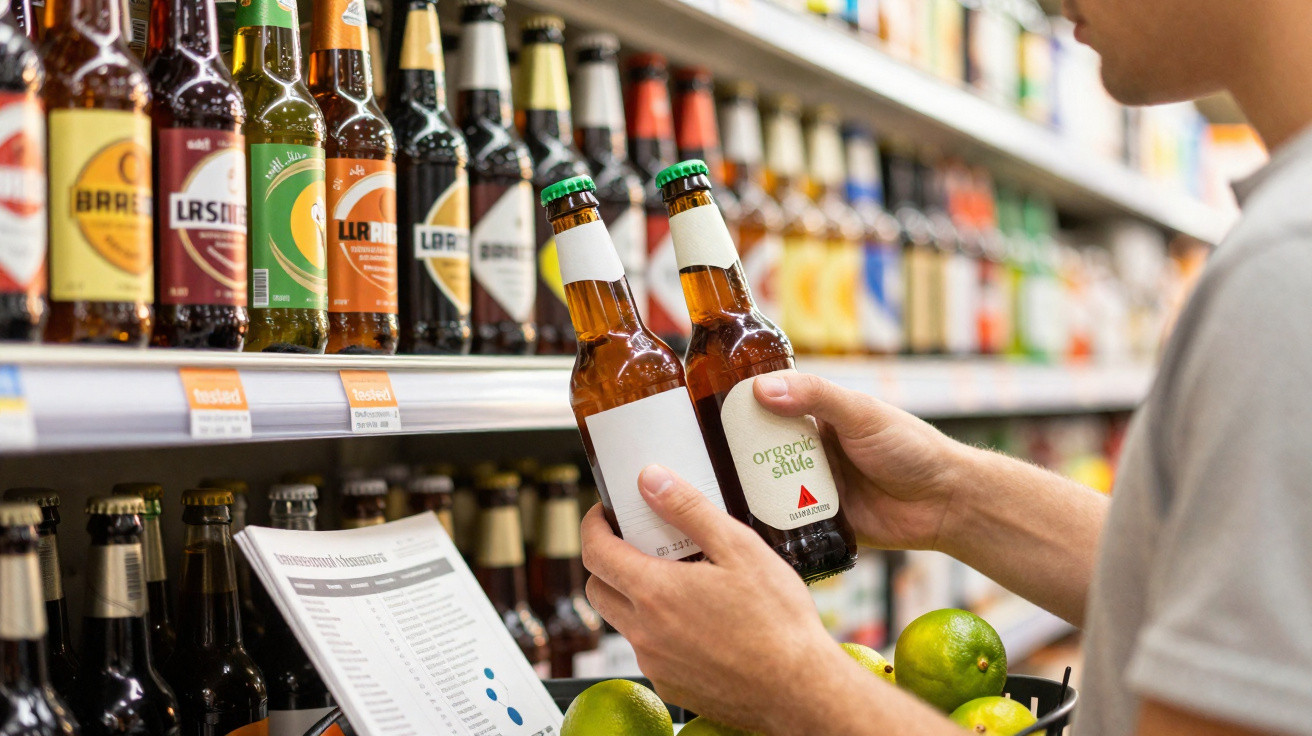
A respected consumer magazine commissioned chemical testing of 45 popular beers sold in supermarkets. The investigation focused on residues from crop-protection products, particularly glyphosate. Its findings have prompted debate: laboratories detected traces of pesticides in most bottles, with three well-known brands performing especially poorly, while others proved unexpectedly clean.
What the testers examined
The study assessed 45 beers with strong demand in France: 39 pale lagers and 6 wheat or white beers. The laboratories screened them for around 250 different pesticide molecules - residues that can originate in farming and cereal cultivation.
The figures were as follows:
- 34 of the 45 beers contained measurable pesticide traces
- 11 beers had no detectable residues
- only four different active substances appeared across the samples
The substances identified were:
- the herbicide glyphosate
- three fungicides: boscalid, folpet and phthalimide
Glyphosate was detectable in 25 beers, including two organic products. Results varied substantially, ranging from roughly 0.41 to 9.23 micrograms per litre. The greatest contamination, approximately 9.3 micrograms per litre, was found in a pale abbey beer.
"The assessment shows that many standard beers contain measurable traces of agricultural chemicals - even though the individual quantities are low."
Is it dangerous, or simply undesirable?
The magazine stresses that the beer samples do not present an acute danger. Its calculations suggest that an adult would need to drink almost 2,000 litres per day of the most heavily contaminated product to exceed the so-called acceptable daily intake for glyphosate. From a toxicological perspective, that is effectively impossible in everyday life.
However, this is where a separate concern arises: people are not exposed through this one source alone. Residues from cereals, fruit, vegetables and drinking water are added to the total. Beer therefore becomes another element of long-term, ongoing exposure to pesticides.
For this reason, the consumer campaigners’ criticism is aimed less at a risk of immediate poisoning and more at broader questions:
- How clean are the barley and wheat that enter the brewery?
- How rigorously do manufacturers monitor their supply chains?
- Why can some producers avoid detectable residues altogether while others cannot?
Three well-known beer brands under particular scrutiny
The report specifically identifies three products as negative examples. The editorial team advises against making them a regular choice:
- Affligem Blonde - an industrially produced abbey beer
- Hoegaarden - a well-known white beer brand
- Itinéraire des Saveurs - a pale beer sold under a retailer’s own label
Pesticide levels in these three brands exceeded the average among the beers tested. Affligem Blonde ranked worst, with the highest glyphosate concentration of the entire test group.
The concerns were not confined to chemical residues. Testers also criticised:
- labels that were unclear or difficult to read
- a lack of information about where the cereals came from
- prices that did not match the quality delivered
"The editorial team is not imposing official bans, but it does issue a clear purchasing recommendation: it is better not to treat these three varieties as everyday beers."
Eleven beers with no detectable residues
There was positive news too: laboratory analysis found no detectable pesticide residues in eleven of the beers assessed. They included major brands that will be familiar to many people in German-speaking countries.
Those named include:
- Heineken Lager
- Carlsberg
- 33 Export
These examples in particular demonstrate that large-scale industrial production does not necessarily result in higher pesticide levels. Some breweries evidently achieve cleaner results through their choice of raw materials and management of suppliers.
How supermarket shoppers can make better beer choices
Anyone wishing to shop more consciously next time can follow several straightforward rules of thumb. They take only a few seconds at the shelf, yet can help distinguish marketing claims from meaningful information.
Check the ingredients list
For beer, the ingredients list is often brief: water, malt, hops and yeast. Even so, anything unusual warrants a closer look:
- Are flavourings or additives listed that would not be necessary in a traditional beer?
- Is the information so vague that it reveals nothing about quality?
Verify where the raw materials come from
An increasing number of breweries state where their barley and hops are sourced, as well as the agricultural standards involved. People seeking lower pesticide exposure should take such details seriously.
Examples of positive signs include:
- specific regions or contract farming arrangements are identified
- references to integrated or organic farming are provided
- information is available about sustainability or quality programmes
Organic beer - the answer, or part of the answer?
Beer carrying an organic label is made from cereals grown without permitted use of synthetic pesticides. This greatly reduces the risk, but it is not an absolute guarantee of zero residues. In rare cases, traces can still occur through spray drift, older stored stocks or contaminated transport routes.
The study supports this picture: two organic beers nevertheless contained measurable glyphosate quantities. Their levels were low, but they show that certification cannot rule out every conceivable source.
Why glyphosate in beer is an issue at all
Glyphosate has been one of the most widely debated active substances in recent years. Farmers primarily use it to control weeds in cereal fields. If residues remain on the grain, they may subsequently find their way into flour, bread - or beer.
The long-term effects of persistent low doses have not yet been conclusively established by science. Some authorities consider there to be no material risk when limits are observed, while other expert bodies urge caution. For consumers, this means that every avoidable source reduces the overall burden.
"Anyone who reduces their general contact with pesticides benefits not only with beer, but across everyday life - from breakfast rolls to drinking water."
Practical advice for mindful beer drinking
Many people do not want to give up their after-work beer entirely, but would like to limit risks and support quality. A combination of purchasing and consumption choices can help in day-to-day life:
- switch brands from time to time rather than always drinking the same variety
- occasionally try smaller regional breweries that communicate openly about their raw materials
- include organic beers as part of the selection
- do not take advertising images of "tradition" at face value; read the labels instead
- pay attention to quantity: drink fewer beers, but choose them more carefully
The final point in particular is often underestimated. People who already drink moderately automatically reduce every type of intake - from alcohol itself to trace substances originating in agriculture.
What this study means for the German-speaking market
Although the beers were tested in French supermarkets, the underlying questions also apply to Germany, Austria and Switzerland. Many of the brands operate internationally, and comparable growing conditions and supply chains are relevant across central Europe.
For consumers in these markets, the core message remains: it is worth examining ingredients and origin, even for seemingly simple products such as a standard pilsner. Supporting breweries that prioritise clean raw materials and honest labelling sends a signal - and will usually offer more in flavour too.





Comments
No comments yet. Be the first to comment!
Leave a Comment