
Written by Steph Lock | Physiotherapist & Pilates Specialist
The core is commonly referred to as a “cylinder” of muscles located in the trunk. This cylinder is made up of:
- The pelvic floor: Forming the bottom of the core, this is a deep group of muscles positioned between the bottom of the spine, the sitting bones and the pubic bone.
- The deep abdominal muscles: The transverse abdominis and oblique abdominis lie beneath the six-pack muscles and around the waist. They guide trunk movement and rib positioning, and are among the first muscles to “switch off” when back pain is present.
- Multifidus: These deep back muscles, alongside the deep abdominals, form the sides of the cylinder. When they become overactive and enter “spasm”, they may contribute to pain. This is generally associated with inactivity and sustained postures.
- The diaphragm: One of the principal muscles used for breathing, the diaphragm creates the cylinder’s upper section.
What the core does
The “core” primarily stabilises the trunk, helps us remain upright and contributes to balance. It enables the spine to move effectively through its full range while also supporting and protecting it.
It activates in response to the way you move, creating a stable foundation from which the arms and legs can function.
The core also preserves the spine’s natural curves, allowing mechanical load to be spread evenly during movement.
It is worth emphasising that moving your spine is not dangerous! It is built to bend in numerous directions and to bear weight; problems usually arise when we stop doing these things.
Core myths: Fake News!
- Core muscles are found in the abdominal region: This is partly true, but the abdominals are only one part of a wider muscle group. The core includes more than the muscles at the front of the stomach: it is the “cylinder” of muscles, including the pelvic floor, multifidus and diaphragm.
- A ‘Six Pack’ equals a good core: False! Completing 1000 sit ups each day does not automatically mean you have a well-functioning core. The six-pack muscle, known as the rectus abdominis, is superficial, whereas the core works at a much deeper level.
- If I keep my core ‘strong and tense’ during exercise, my back is being protected: Fake news! When working to improve your core, it is advised to engage the core muscles gently while ensuring you can still breathe. Trying to fully activate the core during exercise often results in holding one fixed position and stopping your breath. A well-controlled core lets you breathe throughout the movement, helping oxygen reach the muscles and improving how they work. Keeping the core strong and tense may also restrict the spine’s natural movement, placing unnecessary pressure on other joints.
- You should train your core daily: Not true. As with all forms of training, rest days are needed so the body can regenerate, adapt and recover. The optimum amount of core training is 3-4 times a week.
- You can strengthen your core: It’s complicated.. There is no evidence showing that core exercises produce muscle growth. Electromyographic studies, which assess the health of muscles and the nerves controlling them, have examined the transverse abdominis. They found that training does not cause this muscle to hypertrophy, or get bigger; instead, it activates more efficiently and contracts with greater control. Therefore, core work improves muscle efficiency and co-contraction rather than strengthening the core muscles themselves.
How Pilates supports your core
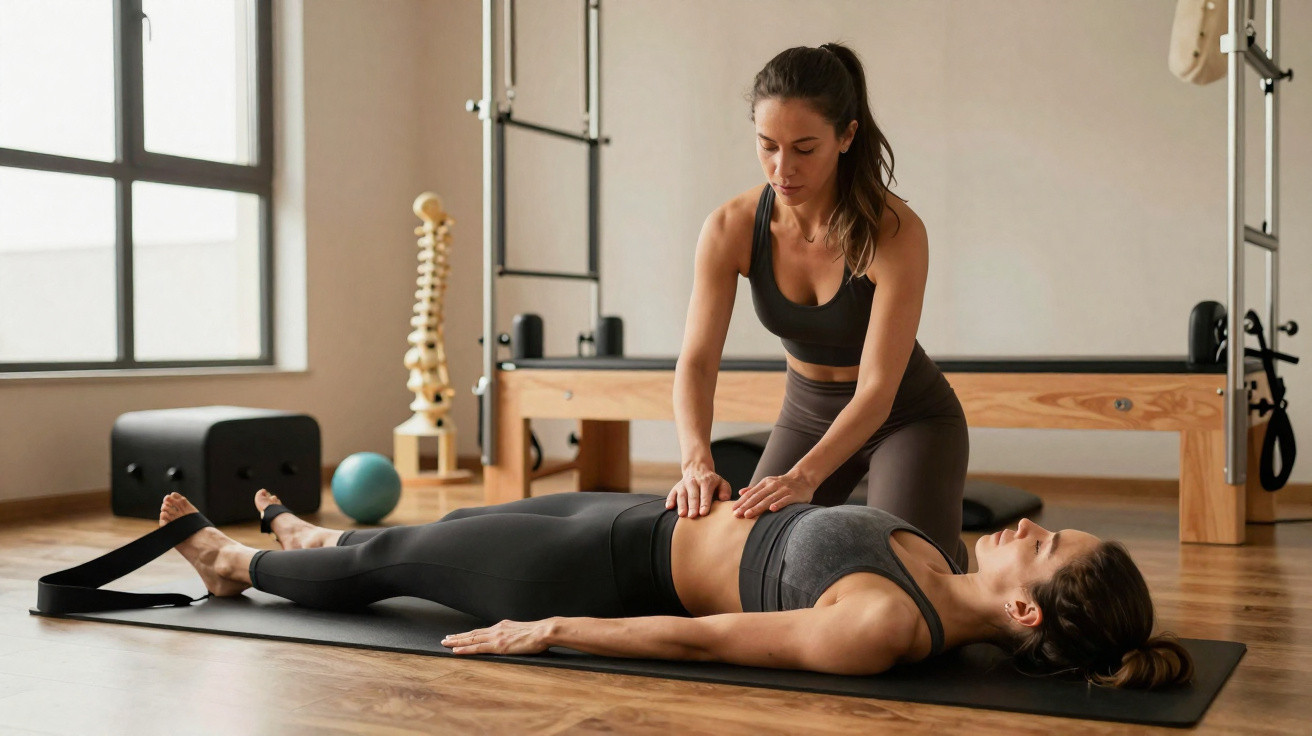
The 5 key elements of Pilates underpin every Pilates practice. They use the core muscles to maintain good spinal alignment, which provides the basis for each exercise. These 5 key elements are taught in a range of positions, beginning in the simplest lying position before gradually developing control and stability by making that posture more challenging.
Before long, this will feel natural, and you may notice this essential posture and control carrying over into everyday activities, whether you are taking washing from the tumble dryer, repairing a car, sitting at a desk or going for a run.
Good luck!!




Comments
No comments yet. Be the first to comment!
Leave a Comment