
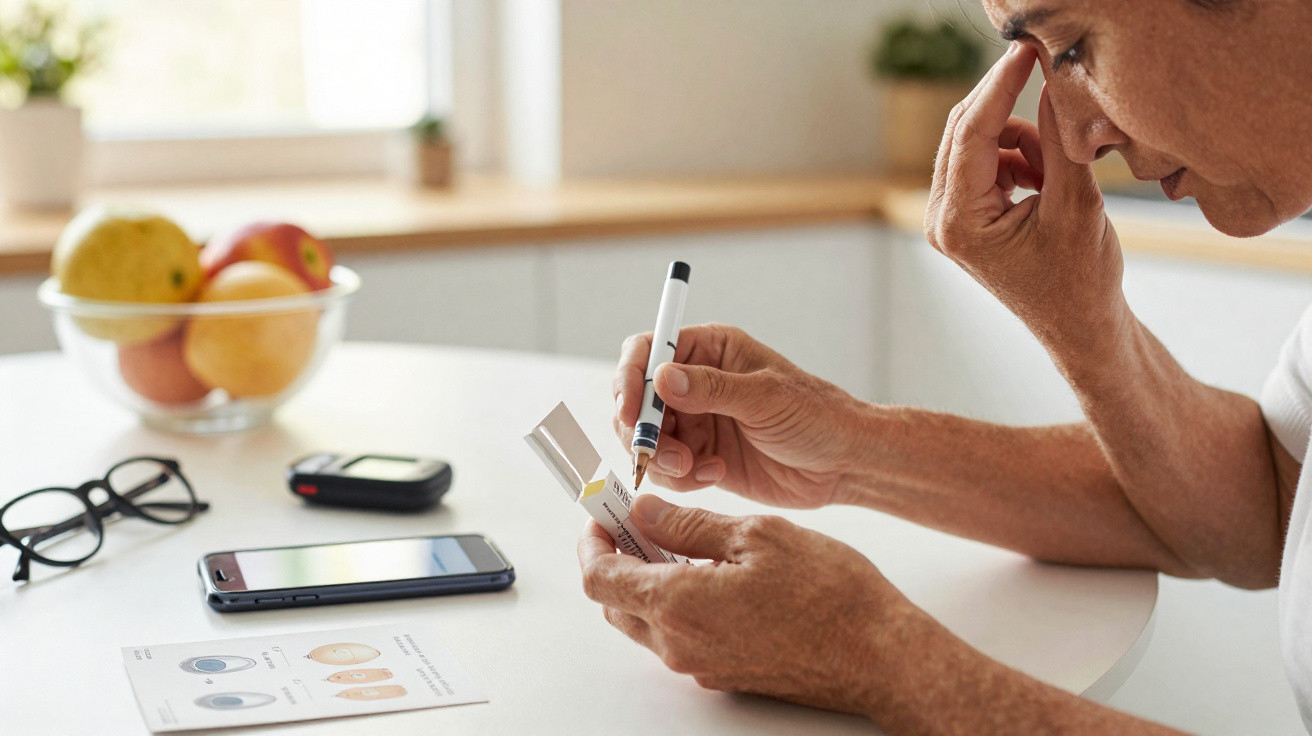
Diabetes medicines have become the focus of a worldwide weight-loss boom. Now, their possible effect on eyesight has become an urgent and uncomfortable concern. Two new studies have heightened concern about vision, bringing caution to a narrative that had previously seemed almost too good to be true.
What the new studies found about semaglutide and eyesight
Semaglutide, marketed as Ozempic, Wegovy and Rybelsus, is part of the GLP-1 drug class. It helps regulate blood glucose and suppresses appetite. Weight falls and cardiometabolic risk improves. However, ophthalmology specialists warn that the optic nerve may not benefit in the same way.
Massachusetts Eye and Ear researchers reviewed records covering 2017 to 2023. They compared people with diabetes or obesity who used semaglutide with comparable patients who did not. Published in JAMA Ophthalmology in July 2024, their results identified more cases of the rare eye condition non-arteritic anterior ischaemic optic neuropathy (NAION) in people exposed to the medicine. Relative risk was around four times higher for people with diabetes, and over seven times higher for people with obesity taking semaglutide. Absolute case numbers were still low, although the finding was sufficiently clear to prompt concern.
In a separate cohort, led by the Karolinska Institutet and the University of Melbourne, the absolute risk was very small - around 0.04% of studied patients - but remained marginally above that of matched controls. Both research groups urge caution in interpreting the findings: diabetes itself increases NAION risk, making a straightforward cause-and-effect conclusion difficult. Well before weight-loss injections made headlines, a 2013 PLOS ONE meta-analysis had associated diabetes with a 64% increase in NAION risk.
NAION is rare. The association with semaglutide looks small in absolute terms, but not trivial for people who already carry eye or vascular risk.
How NAION affects vision
NAION is sometimes described as a “stroke of the eye”. It occurs when the blood supply to the optic nerve head suddenly fails. Sight in one eye may become dim, frequently upon waking. The episode is generally painless, and the resulting harm can be permanent. Ophthalmologists particularly monitor people with a “crowded” optic disc, high blood pressure, sleep apnoea or previous vascular disease. These factors appear to create conditions for greater susceptibility.
- Typical warning signs: a sudden dark area, a curtain across the field of vision, faded colours or quickly worsening blur in one eye.
- Higher-risk profiles: diabetes, obesity, hypertension, sleep apnoea, a crowded optic disc and previous NAION in the other eye.
- Immediate action: stop the injection, obtain an urgent eye assessment, and inform the clinician about GLP-1 treatment.
If vision turns dim or patchy after a jab, treat it as an emergency. Act fast and get the eye examined the same day.
How regulators and clinicians are responding
Europe has acted on this signal. In June 2025, the European Medicines Agency added NAION as a “very rare” adverse effect of semaglutide and recommended stopping treatment if sudden visual symptoms occur. This does not amount to a ban on the medicine. Instead, it changes the discussion around informed consent and monitoring.
Clinicians must now strike a familiar balance. GLP-1 medicines support weight loss, improve glucose control and reduce cardiovascular risk. For many people, those benefits greatly outweigh an exceptionally rare eye event. Risk, however, differs between individuals. Those with sleep apnoea, uncontrolled blood pressure or previous optic nerve problems require more careful follow-up. Shared decision-making is central, alongside clear guidance on symptoms to look out for.
| Study | Population | Outcome measured | Key result |
|---|---|---|---|
| Massachusetts Eye and Ear (2017–2023), JAMA Ophthalmology 2024 | Diabetes and obesity cohorts, >16,000 records | NAION incidence on semaglutide vs no semaglutide | Higher relative risk: ~4x (diabetes), >7x (obesity); absolute numbers remained low |
| Karolinska Institutet & University of Melbourne | Patients on GLP-1 therapy | Absolute NAION risk vs matched controls | Approx. 0.04% absolute risk; slightly above control group |
| PLOS ONE meta-analysis, 2013 | Mixed populations | Baseline NAION risk in diabetes | Diabetes associated with a 64% higher risk of NAION |
What this means for people taking Ozempic or Wegovy
There is no need to panic. For any one person, the likelihood of NAION remains low. Do not stop medication without first discussing it with a GP or specialist. If you are beginning a GLP-1 medicine and have additional risks, arrange an eye examination. Tell your clinician about sleep apnoea, blood pressure concerns or earlier optic nerve problems. Ask for baseline documentation of your vision and optic disc appearance, as this can be useful should symptoms develop later.
During dose increases, keep an eye diary. Record dark spots, visual field changes or alterations in colour perception, and report these without delay. Keep blood pressure under consistent control and obtain treatment for sleep apnoea where needed. Remain well hydrated, particularly if injection-related nausea means you drink less. These straightforward measures support the optic nerve’s blood supply.
Why the optic nerve may be at risk
Researchers are exploring several explanations. One involves microcirculation in the optic nerve head, where alternative blood-flow routes are limited. Fast changes in glucose, blood pressure or vascular tone might push a borderline nerve into ischaemia. Another theory concerns structure: a cramped optic disc offers less space for swelling, increasing the likelihood of a pressure-perfusion mismatch. GLP-1 receptors could also affect vascular reactivity in ways that are not yet fully understood.
Longer-term research is under way. One ongoing project is following around 1,500 patients for five years, using retinal scans, optic nerve structure mapping, and comparisons of events with dose adjustments and metabolic changes. Its purpose is straightforward: to establish who faces increased risk, when that risk is greatest, and which protective measures are effective.
The next phase is precision. Pin down the small group at risk and keep the wider pool on treatment with eyes wide open.
Making informed choices with real-world numbers
Absolute risk is important when weighing treatment choices. A rate of 0.04% means that four in 10,000 treated people experienced NAION in one analysis. Most patients will never encounter it. Yet the consequences are serious if sight is lost. This is why care will be tailored. A person with obesity, hypertension and sleep apnoea may receive substantial cardiovascular benefit from semaglutide, while also needing closer eye monitoring.
Practical advice before and during treatment
- Request a baseline eye examination, including optic disc photography, if you have vascular risk factors.
- Agree a symptom plan covering what to do, whom to contact and when doses should be paused.
- Track blood pressure, particularly overnight if your doctor suspects dips that could deprive the optic nerve of blood.
- Keep changes in glucose gradual while increasing the dose; discuss the pace if you feel unwell or dehydrated.
- Report any change in vision in one eye immediately, even if it resolves by midday.
A few terms may help when discussing this with a clinician. GLP-1 means glucagon-like peptide-1, an intestinal hormone that stimulates insulin and slows gastric emptying. Semaglutide is a GLP-1 agonist. NAION is ischaemic damage to the front part of the optic nerve that does not involve arterial inflammation. It differs from diabetic retinopathy, which affects retinal blood vessels and commonly develops over time.
Alternatives are available if semaglutide is unsuitable. There are other GLP-1 medicines as well as weight-loss treatments that do not use GLP-1. Every option has its own balance of risks and benefits. People who have already experienced NAION in one eye have an increased chance of developing it in the other, so they need an individual plan. The same applies to people whose jobs depend on flawless vision, including pilots, surgeons and electricians.
The message is not that weight-loss injections should be rejected. It is a case for using them precisely. GLP-1 therapy continues to offer substantial benefits for many people. The eye warning is uncommon but genuine. Discuss it early, plan monitoring and respond quickly if symptoms arise. In this way, patients can retain the benefits of modern obesity care while protecting their most irreplaceable sense.






Comments
No comments yet. Be the first to comment!
Leave a Comment