
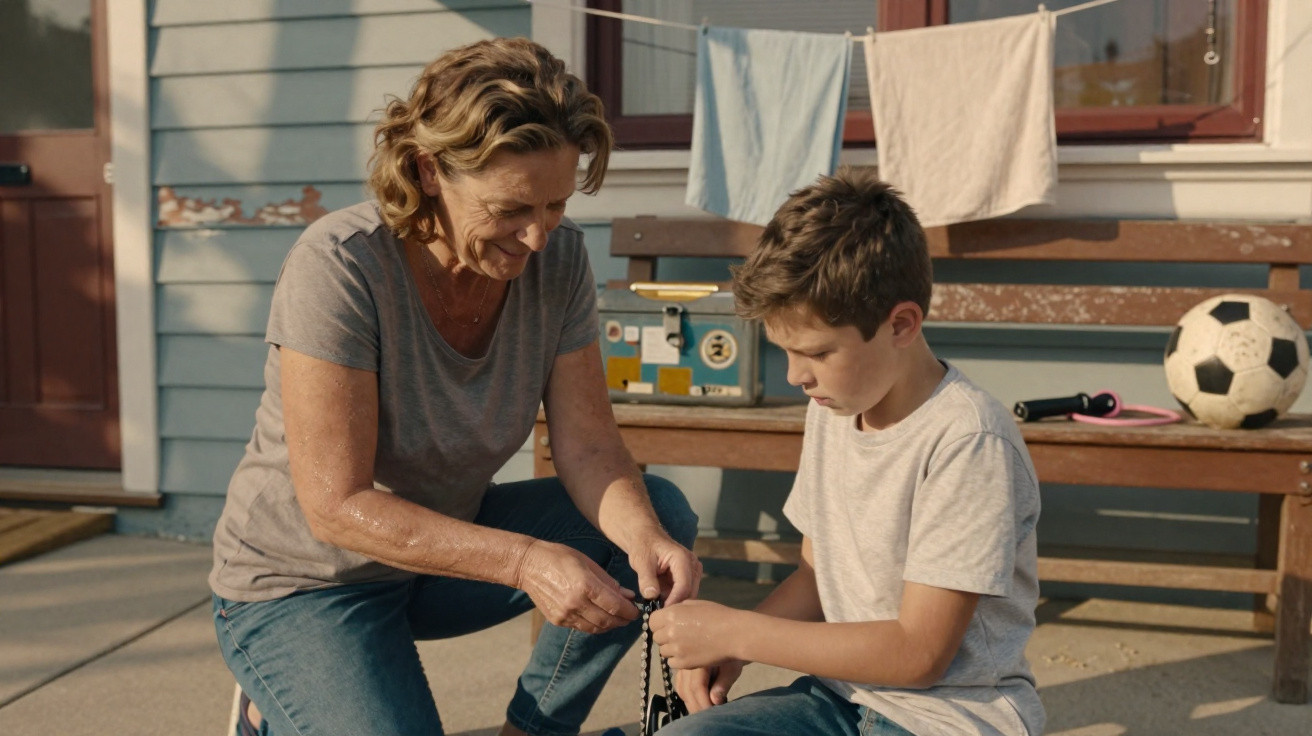
People who grew up in the 1960s or 1970s experienced a world without constant distraction, social media or permanent connectivity. Psychologists see more than nostalgia in this: many people from these generations developed mental abilities that are increasingly being lost in digital daily life – and these are precisely the abilities we need more urgently than ever.
How everyday life once shaped character
Life was not more idyllic, but it was far more immediate. Information took days rather than seconds to arrive. Arrangements were kept because nobody could “cancel at the last minute” via a messaging app. Children more often had to entertain themselves, resolve conflicts face to face and take on responsibility at an early age.
“A lack of comfort built mental resilience – not through special genes, but through daily practice in real life.”
Psychologists refer to “resilience”, “self-efficacy” and “frustration tolerance” – terms that may sound clinical, yet in everyday life they determine whether someone falls apart under pressure or keeps a cool head. Nine of these strengths stand out among many people who grew up during the 1960s and 1970s.
1. Calmness when facing uncertainty
In the past, almost nothing could be checked with an app. People waited for letters, official decisions, exam results or a call from the doctor. These waiting periods cultivated patience and the ability to live with uncertainty without immediately panicking.
Those who repeatedly experienced this as children and teenagers generally develop:
- greater composure when there are no clear answers
- fewer impulsive, frantic reactions
- sounder decisions under pressure
Today, many people are thrown off course when a message goes unanswered for a few minutes. Older generations know what it feels like simply to have to “put up with” things – an underrated mental resource.
2. Recognising emotions without letting them take the wheel
Bills still had to be paid, children cared for and jobs completed, regardless of someone’s mood. This created a mindset in which feelings matter, but do not dictate everything. Psychologists call this “emotion regulation”.
People who possess this skill can, for instance:
- feel annoyed without immediately exploding
- experience fear while still taking action
- be sad without becoming completely paralysed
At a time when so much is instantly shared and commented on, decisions can quickly become driven by gut feeling. The generation of the 1960s and 1970s was more often taught to assess the facts soberly, even in difficult moments.
3. Being content with “enough” rather than constantly seeking “more”
Many households had one car, not three. There were two or three toys rather than an entire room full of plastic. Holidays meant a campsite instead of a long-haul trip. Yet many people still felt rich – in time, experiences and belonging.
“Anyone who learns to be content with simple things becomes less dependent on consumption and comparison.”
Psychologists describe this as an attitude of “contentment”. It protects against envy, constant stress and the sense of permanently missing out. Social networks now fuel that feeling, whereas there was far less of a stage for status symbols in the past.
4. The belief that “my actions make a difference”
Whether it was leaving school, securing an apprenticeship or buying a home, the message was often this: if you want something, you have to work for it. People placed less emphasis on “the system” or “luck”, and more on their own efforts.
In psychology, this is called an “internal locus of control”. People with this outlook:
- do not feel entirely at the mercy of their problems
- try out solutions instead of merely complaining
- have more self-confidence because they attribute successes to themselves
Modern life, by contrast, often suggests that algorithms, crises and politics are all things that happen “from outside”. Earlier generations lived more strongly by the thought: “It is also my responsibility to change something.”
5. Tolerating discomfort without immediately raising the alarm
Waiting on a train without Wi-Fi, being bored in a waiting room or having awkward conversations at a family gathering – these were simply part of life in the past. There were hardly any ways to escape into digital parallel worlds.
As a result, people developed a greater tolerance for discomfort. Psychologists say that those who had to learn to endure tension or unpleasant feelings are less likely to collapse completely when later faced with stress.
“Resilience does not grow in the comfort of the sofa, but through controlled contact with real challenges.”
6. Solving problems practically instead of clicking them away
Broken appliances were repaired rather than immediately replaced. Routes were found using paper maps instead of sat-navs. Misunderstandings were resolved in person, often with a trembling voice – but they were resolved.
Every one of these situations developed problem-solving skills:
- planning amid uncertainty
- thinking step by step
- practical and social creativity
People who build up more experiences of this kind form a robust inner conviction: “I can somehow sort things out.” That feeling acts like a psychological shield during crises.
7. Being able to delay gratification
Many people remember saving for months for their first moped. Waiting weeks for a new book. Having one big television evening each week rather than 200 episodes of a series available at the touch of a button.
This repeated practice of waiting strengthens self-control and long-term thinking. Studies show that children who can delay gratification are later more likely to:
- achieve better qualifications
- have healthier relationships
- show fewer risky behaviour patterns
Today, parents and schools need to develop this ability deliberately because everyday life no longer provides it automatically.
8. Deep concentration without constant stimulation
Reading a whole book in one sitting. Listening to a record from beginning to end. Doing homework without having five chats open at the same time – for children of the 1960s and 1970s, this was normal.
“Anyone who has learned genuine concentration can achieve more in a short time and is less likely to feel completely overstimulated at the end of the day.”
Neuropsychological research shows that continual digital distraction fragments attention. People raised in a quieter media environment often retain the capacity for focused work for longer – a major advantage both at work and in private life.
9. Addressing conflicts directly rather than suppressing them
Ending a relationship by message, muting someone or ghosting them – none of this existed then. Anyone involved in an argument had to talk: at the kitchen table, in the playground or at the office. It could be uncomfortable and sometimes loud, but it was direct.
This fostered two uncommon abilities:
- addressing problems rather than pushing them aside
- remaining emotionally steady when tensions arise
People shaped socially in this way can read body language, recognise subtle undertones and state their own boundaries more clearly. These skills are missing for many younger people who learn communication mainly through screens.
What younger generations can take from this
The 1960s and 1970s were not a paradise. There were severe inequalities, rigid gender roles and little awareness of mental health. Even so, the everyday experiences of that era contain a wealth of lessons that still have much to offer today.
Anyone wishing to bring some of these strengths into their own life can start small, for example by:
- consciously enduring waiting times without a smartphone
- working on one task each day for 30 minutes without interruption
- deliberately delaying small purchases and practising saving
- raising conflicts in person rather than by message
- repairing broken items before buying replacements
Many psychological terms initially seem abstract: “self-efficacy”, “frustration tolerance”, “resilience”. In everyday terms, they refer to very concrete things: trusting yourself, enduring difficult feelings and tackling problems rather than running away from them.
What is particularly encouraging is that these abilities can still be trained at the age of 30, 40 or 60 and beyond. The brain remains adaptable. Every uncomfortable situation that someone consciously faces strengthens their own mental muscle a little.
Above all, the generation of the 1960s and 1970s demonstrates one thing: strength rarely develops in comfort mode. It grows when people take responsibility, do not push discomfort away and refuse to let setbacks define them.





Comments
No comments yet. Be the first to comment!
Leave a Comment