
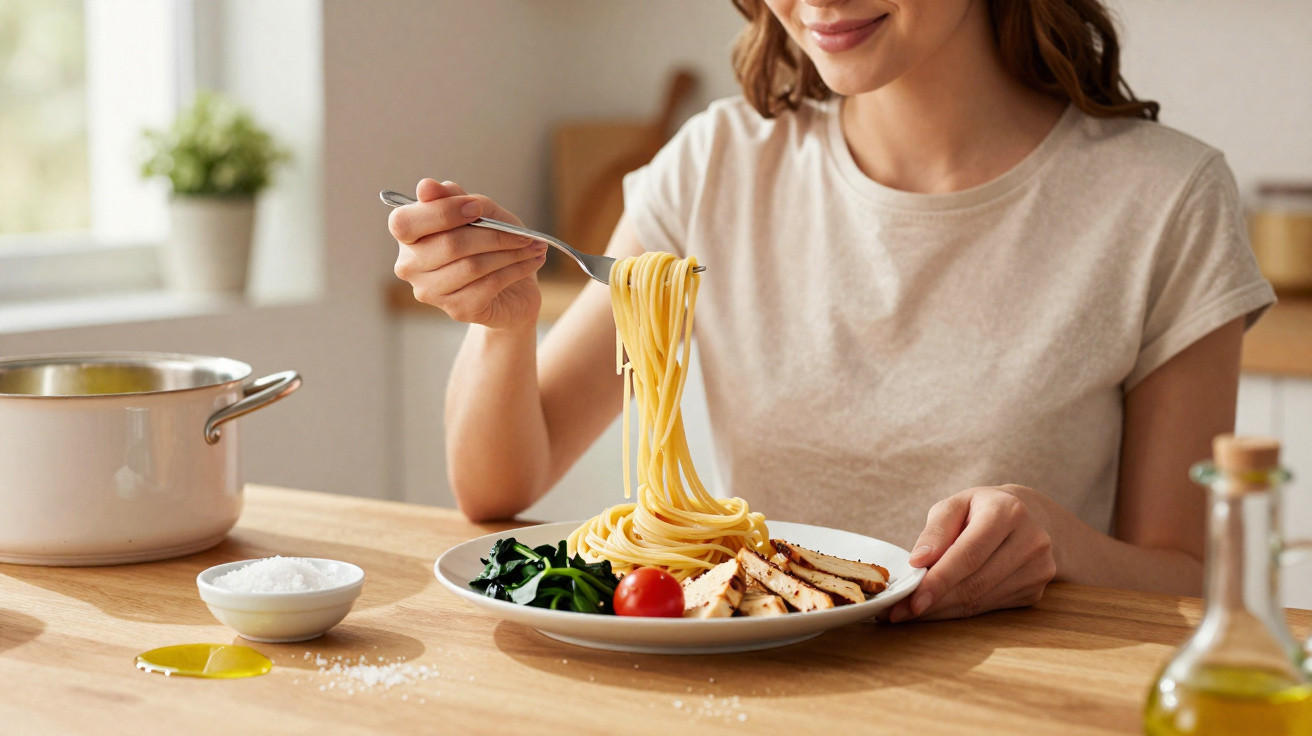
Many people remove pasta from their diet because they fear the calories – entirely unnecessarily, say nutrition professionals.
Portion size and what you pair it with are what matter.
Pasta is seen as both comfort food and a figure-wrecker. There are plenty of myths between those two extremes. So how often can you genuinely eat spaghetti and other pasta without putting your health or waistline at risk? And does it matter whether it is served at lunchtime or in the evening?
How many times a week can you eat pasta safely?
Nutrition specialists largely agree on one point: healthy people who get a reasonable amount of exercise can eat pasta far more frequently than many assume. In traditional Mediterranean cuisines, pasta appears on the menu several times a week, yet people in those regions are not regarded as being particularly overweight.
“Many specialists consider 4 to 5 pasta meals per week perfectly reasonable – provided the portions and side dishes are right.”
Pasta provides complex carbohydrates. When it is combined with protein, vegetables and a little fat, it supplies the body with steady energy and helps prevent major blood sugar spikes. Frequency is not the only deciding factor; the overall diet matters too:
- Someone who barely eats vegetables each day but enjoys large portions with creamy sauce is likely to run into problems even with only two pasta days a week.
- Someone who eats pasta 4 or 5 times a week, chooses relatively small portions and adds plenty of vegetables, pulses or fish can do so successfully – and lose weight.
For healthy adults, around 70 to 80 grams of dried pasta counts as a standard serving. People who are highly active or do physically demanding work often need more carbohydrates and can also manage 90 to 100 grams.
Does pasta automatically make you gain weight?
Pasta owes much of its poor reputation to low-carb trends, which tend to treat carbohydrates in general as the enemy. Research presents a different picture: weight gain is not caused by individual foods, but by consistently consuming too many calories and having a poor balance of nutrients.
“Pasta itself is rarely the problem – the portion size, mound of cheese and creamy sauce around it are much more likely to be the issue.”
Pasta can even help prevent cravings. A sensible lunchtime serving of pasta with vegetables and protein will often keep you full for longer than a small salad with white bread. The body receives slowly released energy, while blood sugar remains more stable.
When pasta really becomes a trap
It tends to become problematic in the following situations:
- Regularly eating huge portions of more than 120 grams of dried pasta
- Choosing extremely calorie-dense sauces made with cream, lots of butter or bacon
- Having very little vegetable matter or fibre on the plate
- Moving too little during the day
- Adding too much white bread, dessert and soft drinks as well
Making small adjustments in these areas means you do not have to cut out pasta; you simply need to approach it differently.
Lunch or dinner: when is pasta better?
For a long time, the rule was that carbohydrates should be eaten only up to early afternoon. This idea is based on the belief that the body uses more energy during the day. There is some truth in that, but it is not an unbreakable law.
Many experts do recommend having pasta at lunchtime where possible. The body is generally more active then, so it has hours to use the energy from the pasta. Even people working in an office can go for a walk afterwards or take the bike rather than public transport.
“Pasta in the evening is not forbidden – a moderate portion and a light topping are what matter.”
A small plate of pasta in the evening can even have a calming effect, as carbohydrates influence the production of serotonin and later melatonin. This may support sleep, provided the plate is not overloaded. Anyone eating late and going straight to bed should simply reduce the amount of pasta and place greater emphasis on vegetables and protein.
Practical examples for different times of day
| Meal | Example dish | Benefit |
|---|---|---|
| Lunch | Penne with tomato and vegetable sauce, plus a little Parmesan | Plenty of energy for the afternoon and lasting fullness |
| Evening | Spaghetti with courgette, garlic, olive oil and prawns | A light meal that still provides enough protein |
| Exercise day | Wholewheat fusilli with lentil Bolognese | Carbohydrates for muscles and protein for recovery |
How to prepare pasta without gaining weight
By combining pasta thoughtfully, you can turn a favourite dish into a complete meal. Three elements are crucial: protein, fibre and healthy fats.
The right partners on the plate
- Vegetables: Broccoli, courgette, peppers, spinach, tomatoes and aubergines add bulk, vitamins and fibre.
- Protein: Chicken, tuna, salmon, prawns, chickpeas, lentils, beans and a little hard cheese.
- Fats: One to two tablespoons of olive oil, nuts or a small amount of pesto are enough to help the body absorb fat-soluble vitamins.
“One simple formula: half the plate vegetables, one quarter pasta, one quarter protein – that keeps the calorie balance under control.”
A plate of spaghetti with courgette and salmon, or pasta with chickpeas and tomatoes, is considerably more filling than pasta with butter and plenty of cheese. Those who often enjoy very creamy sauces can replace some of the cream with passata, a little reduced-fat cream cheese or puréed vegetables.
Which type of pasta suits which goal?
The variety of pasta you choose also makes a difference:
- Wholewheat pasta: Contains more fibre, keeps you full for longer and causes a slightly lower rise in blood sugar.
- Pulse pasta (chickpeas, lentils): Especially high in protein and fibre, and noticeably more filling for many people.
- Traditional durum wheat pasta: Easy to digest and can be balanced out by the other ingredients in the meal.
People managing blood sugar levels or body weight often benefit from including wholewheat or pulse pasta more often – not necessarily every time, but regularly.
Why al dente is more than a matter of taste
Cooking time affects how quickly the body absorbs carbohydrates. The softer pasta becomes, the more easily the gut can break it down, causing blood sugar to rise more quickly.
“Pasta al dente does not only taste better; it also produces a slower rise in blood sugar and often keeps you full for longer.”
For many pasta types, draining it one to two minutes earlier than the packet suggests is enough. Tossing it in the sauce afterwards allows it to continue cooking slightly without turning mushy.
There is another benefit: cooked pasta that has then cooled develops what is known as resistant starch. This behaves partly like fibre in the body and can slightly soften the rise in blood sugar. Leftover pasta from the previous day, briefly reheated in a pan with vegetables, is therefore not only practical but often easy to digest too.
Who needs to follow restrictions?
People with certain medical conditions need to tailor their pasta intake more individually. For example, anyone with diabetes should know their carbohydrate intake precisely and discuss it with their doctor or a nutrition professional. The same applies to severe insulin resistance or digestive disorders.
Traditional wheat pasta is, of course, unsuitable for people with coeliac disease or gluten intolerance. Rice pasta, maize pasta or specialist gluten-free blends are possible alternatives. The core principles remain unchanged: moderate portions, plenty of vegetables and good-quality protein.
Specific ideas for a “pasta-smart” week
What might a week containing 4 to 5 pasta meals look like without calories getting out of hand? For example:
- Monday: Wholewheat spaghetti with tomato sauce, plenty of vegetables and a little Parmesan.
- Tuesday: A break from pasta, focusing on roasted vegetables and fish.
- Wednesday: Pasta with chickpeas, spinach and garlic.
- Thursday: Salad with chicken and bread on the side.
- Friday: Penne with salmon, courgette and olive oil.
- Saturday: A small serving of your favourite pasta, such as carbonara, with extra salad.
- Sunday: A pasta-free day, perhaps rice with vegetables and tofu.
This keeps the diet varied, leaves room for enjoyment and maintains a sensible overall balance.
If you are unsure, weigh your portions for a few days and notice how full you feel. You will quickly develop a sense of the amount of pasta that works well for you personally – and how often it can appear on the table each week without guilt.






Comments
No comments yet. Be the first to comment!
Leave a Comment