
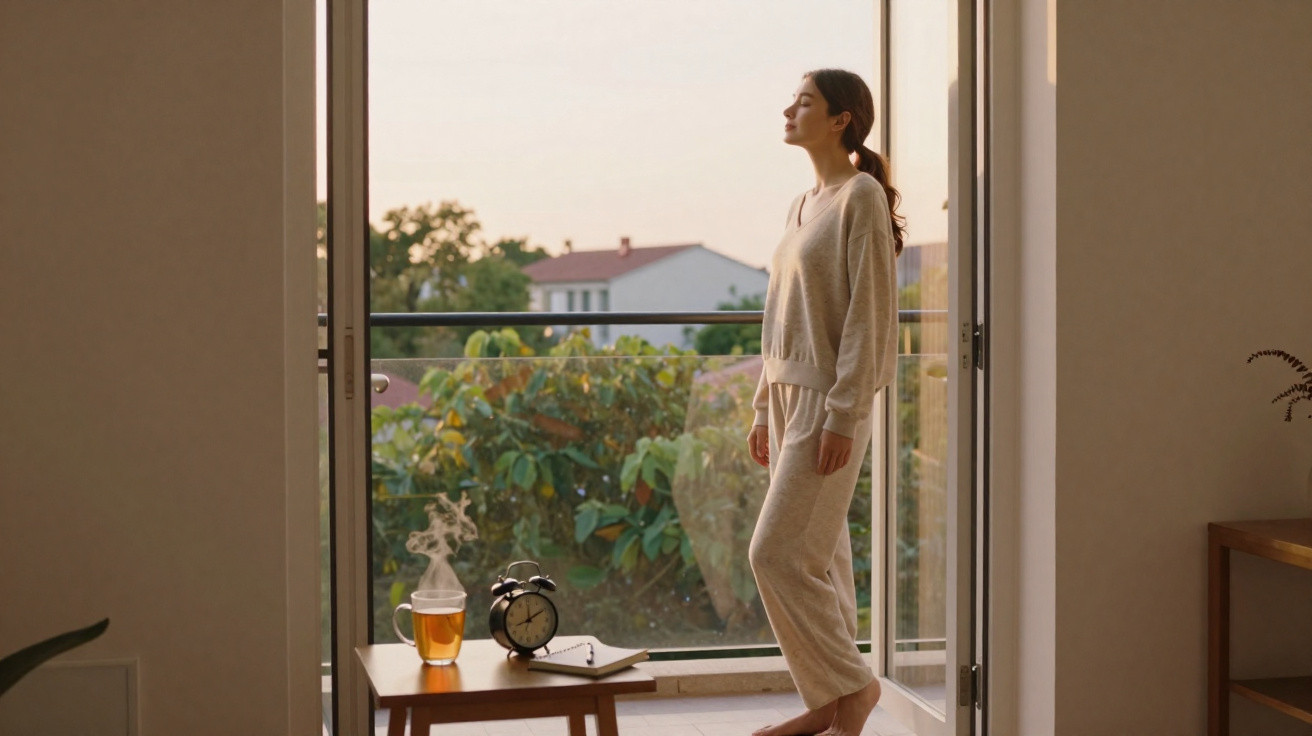
Step outside into daylight during the first hour after waking and your inner weather may stop changing quite so sharply. There are no supplements to buy and no costly equipment required. All you need is your eyes, the sky and a few minutes already available in your day.
The city was only just stirring when I met the wellness expert in a peaceful side street. Dog walkers drifted past, coffees gave off steam, and it was the sort of morning in which you could hear yourself breathing. “Give it a second,” she said, raising her face towards the weak sun as it emerged over the roofs. The brightness was soft, as though a curtain had been pulled back inside my mind. It was subtle rather than spectacular, but noticeable. A neighbour gave a wave. A cyclist sped by. We were not looking into the sun; we were looking at the sky. Within six minutes, my shoulders had relaxed. The expert smiled, explaining that by the end of the first week she often hears people speaking more quietly. On certain mornings, daylight can seem like a reset button. Could this be the mood anchor you have been lacking?
Why first-hour sunlight steadies your inner weather
Your brain contains a master clock that responds well to regular timing. Daylight early in the day, particularly during the first 60 minutes after you wake, tells this clock to begin the day’s chemistry at the proper time. That message arrives through specialised cells in the eyes that react strongly to outdoor brightness. When the signal comes early, the body produces a clear wave of daytime alertness. You may feel less edgy at midday and less overstimulated at night. It is rather like setting a watch once instead of trying to correct it throughout the day.
Take Mara, a nurse whose schedule alternated between late shifts and early starts. As soon as she woke, she started spending 10 minutes on her doorstep, including on overcast days. By the second week, she had stopped doom-scrolling at 3 a.m., while her partner said she seemed “less spiky” by dinner. This is not magic. Clinical light therapy has been used for years to support people who experience seasonal dips in mood when daylight is limited. Bright early light, preferably outside, has been associated with improved sleep quality, more even energy and fewer mood swings in winter and summer alike.
The reasoning is straightforward. Morning brightness reaches melanopsin-containing retinal cells, which signal the brain’s suprachiasmatic nucleus, the circadian pacemaker. A correctly timed pulse of light regulates the cortisol awakening response, your built-in “get up and go”, so that it arrives at the appropriate size and time. When that rise happens as it should, the stress system follows a pattern rather than becoming a struggle. Daylight also supports serotonin pathways during the day and helps turn that signal into melatonin at night. In practical terms, brighter mornings can bring calmer afternoons and greater sleepiness at bedtime. This is not merely psychological; it is part of your wiring.
How to use morning light without overthinking it
Go outdoors within an hour of waking and look towards an open patch of sky. Direct sunlight does not need to enter your eyes, and you should never stare at the sun. Simply allow broad daylight to fill your field of vision. Five to 10 minutes is sufficient on a clear morning. When it is cloudy, stay out for 15–30 minutes. If comfortable, leave off sunglasses for this short period, while continuing to wear prescription glasses or contact lenses if you use them. Attach the practice to something you already do automatically, such as drinking coffee, walking the dog or watering plants, so it fits the morning you already have.
Typical errors include doing it behind a window, where glass filters the wavelengths that help set your clock; leaving it until late morning; or believing grey skies do not help. They do, and cloud cover can diffuse the light beautifully. Everyone has had mornings when the bed seems magnetic; go outside regardless, even if you are wearing a hoodie. If you work nights, make your first “morning” after your main sleep the target, even when it is afternoon outside. Apply sunscreen to exposed skin if you plan to remain outdoors, as this is about safely receiving ambient light through the eyes, not sunbathing.
No one manages this every day, so aim for most days rather than perfection.
“Your mood isn’t a mystery,” the expert told me. “It’s a rhythm. Morning light is the conductor’s baton-short, clear, and on time.”
- Head outdoors within 60 minutes of waking.
- Direct your attention towards the sky rather than the sun, keeping your gaze easy.
- Spend 5–10 minutes outside when it is sunny and 15–30 minutes when it is cloudy. Stay longer in deep winter.
- Avoid windows. If you can do so comfortably, briefly go without sunglasses; never push yourself.
- Link it to an existing habit: coffee, stretching, a short walk or phoning a friend.
A small morning light ritual with outsized returns
First-hour light is straightforward, almost dull, and that simplicity is precisely its strength. It is an effortless lever that supports your system upstream, before the day’s notifications begin pulling at your attention. The expert described it as “mood hygiene”, and I kept returning to the thought that many of us attempt to solve a midday problem with willpower when the answer begins at 7:12 a.m. It is not a cure-all, but it is a dependable prompt.
Give it seven mornings, then pay attention to what changes. Your appetite may arrive sooner. Perhaps your afternoon coffee starts to feel unnecessary. You might get to sleep a little more quickly, or find that traffic delays leave you less on edge. It may even become the quietest moment in your day-five minutes when your phone remains in your pocket and the sky does the talking. Mood responds to rhythm, and rhythm benefits from repeated cues. Light is the most straightforward cue available to us.
When winter cloud cover closes in, continue with the ritual and consider a 10,000-lux light box as a back-up in particularly dark latitudes. If you have bipolar disorder or a seizure condition, speak with your clinician about adapting the timing: early light can be potent, and potent tools require care. For most people, it can be as fundamental as brushing your teeth: a small, consistent ray of structure in a loud world.
| Key point | Detail | Benefit for the reader |
|---|---|---|
| Morning light sets your clock | Outdoor brightness during the first hour calibrates cortisol and circadian rhythm | Fewer mood swings and steadier energy throughout the day |
| Brief, safe exposure works | 5–10 minutes if sunny; 15–30 if cloudy; do not stare at the sun | A practical habit that suits busy mornings |
| Windows do not count | Glass filters key wavelengths; go outside or use a light box in winter | Maximises results without wasting time |
FAQ:
- Does it still work if it’s overcast or raining? Yes. Daylight under cloud cover remains far brighter than indoor lighting. On cloudy days, stay outside for 15–30 minutes, using a porch if necessary.
- Can I wear sunglasses or a hat? If it feels comfortable, briefly remove sunglasses to receive the light signal. A hat with a brim is fine. Never force yourself if you are light-sensitive; spend a few additional minutes outside instead.
- What if I wake before sunrise? Begin your day with indoor lighting, then go outdoors once the sky becomes brighter. In deep winter, consider placing a 10,000-lux light box on a table at eye level.
- Is this safe for eyes and skin? Do not look directly at the sun; look towards the sky instead. Put sunscreen on your skin if you will remain outside for longer. If you have an eye condition, ask your clinician about sensitivity.
- Will it help me sleep better at night? Often, yes. Early daylight moves your clock forward so melatonin rises sooner. Within 1–2 weeks, many people fall asleep more quickly and feel better rested.






Comments
No comments yet. Be the first to comment!
Leave a Comment