
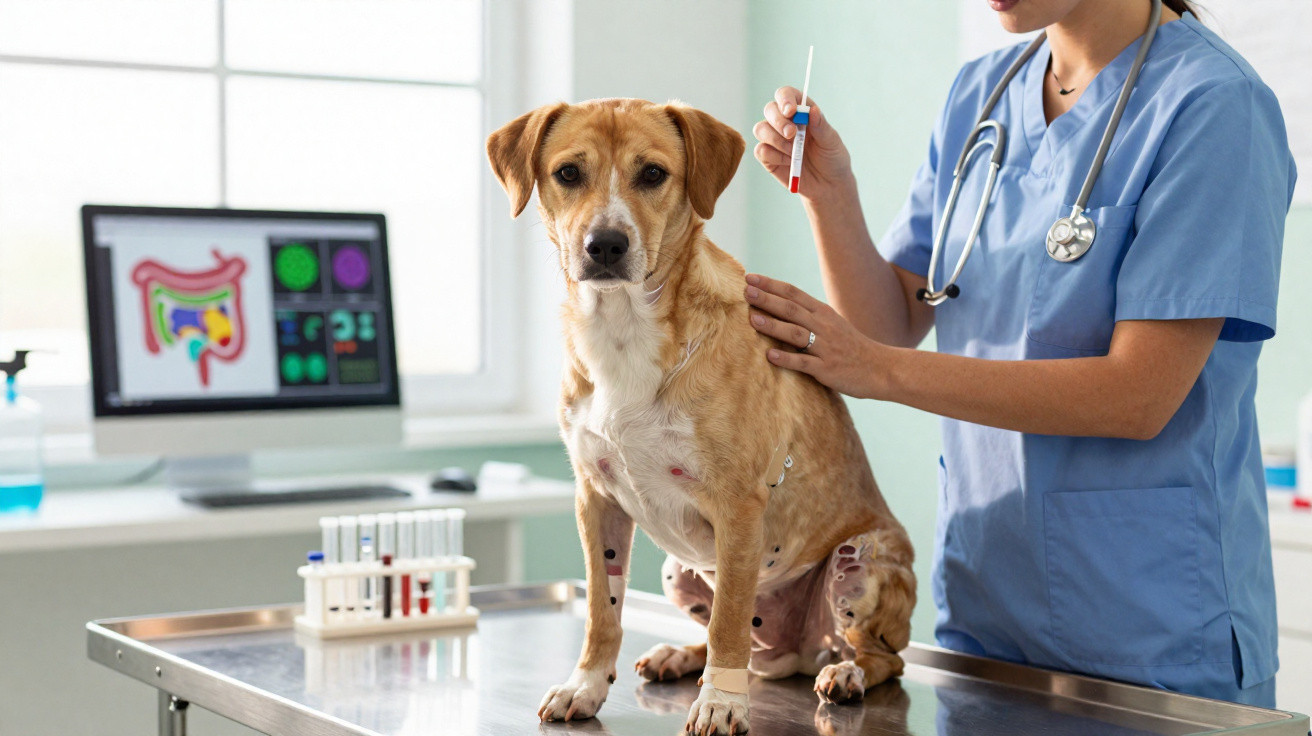
No pet owner wants to confront this reality, yet about 6 million dogs in the United States are diagnosed with cancer each year. Heartbreakingly, cancer is the leading cause of death in dogs. Even so, scientists are pursuing new ways to tackle it.
New research indicates that particular bacteria in the gut microbiomes of dogs with cancer may be connected with how long they live following immunotherapy.
"Studies in humans have linked specific gut microbiome signatures to clinical outcomes in cancer patients receiving immunotherapy, highlighting their potential as diagnostic or prognostic biomarkers," the researchers write in their published paper.
Could this also apply to dogs?
Dog gut microbiome and cancer immunotherapy
Fifty-one dogs with cancer at the Bridge Animal Referral Center in the United States took part in a clinical trial of a cancer immunotherapy vaccine that has already delivered promising results.
The vaccine supports the immune system in combating tumour growth by blocking two proteins, EGFR and HER2, which are overexpressed in certain cancers. The aim is to offer dogs with cancer more good-quality time with their families, even where a complete recovery is not possible.
However, a dog's immune system does not operate in isolation. It functions within a densely populated community of microbes that have their own roles. Decades of research have demonstrated that bacteria, fungi and other microorganisms in the intestinal tract can influence an animal's immune response, both in the gut and elsewhere in the body.
By examining rectal swabs from the dogs at Bridge and tracking their survival after treatment, the researchers found 11 bacterial types that seem to influence the vaccine's effectiveness.
Four of these bacteria were linked to longer survival after treatment, while seven were associated with shorter survival. The connections remained regardless of the dog's breed or type of cancer.
This points to the possibility that gut bacteria may shape a dog's immune response even to cancers outside the intestine, including osteosarcoma, a form of bone cancer, and haemangiosarcoma, a cancer of blood vessels.
The research did not investigate the processes through which these bacteria may alter outcomes in either direction; that will need to be addressed in future studies.
What the findings could mean for dogs with cancer
"Our study is a first step toward using the gut microbiome as a tool to develop prognoses and to manipulate cancer, not just in dogs, but potentially as a model for human treatments as well," says Natalia Shulzhenko, who researches host-microbiota interactions at Oregon State University.
Both the research and the immunotherapy itself are still at an early stage. Nevertheless, the results suggest that microbial interventions, such as probiotics or faecal transplants, might one day complement the canine cancer vaccine.
"In the future, an analysis of a microbiome swab could help predict how well a dog might respond to a cancer treatment," Shulzhenko says.
"This allows pet owners and vets to make more informed decisions about care. And now that we know certain bacteria are linked to survival, we can explore ways to 'fix' a dog's gut microbiome to help the vaccine work better and help the dog live longer."
The study was published in Veterinary Oncology.






Comments
No comments yet. Be the first to comment!
Leave a Comment