
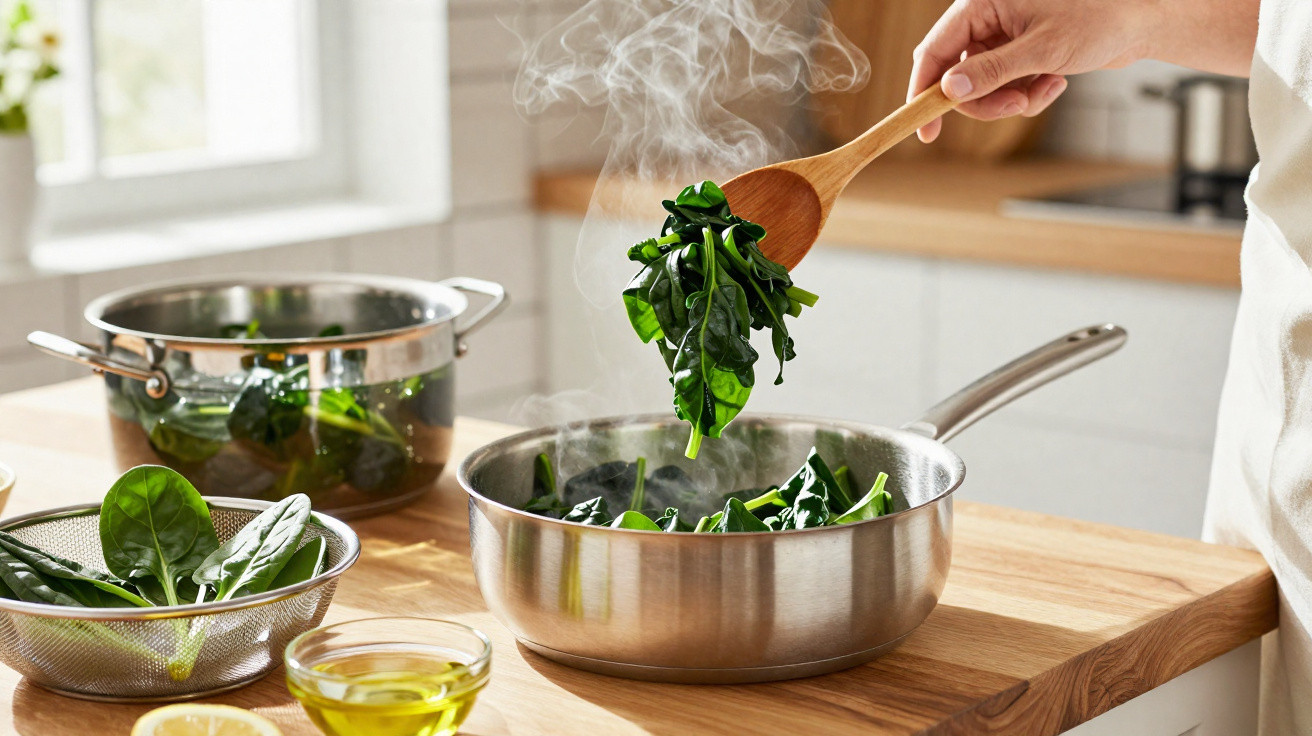
The best way to cook spinach while retaining its nutrients is to use gentle heat, very little water and a short cooking time. A quick sauté or a few minutes of steaming better protects its vitamins, minerals and texture, helping the leaves retain their colour, flavour and some of their nutritional value.
Why does preparation affect spinach nutrients so much?
Spinach is a leafy vegetable containing fibre, folate, vitamin K, magnesium, potassium and plant-based iron. Its delicate leaves can lose some of their more heat-sensitive nutrients when overcooked, while becoming excessively wilted.
However, brief cooking can make it easier to eat and reduces the leaves' volume, making it possible to serve a larger amount on the plate. The key is to avoid turning the process into prolonged boiling.
Which method best preserves iron and vitamins?
Quick sautéing and steaming are both suitable options, as they require minimal water and little time. This softens the spinach without entirely losing its green colour or releasing as many nutrients into the cooking liquid.
- Quick sautéing: retains flavour and limits losses caused by excess water.
- Steaming: softens the leaves without submerging them.
- Microwaving: can work well with a few drops of water and a short cooking time.
- Raw: preserves texture and vitamins, although it may be less comfortable for some people to digest.
- Boiling: should be avoided or limited to an extremely short time.
What mistakes cause spinach to lose nutritional value?
The most frequent mistake is cooking it for too long. If spinach becomes dark, soft and leaves plenty of water in the pan, it has already lost some flavour and soluble compounds.
- Boiling the leaves in a large volume of water, then discarding the liquid.
- Keeping spinach over the heat until it loses its vibrant green colour.
- Chopping it too long before washing and cooking it.
- Reheating the same portion several times.
- Adding too much salt to make up for lost flavour.
How should spinach be cooked to the right point?
For a sauté, wash the leaves thoroughly, drain them and add them to a frying pan with a drizzle of olive oil and garlic, if desired. Stir for 1 to 3 minutes, only until the leaves wilt. Ideally, switch off the heat while they are still green and moist, but not waterlogged.
When steaming, cooking should likewise be brief, taking around 2 to 4 minutes. Once cooked, avoid squeezing the leaves too firmly, as this can remove some of their natural juices and leave the spinach without texture.
How can you make better use of its nutrients when eating it?
Spinach contains plant-based iron, which is absorbed less readily than the iron found in meat. To improve absorption, pair the leaves with vitamin C sources such as lemon, orange, tomato or pepper, preferably added after cooking.
The best approach is to alternate between raw spinach in salads, quick sautéed spinach and steamed spinach. With limited heat exposure, little water and well-matched foods on the plate, the leaves better retain their flavour, colour and an important part of their nutritional properties.






Comments
No comments yet. Be the first to comment!
Leave a Comment