
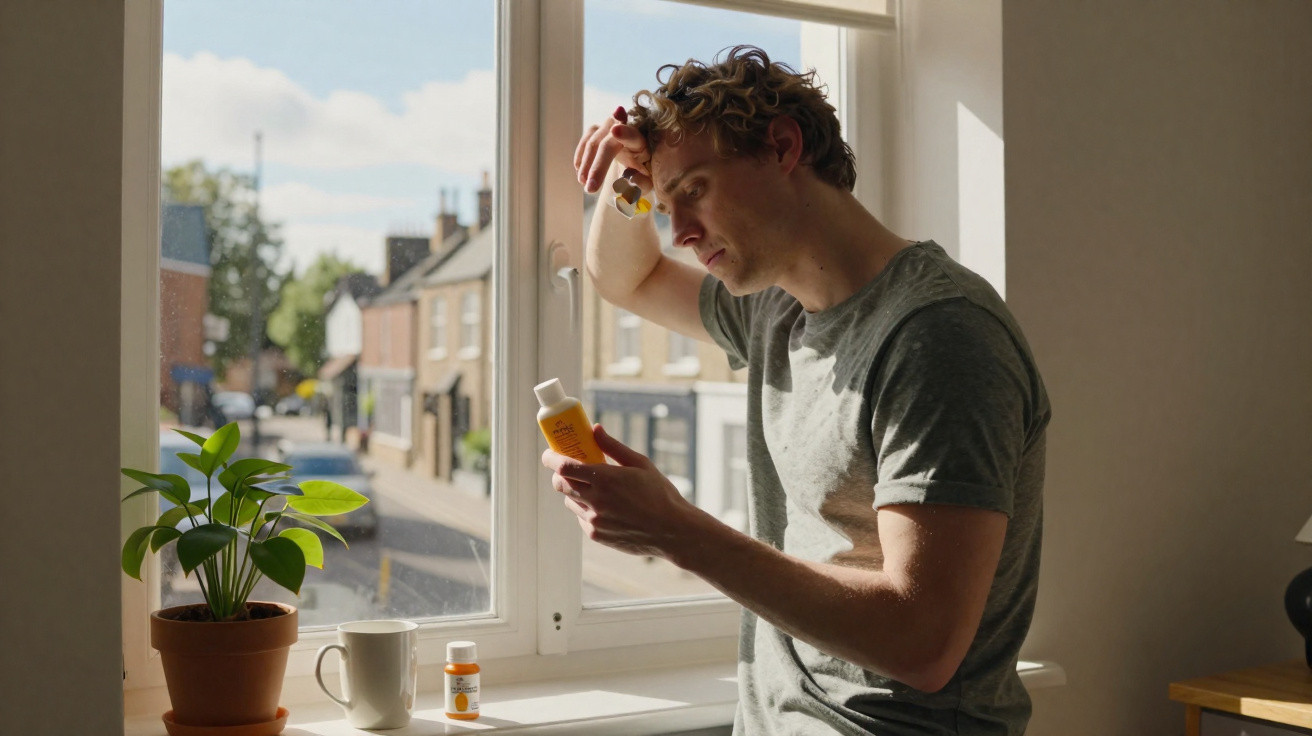
You might imagine that a British summer, once it eventually arrives, would put almost everything right. The jumpers are packed away, pub gardens are rammed, and we all head outdoors to “top up our vitamin D” like sun-seeking batteries. My friend Emma was that person this year: out for a walk each morning, meticulous with her SPF 50, and feeling both healthy and slightly self-satisfied. Then her GP called with her blood-test results and said “deficient”. In August. During a heatwave. She looked at her phone wondering how she could possibly still be low.
If you apply high-factor sunscreen liberally like the sensible adult you are, yet still develop vitamin D deficiency, you are far from the only one. That sluggish mid-afternoon feeling, the delicate mood that never quite shifts, the sore muscles you put down to “getting older” - all can be easy to overlook. Yet it is quietly disconcerting when your body seems to suggest something is absent, and the test results confirm it. The odd thing is that you may be following precisely the advice you have always been told is “right”. That is when things become more complicated.
The summer lie we like to believe
In the UK, we tend to cling to a comforting myth: summer appears, daylight stretches out, and any vitamin D problems simply disappear. We imagine soaking up sunshine at barbecues, taking the dog through warm evening light, and collecting rays like a houseplant by a window. In practice, much of that time is under clouds, in shade, behind windows or protected by sufficient SPF to cope with Mercury. We then seem shocked when a September blood test reveals we are still running on empty.
Most of us know the moment when a GP asks, “Do you get out in the sun much?” and we immediately reply, “Yes, loads,” before reconsidering. But do we? Or are we counting the dash from the front door to the car, or from the office to Pret, and treating a ten-minute walk to the station as “plenty of sunshine”? The difference between the outdoor life we imagine and an ordinary weekday reality is wider than we care to acknowledge. Vitamin D exists right within that uneasy space.
There is also an unstated assumption that every warm day delivers plenty of vitamin D. A misty afternoon with bare arms can feel like summer, but if the UV index is low - or your skin is coated in factor 50 - your body may create very little. It is rather like believing your muscles will become toned merely by sharing a room with a gym. A nice thought, but not the way the body functions.
How sunscreen quietly changes the vitamin D equation
This is the part that feels particularly unfair: the product protecting you against skin cancer can also stop the UVB rays your skin requires to produce vitamin D. When high-SPF sunscreen is applied correctly and regularly, it can substantially reduce vitamin D production. That is what it is made to do. SPF 50 does not merely block a small amount; it prevents the overwhelming majority of burning UVB, the same wavelength that starts your skin’s vitamin D-making process. There is nothing wrong with you. Your sunscreen is simply doing its job exceptionally well.
Most of us do not follow sunscreen instructions precisely - two full finger-lengths for the face, a shot-glass quantity for the body, reapplied every two hours and again after swimming or sweating. Honestly, almost nobody manages that daily. But if you are among the unusual few who come close - the conscientious, fair-skinned, anti-wrinkle crowd who do not let their nose meet daylight - your vitamin D production may be significantly affected, particularly in a country where sunshine is already limited for half the year.
The face, the arms, and the bits that never see light
One seemingly minor point matters: which areas receive the sunscreen. Many of us put SPF 50 on our face every day, whether to prevent skin ageing or cancer, and perhaps cover the arms and chest on bright days. When your face is permanently protected and you wear long sleeves at work most of the time, very little skin remains to take on the work. One exposed patch of wrist will not magically raise your levels, however reliably you stroll to the coffee shop.
For those who cover their bodies for cultural, personal or medical reasons, the impact can be greater still. A person wearing long sleeves and a head covering, alongside high-SPF sunscreen, may spend hours outside while producing hardly any vitamin D. The sunshine is present, as is the heat. But the skin and the rays do not properly come together in the way required.
Why you still feel tired when the skies are blue
Feeling low when the weather has finally improved is especially irritating. Winter blues make sense: January’s gradual heaviness, darkness arriving at 4pm, and the urge for carbohydrates and pyjamas. But in July, when you are dragging yourself through the afternoon as though your brain is moving through custard, it seems all wrong. You may blame work, sleep, your phone or anything else, except the hormone quietly connected to mood and energy.
Vitamin D is not solely about bones. It has a part in immune function, muscle strength, inflammation and even the way our brains keep going. Reduced levels may show up as indistinct tiredness, a weaker grip, more colds or a persistent flat feeling that is difficult to describe. It is not a dramatic, soap-opera-style illness. It is simply life seeming a little more difficult than it ought to. On hearing “deficiency”, you may picture rickets from a Victorian history book rather than an exhausted 35-year-old scrolling on the sofa.
A quiet sense of shame can slip in too. How can you be “low” in sunshine when open parks and Instagram sunsets surround you, and endless wellness posts urge you to “go outside more”? It can seem like failing at something basic, such as not drinking sufficient water or pressing snooze three times. You might shrug it off, promise yourself you will buy “some vitamins at some point”, then remain quietly stuck in the same place.
The British latitude problem nobody really talks about
A dull-sounding word has considerable influence here: latitude. The UK is sufficiently far north that, from approximately October until March, sunlight does not contain enough UVB for skin to make vitamin D, regardless of how boldly you stand outdoors in shorts. You could lie in the midday sun in Edinburgh during November and produce virtually nothing. The sun is visible, but its angle is unsuitable for the chemistry your body needs.
That means spring begins with many of us already at a disadvantage. By May or June, plenty of people have become significantly depleted over winter. Summer then arrives as both a rescue operation and a race against time. If weekends are full, weekdays happen mainly indoors and the brief periods you spend outside involve SPF 50, your levels might not recover as much as expected. The tank does not quite get replenished.
Clouds, work, and real-life sunlight
There are also clouds, unreliable weather and everyday life to contend with. Hot days do happen, but so do weeks of grey, blustery drizzle when summer barely feels like summer. Many people work through the hours when UVB is at its strongest, beneath strip lighting and air conditioning, and only go out after the sun has already begun to drop. Fifteen warm minutes on the balcony may be pleasant, but it is very different from a midday walk for vitamin D production.
This is why sunscreen becomes more than a minor consideration. Someone working nights or lengthy shifts, who only sees sunlight at unusual times, may have just one meaningful opportunity for their skin to produce vitamin D: a short spell around midday. If that opportunity is consistently blocked by high-SPF sunscreen and clothing, the balance shifts in the wrong direction. You gain all the skin-risk protection, without much return for your bones, muscles or mood.
Can you have both: strong sun protection and decent vitamin D?
This is the question many people carry in the back of their minds: must I decide between preventing wrinkles and preventing deficiency? The brief answer is no, although it may require a different idea of what being “sun-safe” means. Dermatologists are correct to emphasise SPF: skin-cancer rates are increasing, while childhood burns and repeated burns in adulthood are genuine concerns. Still, many experts quietly recognise that a short period of unprotected sunlight on bare skin, at an appropriate time, can help with vitamin D.
Some people choose a middle route: they spend 10–15 minutes in midday sun with relatively large areas, such as their arms and lower legs, uncovered before putting on sunscreen, particularly in late spring and early summer. This is not permission to lie in the sun until you burn, but a brief and deliberate window. Others, particularly people with very fair or sensitive skin, avoid this altogether and choose supplements, allowing tablets rather than sunshine to do the work. Either option can be valid; what matters is making a considered choice rather than guessing.
Supplements, food, and the quiet back-up plan
Diet alone seldom delivers enough vitamin D to correct a real deficiency, although it can add a little to your overall supply. Oily fish, egg yolks, liver, fortified spreads and cereals each provide small amounts. For many people, the genuine difference-maker is a daily supplement, particularly in places such as the UK, where health authorities already advise taking one through the darker months. A straightforward capsule or spray can support your levels in the background while you continue using SPF carefully.
There is something reassuring in knowing that daily perfection is unnecessary. You can wear SPF 50 on your face throughout the year, choose shade, avoid burning entirely, and let a small tablet make up the difference. For people covering most of their skin, or those with darker skin who make vitamin D more slowly, this is not “cheating”; it is a sensible practical solution. The real concern is not sensible supplement use - it is spending years shrugging and assuming summer sunshine will somehow resolve everything when it does not.
The quiet warning signs you might be ignoring
Vitamin D deficiency does not make everyone dramatically unwell. Some people merely feel… not quite right. Your legs may ache after a brief walk, shopping bags may seem harder to grip, or you may tire sooner than before. Perhaps you keep catching colds, or your mood drops for no obvious reason even though life seems fine on paper. It is easy to label these things “stress” or “getting older”, particularly when nobody around you appears visibly concerned.
Then there is the mildly awkward GP discussion after a routine blood test. They may say you are “on the lower side” or that “we’d like to supplement you for a bit”. Most people agree, take the prescribed high dose, tell themselves they will “go outside more”, and leave the surgery straight back into the habits they had before. There is no spectacle or blue flashing lights, only a quiet turning point where you either take notice or carry on drifting.
What is frequently overlooked is how gradually this develops. You do not wake up one day with “vitamin D deficiency” across your forehead. It may take months or years of borderline results, combined with patterns such as regular high-SPF use and an indoor lifestyle, before you cross the line. Once you sense that something is wrong, the behaviours involved are so familiar that they become invisible: commuting, office hours, sunscreen, shade and evenings indoors. The pattern forms while you are barely aware of it.
Rethinking what “healthy sun” looks like
There is an emotional side to this worth acknowledging openly. Many of us apply high-factor sunscreen from fear: fear of burning, ageing or that suspicious mole we repeatedly check in the mirror. Some have watched someone close to them experience skin cancer, or have had a biopsy themselves, so the SPF bottle becomes a form of armour. Learning that this same armour could be contributing to lower vitamin D can feel like a betrayal, as though health advice has contradicted itself again.
Perhaps the solution is not to pick a side - sunscreen or sunshine - but to become more curious about your own circumstances. How regularly do you genuinely stand in midday light with some bare skin before you reach for the bottle? Do you know your most recent vitamin D result, or are you estimating it from the amount of “outdoorsy” social-media content you have viewed this week? A blood test, a modest supplement, a few purposeful minutes in the sun and dependable SPF afterwards need not be dramatic. It is simply a more understated and truthful version of “being healthy” than relying on vague assumptions and half-remembered headlines.
The next time you sit in a café garden, warmth on your arms and a missed white line of sunscreen visible at your wrist, you may think about what your skin is doing below the surface. It is not only ageing or freckling; it is attempting to produce a hormone on which your whole body quietly depends. You’re allowed to protect your skin and still ask whether your vitamin D needs a bit of help. That is neither vanity nor fuss, but the sort of adult attention our sunshine-filled, sunscreen-coated summers rarely receive.






Comments
No comments yet. Be the first to comment!
Leave a Comment