
Across Europe and North America, strikes, severe weather and geopolitical strain continue to show how vulnerable supermarket supply chains can be. The natural response is to take whatever remains on the shelves, whether that is cooking oil or tinned puddings. Yet crisis experts say a compact, carefully chosen reserve is more useful than a packed-out bunker – and that just five everyday foods can meet most essential needs.
Why your “emergency cupboard” should be compact and practical
Guidance from emergency organisations across Europe, including the French Red Cross and civil-protection bodies, broadly agrees on one principle: households should be capable of coping without external support for at least 72 hours, and preferably for several weeks.
This is not a call to fill the garage with pallets. It is about ensuring you have sufficient calories, protein and minerals to keep everybody going, including during stressful circumstances.
A good emergency stock is less about quantity, and more about foods that last, nourish and stay affordable.
When compiling non-perishable food lists, risk planners focus on three main requirements:
- An exceptionally long storage life without refrigeration or freezing
- Strong nutritional value for each kilogram of food and litre of water required
- Affordable, straightforward preparation, even when only basic cooking equipment is available
Apply those tests properly and fashionable “prepper” staples quickly become less convincing. Vegetable oil may become rancid. Premium granola costs a lot and does not keep especially well. Rice cakes occupy cupboard space without providing much nourishment.
Instead, a concise selection of dependable foods remains. These options provide energy, protein, fibre and several important micronutrients while requiring very little storage space.
The 5 foods that matter most when shelves are empty
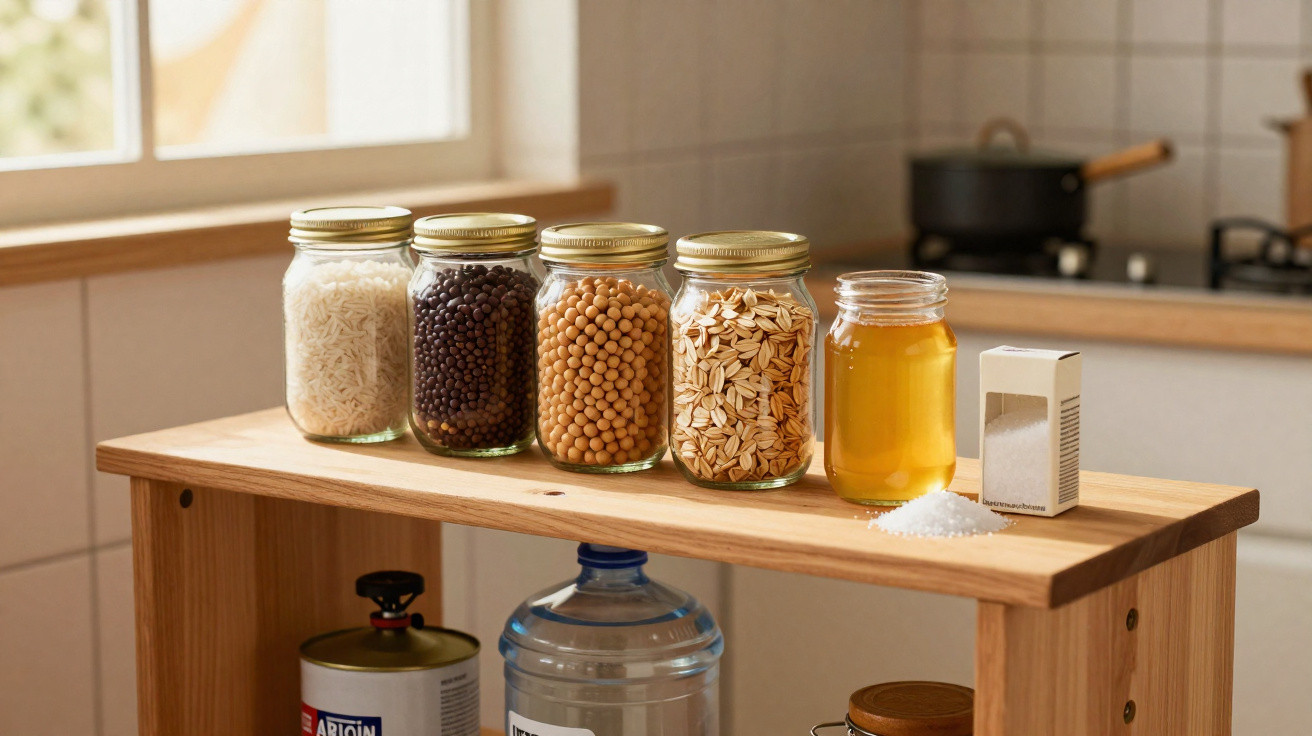
Emergency planners and nutritionists regularly arrive at the same core list: white rice, dried pulses, pure honey, iodised salt and rolled oats. There are no complicated superfoods or camouflage-packaged survival meals involved – only familiar supermarket essentials.
White rice, dried legumes, honey, iodised salt and oats form a basic survival menu from breakfast to dinner.
1. White rice: a dependable long-storage source of calories
White rice may not be fashionable, but it is an understated essential during a crisis. Because its outer bran has been removed, it has very little fat and is therefore unlikely to turn rancid easily.
If sealed in airtight containers, shielded from oxygen and stored at below approximately 20°C, white rice can remain edible for decades. With suitable storage conditions, some emergency planners suggest it may last for as long as 30 years.
It also provides substantial energy in a compact form: around 350 calories per 100g. It can be prepared in one pan and has a mild flavour that works alongside almost anything else in the cupboard.
2. Dried pulses: lentils, beans and chickpeas for protein
Dried lentils, beans and chickpeas supply the protein that rice does not. According to the variety, they provide about 20–25g of protein for every 100g when dry, as well as fibre, iron and slow-release carbohydrates.
When kept dry and safe from insects, many pulses remain usable for 10–30 years, although older beans may need more time to become tender. Lentils tend to be the most practical choice where fuel is limited, as they do not require lengthy soaking.
Rice and pulses together create a complete protein profile that is close to meat, an important benefit when fresh food is difficult to obtain.
3. Honey: a jar with an almost unlimited shelf life
Pure honey is among the very few foods that can keep almost indefinitely. Archaeologists have discovered sealed honey pots in ancient tombs that were still technically edible.
Its durability comes from its low moisture level, high sugar content and naturally acidic pH. Together, these conditions make it inhospitable to most fungi and bacteria. Honey that crystallises in the cupboard has not gone off; only its consistency has altered. A gentle water bath will return it to a liquid state.
During an emergency, honey offers quick energy, can ease sore throats and adds sweetness to otherwise plain bowls of oats or rice.
4. Iodised salt: small crystals with an important purpose
Salt can seem unremarkable until there is none available for cooking. In addition to adding flavour, iodised salt supplies iodine, a trace element required for normal thyroid function. In certain areas, it helps make up for limited iodine in soil and drinking water.
Salt stored correctly does not truly expire. Moisture can make it clump, but it remains fit for use. Even a modest supply makes plain rice and beans into food that people are more likely to eat willingly day after day.
5. Rolled oats: breakfast, snacks and a thickening ingredient
Rolled oats complete the five-food list. They are quick to prepare, can be soaked and eaten without boiling where fuel is scarce, and suit both sweet and savoury meals.
Oats contain more fat than rice, so their longevity is strongly affected by their packaging. In airtight, oxygen-free bags or tins, they can last for many years; once opened in a cardboard box, their flavour may deteriorate after only a year or two.
As well as making breakfast porridge, oats can add bulk to soups, thicken stews, or be combined with honey and a little water to make simple baked bars.
How to store these foods so they genuinely last
Selecting suitable food is only part of the task. Storage methods determine whether supplies keep for three months or three decades.
Cool, dry, dark and airtight: those four words matter more than any brand name on the packet.
| Food | Ideal container | Key enemies |
|---|---|---|
| White rice | Glass jars or Mylar bags with oxygen absorbers | Moisture, insects, high heat |
| Dried pulses | Airtight tubs or jars, away from light | Humidity, rodents, pantry moths |
| Honey | Original sealed jar, in a cupboard | Heat above 30°C, contamination by utensils |
| Iodised salt | Dry, sealed container | Moisture, steam from cooking |
| Rolled oats | Vacuum-packed bags or jars | Oxygen, pantry moths, strong odours |
A common recommendation from emergency planners is the simple “first in, first out” approach: use the oldest pack before newer ones and replace it with a fresh pack. This keeps the emergency reserve current because it is used in everyday meals rather than left forgotten in the loft.
Some widely chosen health foods are poorly suited to very long-term storage. Brown rice contains extra oils in its bran layer, which can become rancid within months at room temperature. Wholemeal flour stored in paper bags can attract weevils and pantry moths.
How much to store – and what people often overlook
Calories from dried staples are of little use without water. Emergency agencies commonly recommend roughly three litres of water per person each day: around two litres for drinking and one litre for basic hygiene and cooking.
For a household of four preparing for one week of disruption, this soon exceeds 80 litres of water, in addition to food. Bottled water, washed and refilled drinks containers, and a dedicated water-storage tank can all contribute.
For food, a sensible modest goal could be two to three weeks’ worth of these five staples. This allows for delays to deliveries or repairs without turning into hoarding that leaves shop shelves empty for other people.
What can you actually eat using only these five foods?
The selection may look austere on paper, but it offers more combinations than might first be expected. For example:
- Breakfast: oats cooked in water with a spoonful of honey and a pinch of salt
- Lunch: rice with lentils and chickpeas, flavoured using salted water
- Dinner: a thick pulse stew, thickened with oats and served on rice
- Snacks: oat and honey “cakes” baked or fried in a pan
In practice, many households will still have miscellaneous items in the fridge or freezer, such as frozen vegetables, tinned tomatoes and spices. The five foods provide a dependable foundation, covering the gaps as fresh supplies become scarce.
Why not simply store everything you enjoy eating?
When disruption begins, shoppers often buy the foods they normally like most: biscuits, crisps, soft drinks and stacks of pasta-sauce jars. Such items can offer comfort, but they seldom keep for decades and many occupy considerable space relative to the nutrients they provide.
Holding very large stocks creates additional problems too: waste from food that expires, a greater risk of attracting pests and a higher initial expense when food bills are already increasing.
A more streamlined, practical plan – built around foods selected for nutritional value and stability – leaves money and room for other resilience measures, including a small camping stove, a power bank or additional blankets for winter power cuts.
Thinking in scenarios rather than fears
Emergency planners often use straightforward scenarios: a three-day power cut after a storm, a week-long strike that interrupts deliveries, or a local epidemic lockdown. Mentally working through each situation can help you assess whether your current cupboards would sustain you.
For example, consider what an ordinary day of meals would involve if the power failed tonight and the shops remained closed for five days. If that exercise becomes difficult by the second day, your emergency cupboard may need a gradual, understated improvement.
Adding to that reserve bit by bit, with each bag of rice or pulses, changes a vague worry about “shortages” into a realistic and manageable task. That move – away from panic buying and towards planned stocking – may be the most composed form of preparation available.





Comments
No comments yet. Be the first to comment!
Leave a Comment