
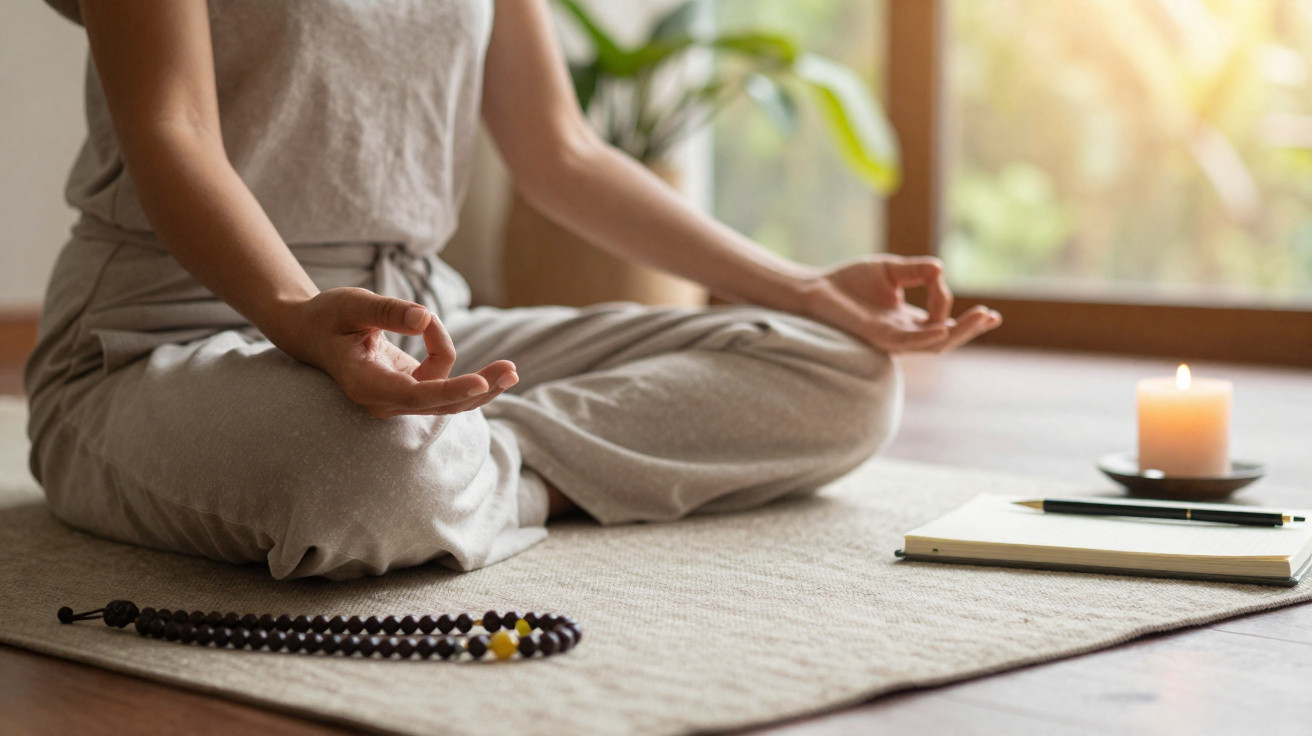
Have you ever wondered what a Mudra is?
A mudra is a hand gesture that is natural, simple and easy to incorporate into everyday activities.
At the close of Savasana, your teacher may invite you to touch your thumb to the tip of each finger. Have you ever considered why? Every finger and the thumb corresponds to a distinct element within the body’s energetic system. Touching the fingertips to the thumb can trigger different responses in the nervous system. In fact, this is a gentle, fundamental mudra performed at the end of your Yoga practice.
Mudras in Yoga practice and philosophy
Mudras form an essential part of Yoga practice and philosophy. Movements of the hands and fingers are said to balance and restore energy, and may even stimulate both the autonomic and parasympathetic nervous systems. These straightforward hand gestures can be practised anywhere and at any time: while sitting, standing, walking or travelling. You do not need to be in a Yoga pose, although doing so may enhance shifts in energy patterns.
You may already make many of these gestures naturally during the day without noticing.
Here are a few examples:
1. Hakini Mudra
Does this seem familiar? I often see people holding their hands this way when they are concentrating deeply, attending meetings or waiting at airports, often with their fingers resting against their chin. This is known as Hakini Mudra. Placing all the fingertips and thumbs together helps deepen concentration. Each finger and thumb represents a separate element in the body. Try it the next time you need to concentrate or solve a problem. Begin to notice what your hands do in different situations throughout your daily activities.
2. Gyan Mudra
Gyan Mudra – the Mudra of knowledge – is widely used in Yoga practice. You may spot this hand placement when yogis are meditating, or in a range of standing and seated postures. Bring the tip of your thumb to the tip of your index finger. This is said to activate the pituitary and endocrine glands. Its benefits include improved memory, greater concentration and the prevention of insomnia. It may also ease hysteria, anger and depression. When practising balancing poses, I find this mudra particularly helpful for supporting my focus, which in turn makes balance slightly more attainable.
3. Yoni Mudra
Yoni Mudra is intended to balance the brain’s left and right hemispheres. Point your index fingers away from your body, with your thumbs directed back towards it. It also balances the body’s overall flow of energy. I tend to experience more injuries on the right side of my body, so I try to sit with this mudra at the end of my practice, consciously encouraging energy to move evenly through both sides of my body.
Noticing your hand gestures
What hand gestures are you beginning to notice? Do you fidget with your hands a great deal during the day? Do you gesture with your hands while speaking? And when you are angry, do you usually express it through hand signals?
Please feel free to share with us, and we can offer some suggestions.


Comments
No comments yet. Be the first to comment!
Leave a Comment