
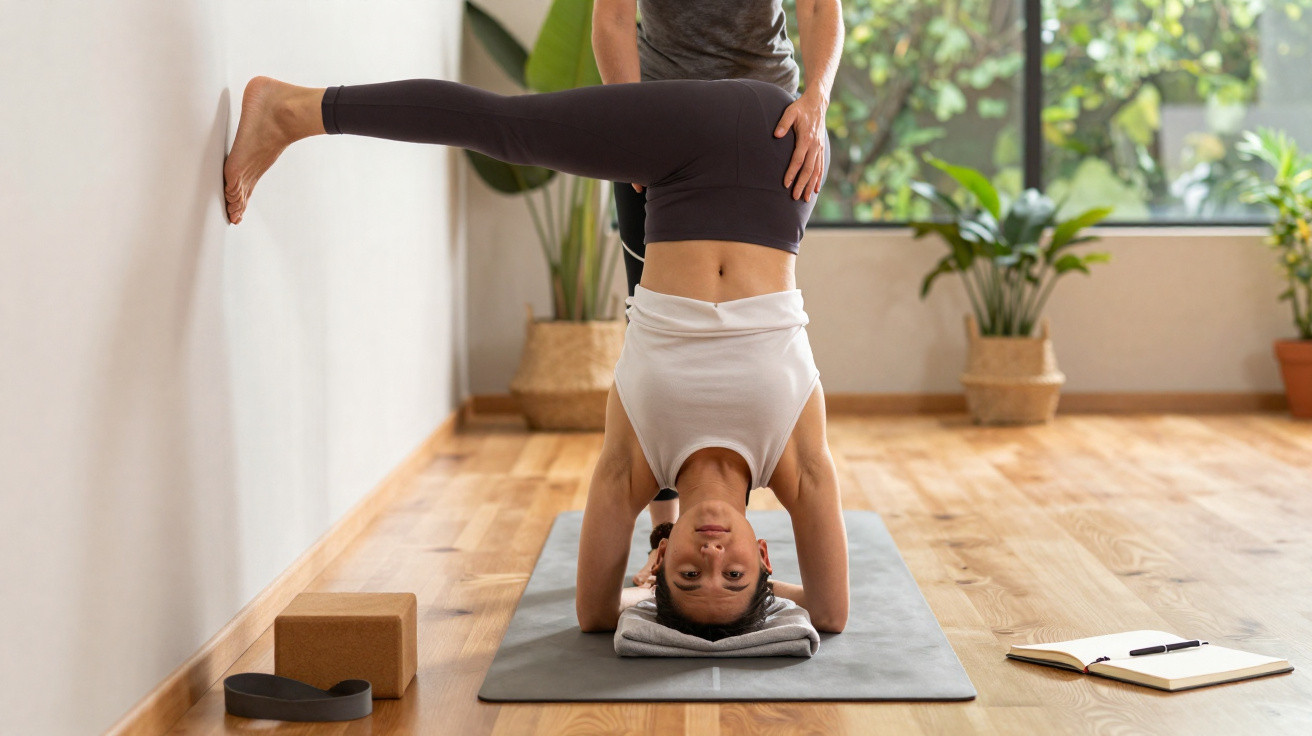
Overcoming my fear of headstands has been one of my biggest challenges, both in group sessions and during my yoga home practice. These are some of the approaches that have helped me.
For a long while, the thought of standing on my head or attempting different inversions stopped me from going to yoga classes altogether. I am clumsy enough at the best of times, so why would I risk completely embarrassing myself in front of a group of much more graceful yogi strangers?
Understanding inversions and headstands
Put simply, an inversion is any posture in which your heart is positioned above your head. It may sound ridiculous, but think of a headstand, handstand, or even bending down to touch your toes. It is essential to be guided through gradual stages, progressing from simple inversions to more complex positions. Inversions require time, practice, strength, balance and plenty of patience!!!
In my own yoga practice, I have experienced a mental block around both headstands and handstands. I will admit that I can be a complete control freak, and my naturally competitive side can work against me. I want to be the quickest learner and the strongest person in the room; let’s just say it has its pros and cons.
When I look around a yoga class, I always notice that each person has ‘their’ pose. A posture that comes easily to me may be difficult for someone else, and the reverse is equally true. Men generally find held poses and headstands easier. They naturally have greater upper-body strength, whereas women often find the more extreme flexibility binds and poses more comfortable. This does not mean that either is impossible to achieve or specific to one gender; it is simply a difference in male and female physiological make-up.
The other day, I heard a teacher tell another student: “Don’t only practice the things you are good at!” He could not have been more right.
Moving beyond the fear of failure
Over the past few weeks, my goal has been to move beyond the security of having my feet on the floor, release my fear of failure, and quite simply get my legs into the air. I have found the following tips most helpful for overcoming my insecurities:
- Proper warm-up: The flexibility sequences at the start of a yoga class do more than warm your muscles; they also regulate your breathing and sharpen your concentration. No one begins a class with inversions, so you should not begin with them when practising at home either.
- Regular practice: Practising consistently helps to develop strength, courage and confidence.
- Listen to your fears but don’t allow them to dictate to you: Fear is an undervalued tool. It should not control your choices, but learning to identify its signals when your senses are on high alert can help you use it to your benefit.
- Have a safety net: Begin by practising against a wall, or ask your teacher or a friend to support you. Both methods provide reassurance as well as support.
- Respect your limitations: Avoid trying to force progress too quickly. Build strength gradually and recognise the improvement you are making.
- Don’t take yourself too seriously: Make sure you have fun. However frustrating it feels, enjoy the learning process. Laugh at yourself; it is an excellent way to relieve stress!
Building confidence in yoga home practice
After only a few weeks, I already feel considerably more confident and my overall flexibility has improved. Although my husband still needs to support my legs, I can recognise the progress I have made! I can now hold a headstand against a wall with very little effort.
Everyone is a beginner at some point, so do not allow your ego to prevent you from trying new things.

Comments
No comments yet. Be the first to comment!
Leave a Comment