
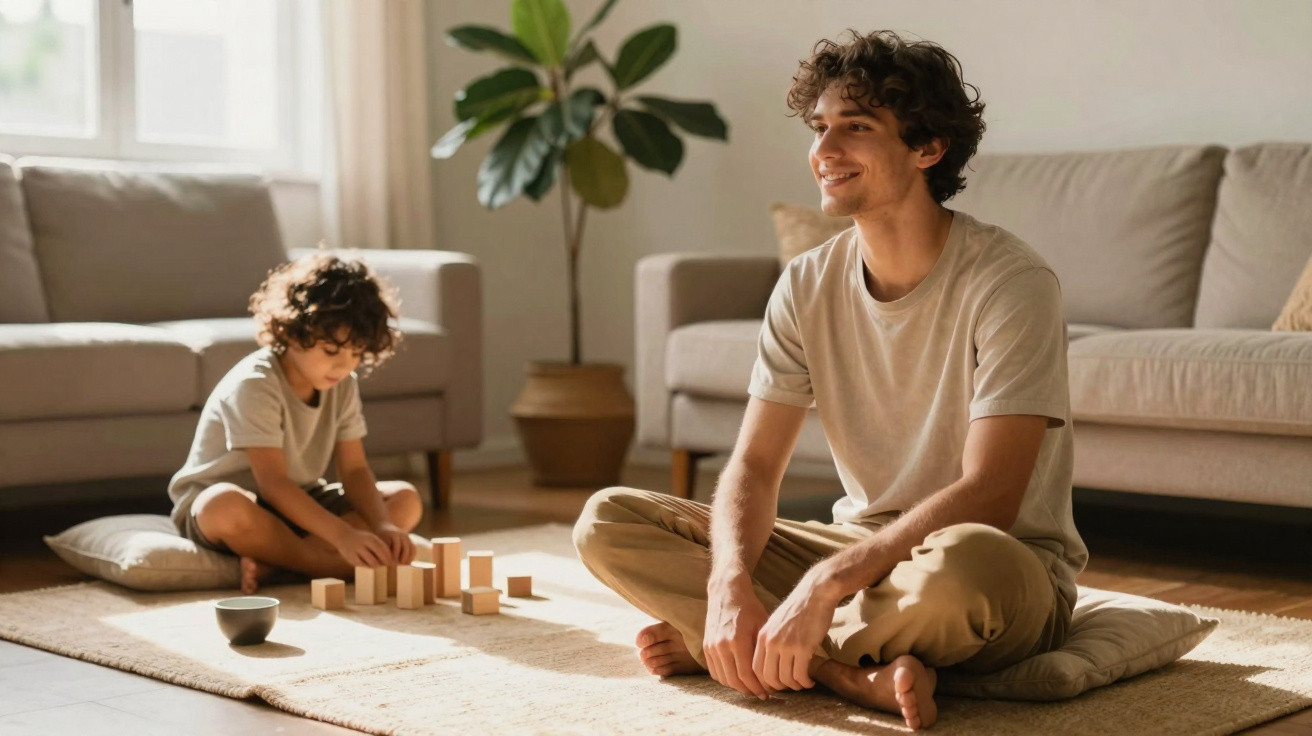
The first time I discovered that I no longer knew how to sit on the floor, I was 34 and attempting to play with toy cars with my nephew. Five minutes in, my hips were complaining, my lower back had begun its revolt, and I had adopted that ungainly half-squat, half-lean adults use when they cannot decide whether they are settling in or about to leave. Meanwhile, my nephew sat in a relaxed squat, completely comfortable just a few inches above the carpet. I was the ridiculous-looking one. At some point between classroom desks, office seating and Netflix binges, my body had silently given up on the floor without bothering to notify me.
That evening, while still aching, I found myself wondering: if my ancestors could spend hours squatting around a fire, what on earth happened to me?
The Day Chairs Won – And Our Bodies Lost
We tend to picture our bodies as modern, improved editions of the people who lived before us. In truth, though, they are still designed for a life lived far nearer the ground. For much of human history, people rested on hard-packed soil, woven mats, low stools and tree roots. They squatted while cooking, ate cross-legged and relaxed in postures that required strength and mobility in the hips, knees, ankles and spine. Then chairs became symbols of status, civilisation and “proper” living. We did not merely begin using them; we gave in to them.
As chairs spread from palaces and churches into homes, workplaces and schools, our bodies adjusted to this new routine. Thighs held at ninety degrees, hips constantly flexed, pelvis rolled backwards, spine curved into the familiar C-shape. Positions once woven into ordinary life - deep squats, kneeling and cross-legged sitting - gradually became things for exercise, yoga sessions or children’s games that we abandon as we grow up. Without ever consciously choosing it, we changed from people who inhabited the ground into permanent perchers.
Oddly, plenty of cultures never completed that transition. In Japan, people still use tatami mats for sitting. Across parts of India, families eat meals on the floor. In much of Africa and Asia, resting may still mean squatting or kneeling rather than sinking into a sagging sofa. When researchers examine these groups, especially those who continue floor-sitting later in life, they often see something quietly striking: greater mobility, reduced stiffness and a freedom of movement that many of us can only envy while scrolling through physiotherapy reels on Instagram.
What Floor-Sitting Does To Your Posture (Without You Noticing)
The first thing that becomes apparent when you cautiously return to the floor is how quickly your posture exposes itself. A chair allows you to slump, cross your legs and curl inwards while it takes on the work. On the floor, you become the chair. All at once, your muscles have a role to play. That is why cross-legged sitting or kneeling can feel surprisingly exhausting initially: your core, hip flexors and spinal muscles are being called back into service after years of semi-retirement.
On the floor, your pelvis can move into a more natural tilt rather than being fixed against the edge of a seat. This position helps the spine stack itself, vertebra by vertebra, into something nearer its natural S-curve. You start noticing when your chest is collapsing or your shoulders are rounding forwards. It is not really a conscious “must sit up straight” instruction; it is more like your body recognising that it must deal with gravity again and quietly arranging itself more effectively.
The Micro-Movements That Save Your Back
One frequently missed advantage of floor-sitting is that you are rarely completely motionless. You transfer weight between hips, lean on your hands, lengthen your legs, draw a foot beneath you or turn your knees to one side. These small movements are not evidence of fidgeting; they are upkeep. They lightly lubricate the joints, bring blood into underused tissues and prevent the sore, “frozen” sensation that follows hours folded over the same office chair.
Research into back pain often identifies extended static sitting as a significant factor. Floor-sitting makes that pattern difficult to maintain. You cannot remain cross-legged through an entire film without repositioning yourself. Mild discomfort prompts small breaks well before it becomes genuine pain. In time, those regular adjustments can create a back that is more robust and adaptable, rather than one familiar with only one state: slumped, supported and switched off.
How Your Gut Knows Where You Sit
Initially, it sounds a little far-fetched: could sitting on the floor genuinely support digestion? But anyone who has had a substantial meal at a low table, with their legs folded beneath them, may recognise that their body feels different afterwards. When you are nearer the ground and your spine is better aligned, there is more space for the abdominal organs. The stomach, intestines and diaphragm experience less compression than they do when you are crumpled into a deep sofa or bent over a laptop while eating a sandwich.
Traditional customs recognised this long before terms such as “gut motility” and “vagal tone” existed. In many societies, sitting on the floor for meals is intentional. You lean forwards slightly to take food, then return upright to chew and converse. Those gentle movements forwards and back act like a subtle massage for the gut. Circulation improves, the diaphragm can move with more freedom and the internal congestion in your abdomen eases slightly.
The Slow-Down Effect
There is also the straightforward reality that eating on the floor often makes you slow down. Keeping a plate balanced, reaching for serving dishes and rearranging your legs makes mindless eating difficult when you are not fixed in dining chairs facing a television. You are more connected to the physical experience of the meal: plates clinking, aromas rising from a bowl and warmth against your hands. This slower rhythm has a quiet strength. Digestion benefits from time. When your nervous system is more settled and you are not rushing food down, your body has the chance to do what it is meant to do.
Naturally, nobody is arguing that sitting cross-legged will magically resolve every digestive problem. Bodies are not that simple. Still, for many people, a somewhat straighter spine, a less compressed stomach and a slower, more grounded approach to eating can separate ongoing bloating from a meal that truly feels nourishing. Sometimes the strongest medicine is simply removing the things that are getting in the way of your body working properly.
The Longevity Clue Hidden In Getting Up And Down
Several years ago, a Brazilian study attracted attention with an apparently simple challenge: sit down on the floor and then stand again, using as little assistance from your hands, knees or arms as possible. People who managed it easily were more likely to live longer. Those who required considerable support, or could not rise without folding in on themselves, faced a greater mortality risk in the following years. It was not magic, but a single modest movement revealing strength, balance, flexibility and coordination.
This sit–stand test highlights something many people would rather avoid: how we manage the floor reflects our wider physical ability. If it is difficult to lower yourself and stand up again at 40, what might it feel like at 70? Regularly sitting on the floor acts as a form of gentle, ongoing practice. Each descent and return to standing rehearses independence - being able to rise after a fall, move without restriction and carry your own body through space.
Floor Time As Anti-Fragility Training
We speak constantly about “healthy ageing”, yet spend eight hours daily sitting still in chairs. There is an obvious contradiction in that. Floor-sitting brings manageable challenge back into everyday routines. Knees bend further, ankles flex, and hips rotate and abduct. It does not feel like formal exercise, but each movement encourages your body to become less fragile and more adaptable.
In communities associated with remarkable longevity - the so-called Blue Zones - this kind of frequent, low-level movement is commonplace. People may not lift weights, but they rise from and lower themselves to the ground many times each day. They kneel while gardening, use low stools and talk on doorsteps. That accumulated exposure to different positions keeps muscles active and joints nourished. You do not have to pursue a personal-best deadlift if you simply choose not to abandon your connection with the floor.
The Awkward, Honest Part: Relearning What Kids Already Know
Let us be truthful: in our chair-obsessed world, hardly anyone does this every day. We intend to stretch, bookmark yoga flows on social media and agree with posture articles while bent over our phones. Then ordinary life takes over. Deadlines, commuting, sofas and scrolling fill the hours. Suddenly, another week has gone by with your backside attached to one or two preferred cushions, while the floor feels as remote as the hiking route you keep meaning to explore.
Learning to sit on the floor again can be embarrassingly difficult in the beginning. Your knees may object, your ankles can feel restricted and your lower back may seem uncertain. It can bruise the ego slightly to see a five-year-old squatting happily for fifteen minutes while you count every second. That discomfort does not mean you are broken; it is an honest assessment from your body. Years spent in one posture leave their mark. Fortunately, bodies can adapt in either direction.
Starting With Ten Honest Minutes
An easy route back is to take ten minutes from an activity already in your day. Watching a series? Sit on a folded blanket on the floor for the opening ten minutes, then return to the sofa. Reading the news on your phone? Do it cross-legged or in a comfortable kneeling position. The goal is not to turn into a floor-dwelling monk by tomorrow. It is to remind your joints that these postures are available, then gradually increase the time you can manage without muttering curses under your breath.
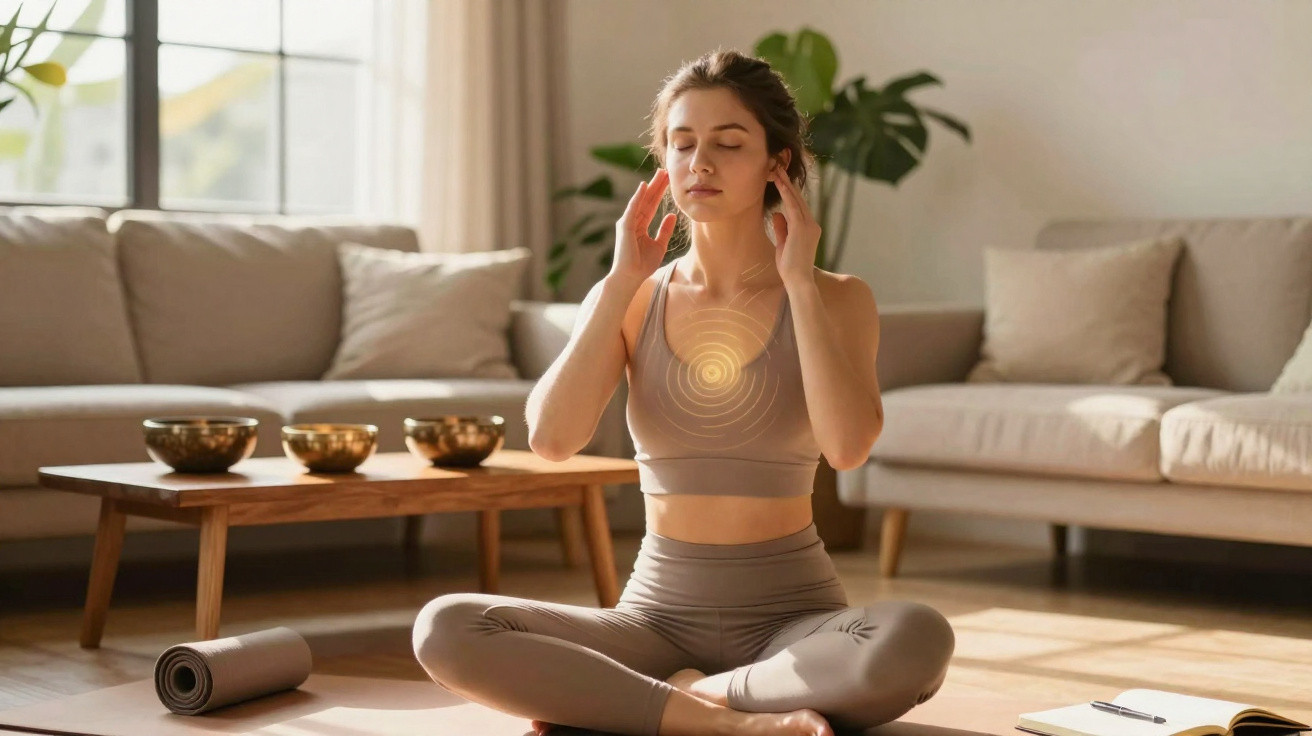
Varying your positions can make the process more manageable: sit cross-legged, extend one leg, straighten both legs, bend your knees with feet on the floor, or use a low cushion beneath your hips for a supported squat. Every shape asks something slightly different of your body. Over the weeks, your nervous system stops sounding the alarm, your tissues become less tense and getting down to the floor and back up begins to feel less like a performance. That is the understated win: progress without a gym subscription or another gadget.
The Emotional Shift Of Being Closer To The Ground
Spending more time on the floor brings another change that is not purely physical. A room appears different when you are a few inches lower. Noises seem quieter. Light reaches the space at an unfamiliar angle. You find yourself level with the design of the rug, dust beneath the radiator and the refrigerator’s low hum. There is something humbling about it, a mild reminder that comfort does not always require height and padding.
Most of us have experienced the moment when we get down on the floor to play with a child or pet and, briefly, time feels denser, slower and more real. The floor has a knack for bringing you into the present. Nobody appears graceful while half-rolled over a cushion, with untidy hair and one twisted sock. Perhaps that is precisely the point. You feel more human and less arranged. More connected to the ways people have met, rested and related to one another for thousands of years.
Choosing the floor instead of a chair also carries a quiet defiance in a culture that treats comfort as ever-deeper layers of foam. It is not about rejecting modern life; it is simply a suggestion that your body may understand something your furniture does not. You don’t have to renounce your sofa to remember the ground. You merely need to return to it often enough that lowering yourself down no longer feels like an exceptional event.
Listening To The Body We Still Have
Once you remove the wellness language and hashtags, floor-sitting is simply a conversation with the body you already inhabit. The creaking knee as you lower down, the pull through a hip while crossing your legs, the faint relief in your back after several minutes upright without a backrest - all are messages. They may not always be pleasant, but they are genuine. They reveal where you have become stiff, where you have compensated and where movement is still possible.
Nobody is advising you to discard your chairs tomorrow. Life takes place at tables, in offices and on buses and trains. But between these fixed postures is a rich, overlooked area just inches above the floor, waiting for you. Sitting on the floor won’t turn you into a superhero, but it might keep you moving like yourself for longer. It may ease digestion, improve posture a little and extend the years in which you can move independently and confidently.
Perhaps that is its subtle strength: not a spectacular reinvention, but countless small bargains with gravity that keep you honest. One hip bend. One unhurried return to standing. One more everyday evening when you select the rug instead of the sofa and briefly recall that your body was not truly designed for chairs in the first place. The floor was here first; our ancestors knew it - and our backs, hips and hearts haven’t forgotten.

Comments
No comments yet. Be the first to comment!
Leave a Comment