
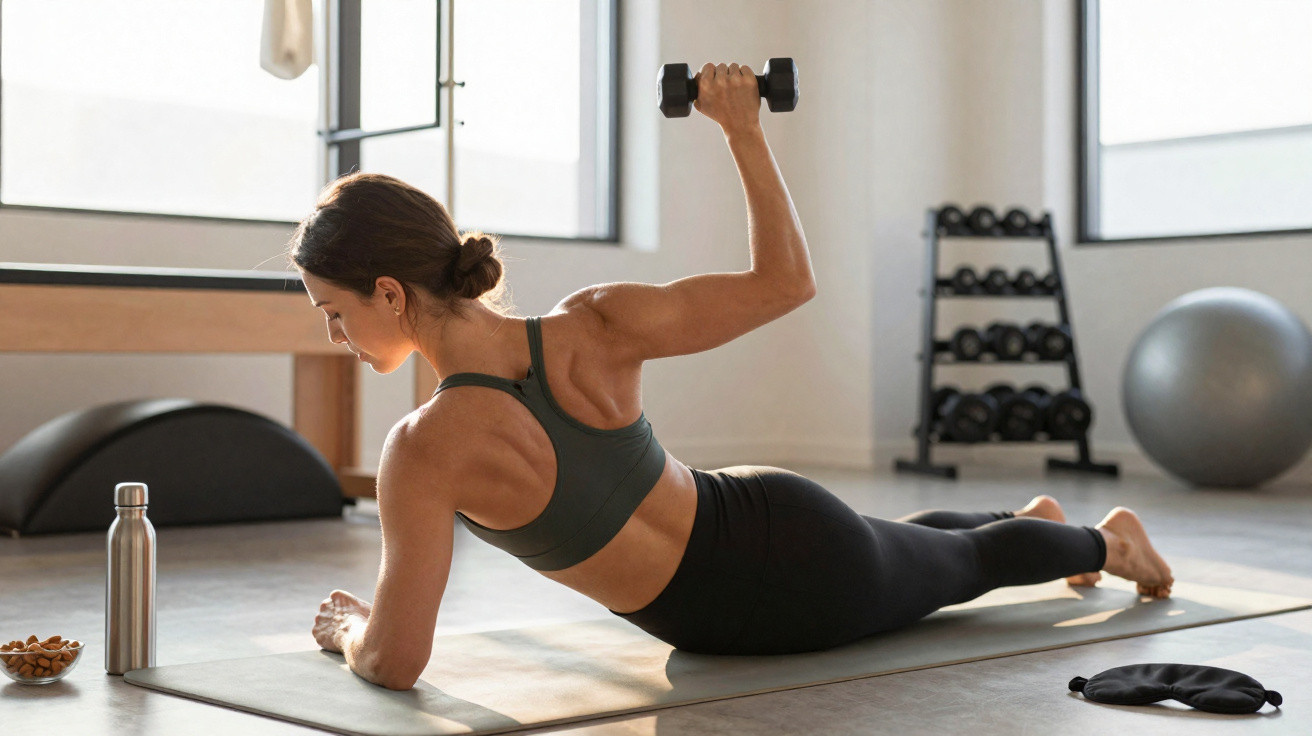
Many people who practise Pilates regularly still wonder why the loose skin on the inner part of their upper arms does not disappear. The answer is straightforward: Pilates improves posture, strengthens the core and increases flexibility, but it does not provide the progressive loading the triceps need to develop tone and size. For this particular area, specialists agree: resistance-based strength training is irreplaceable.
Why is the back of the arm so difficult to firm up?
The triceps brachii, located along the back and inner side of the upper arm, is among the muscles least engaged by everyday activities. Unlike the biceps, which are activated by simple actions such as carrying shopping bags and opening doors, the triceps are seldom worked intensely enough to create a genuine muscular stimulus. As people age, gradual collagen loss, together with weight fluctuations over the years, means that failing to use this muscle regularly leads to the looseness visible when the arms are raised.
Mayo Clinic notes that the arms are involved in countless functional activities, and that keeping these muscles strong is essential for preventing injuries, maintaining good posture and preserving independence over the years. Addressing loose upper arms is not solely an aesthetic concern: it also means strengthening muscles that support everything from basic movements to more demanding daily efforts.
- Bench dip (triceps dip): place your hands on a sturdy chair or bench, bend your elbows to lower your body, then press back up - 3 sets of 12 to 15 repetitions
- Overhead triceps extension: hold one dumbbell with both hands, lower it behind your head by bending your elbows, then return to the starting position - 3 sets of 12 to 15 repetitions
- Close-hand press-up (diamond press-up): keep your elbows close to your torso throughout the movement; this isolates the triceps far more than a conventional press-up - 3 sets of 10 to 12 repetitions
- Dumbbell shoulder press: raise your arms from shoulder height until fully extended overhead, working the triceps and deltoids together - 3 sets of 12 repetitions
- Minimum recommended frequency: two to three triceps workouts each week, with at least 48 hours of rest between sessions to allow proper muscle recovery
How strength training differs from Pilates for the triceps
Pilates works the arms as a supporting element, without the progressive resistance required to produce meaningful triceps hypertrophy. Its movements are valuable for mobility, body awareness and overall muscular balance, but they do not challenge the triceps at the intensity needed to alter their composition. Genuine toning requires exposing the muscle to progressively heavier loads over the weeks - and Pilates alone does not deliver this for the area.
The ideal approach recommended by specialists is to retain Pilates for its posture and mobility benefits while adding dedicated strength-training sessions for the arms. The two methods complement one another: Pilates supports alignment and movement quality, while strength training tackles looseness through the muscular stimulus it requires. Neither replaces the other, and expecting Pilates alone to achieve what progressive loading can do is the most common mistake in this process.
How long do the first results take to appear?
Setting realistic expectations is crucial for staying consistent during the early stages. In the first two to four weeks of training, the main improvements are muscular endurance and neuromuscular coordination - the brain learns to recruit the muscle more efficiently before it actually grows. From the fifth to the eighth week, with consistent training and suitable nutrition, firmness starts to become noticeable both to the touch and visually.
Weekly routine combining strength, cardio and rest
How to arrange workouts for more consistent results
Monday and Thursday: arm and shoulder training using the triceps exercises listed above, progressively increasing the load each week. Tuesday and Friday: full-body training or Pilates, keeping the arms active with light dumbbells during compound exercises. Wednesday and Saturday: moderate cardiovascular exercise, such as walking or cycling, for 30 to 40 minutes, which helps reduce overall body fat. Sunday: active rest with gentle stretches.
Those starting from scratch can cut this down to two arm workouts per week, with additional rest days. Load should be increased gradually - when the repetitions become easy at the current weight, it is time to move up. Correct technique must always take priority over adding weight, as poor form in triceps exercises raises the risk of elbow and shoulder injuries.
The factor that matters most for results is not the chosen exercise, but the progression of load over time. Using the same two-kilogram dumbbells for months without variation allows the muscle to adapt and stop growing. Raising the weight in small increments every two or three weeks is what keeps the stimulus active and allows results to continue appearing week after week.
The role of nutrition and sleep in arm results
Strength training creates the stimulus, but the muscle actually grows outside the gym. A diet with adequate protein supplies the amino acids that rebuild the muscle fibres damaged during training. Without this nutritional support, the muscle lacks sufficient material to recover and grow between sessions, and progress arrives far more slowly than the effort involved would warrant.
Sleep completes the triangle. During deep sleep, the body releases growth hormone and carries out most of the recovery and muscle-building process. Someone who trains well and eats well but sleeps poorly will see considerably weaker results than someone who manages all three areas at once. Loose skin does not disappear through training alone: it improves through the set of habits surrounding training.
An important precaution before starting if you are over 40
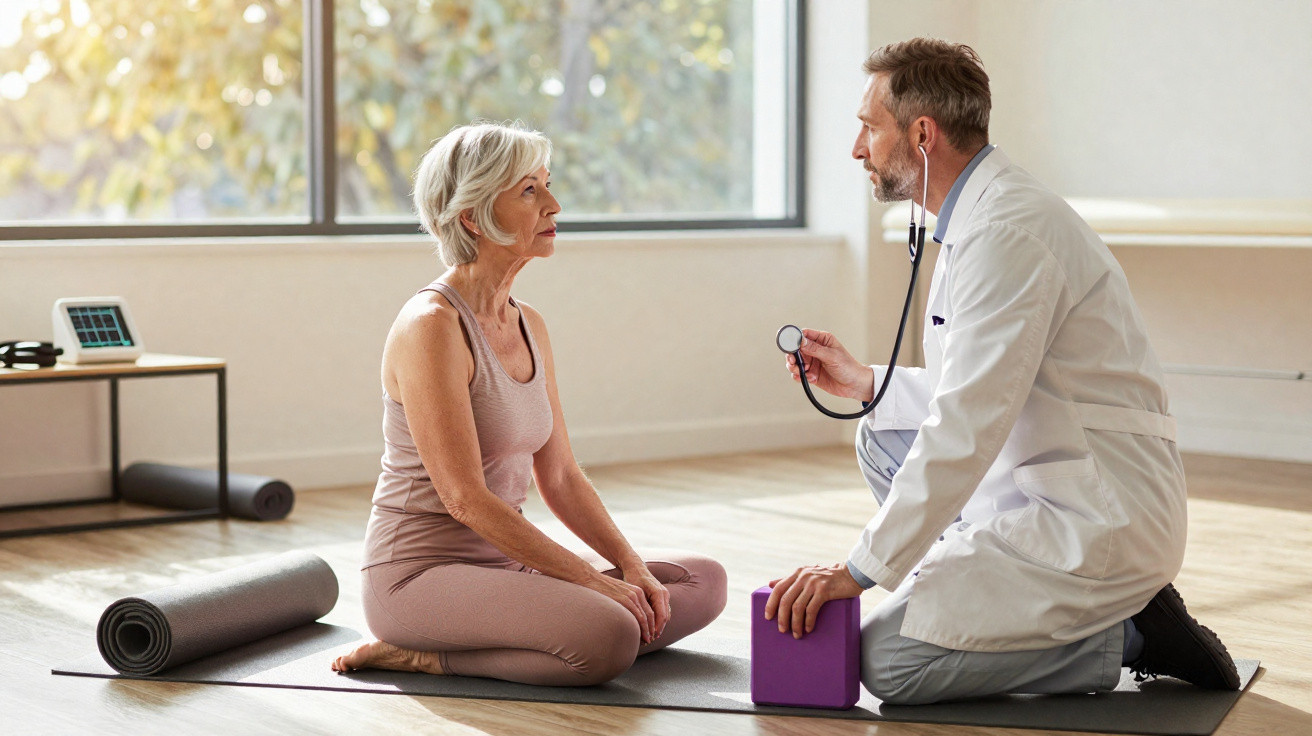
For anyone over 40, or with a history of elbow or shoulder joint problems, the recommendation is to consult a doctor before beginning a strength routine and seek guidance from a qualified fitness professional to ensure movements are performed correctly. Incorrect technique in triceps exercises can overload the joints, causing injuries that interrupt training for weeks - precisely the opposite of what is needed when consistency and progression are the aim.
Anyone ready to take on the challenge may notice a difference in their arms sooner than expected. Share this with someone who has been doing Pilates for months without seeing results in their arms and still does not know what their routine is missing.


Comments
No comments yet. Be the first to comment!
Leave a Comment