
Soft blankets, quiet music and folding chairs arranged in a line for support. Most attendees are over 70. Several have heart monitors beneath their T-shirts; one man wheels an oxygen cylinder behind him like an unobtrusive suitcase.
“This is saving my life,” Mary, 78, whispers before the session begins. Her daughter funded the classes after reading that yoga “reverses heart disease”. The instructor smiles, speaks about “opening the heart”, then asks the group to breathe deeply and twist “just a little more”.
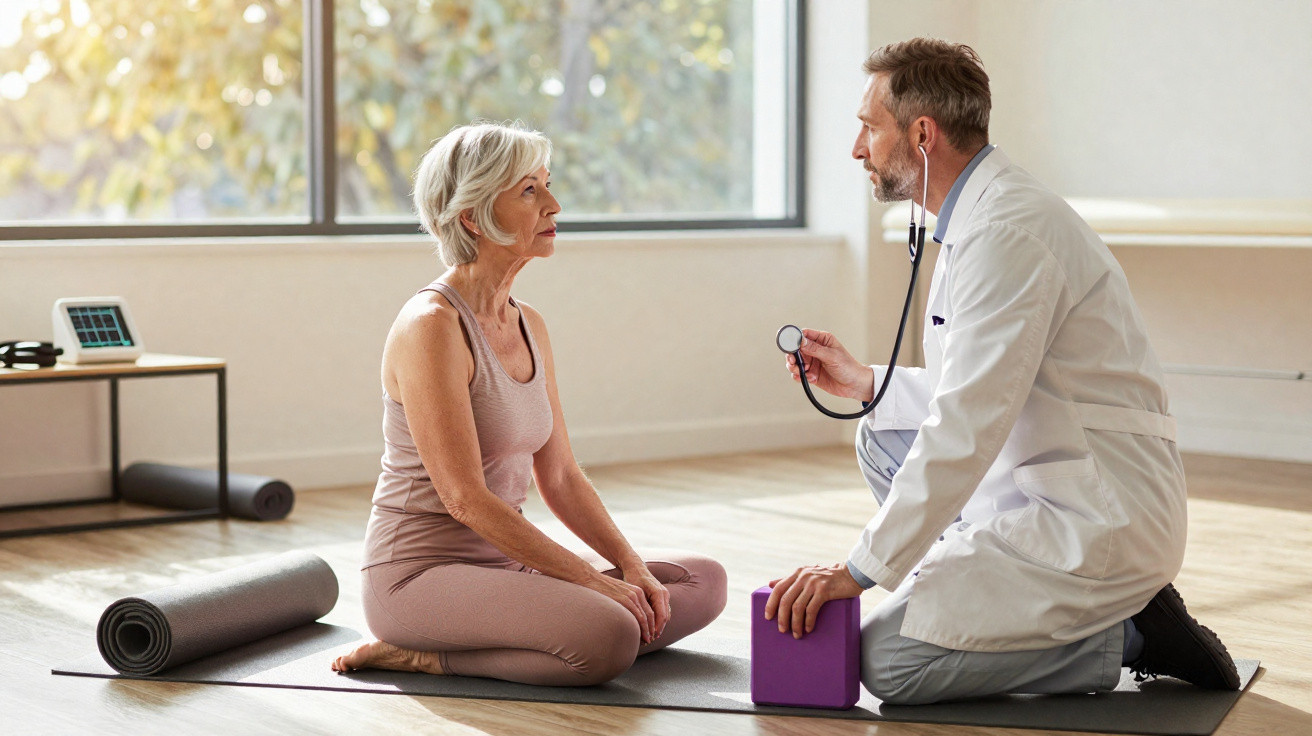
At the rear of the room, a cardiologist stands watching with folded arms. Ten minutes later, he bends down to quietly say something that would anger many families.
“Gentle” yoga is not as harmless as you think
When cardiologist Dr. Rohan Mehta eventually addresses the group, the room falls silent. He wholeheartedly supports older people moving, stretching and reconnecting with their bodies. He is not opposed to yoga. Still, his conclusion sounds stark: “Some of what I see here is dangerous for fragile hearts.”
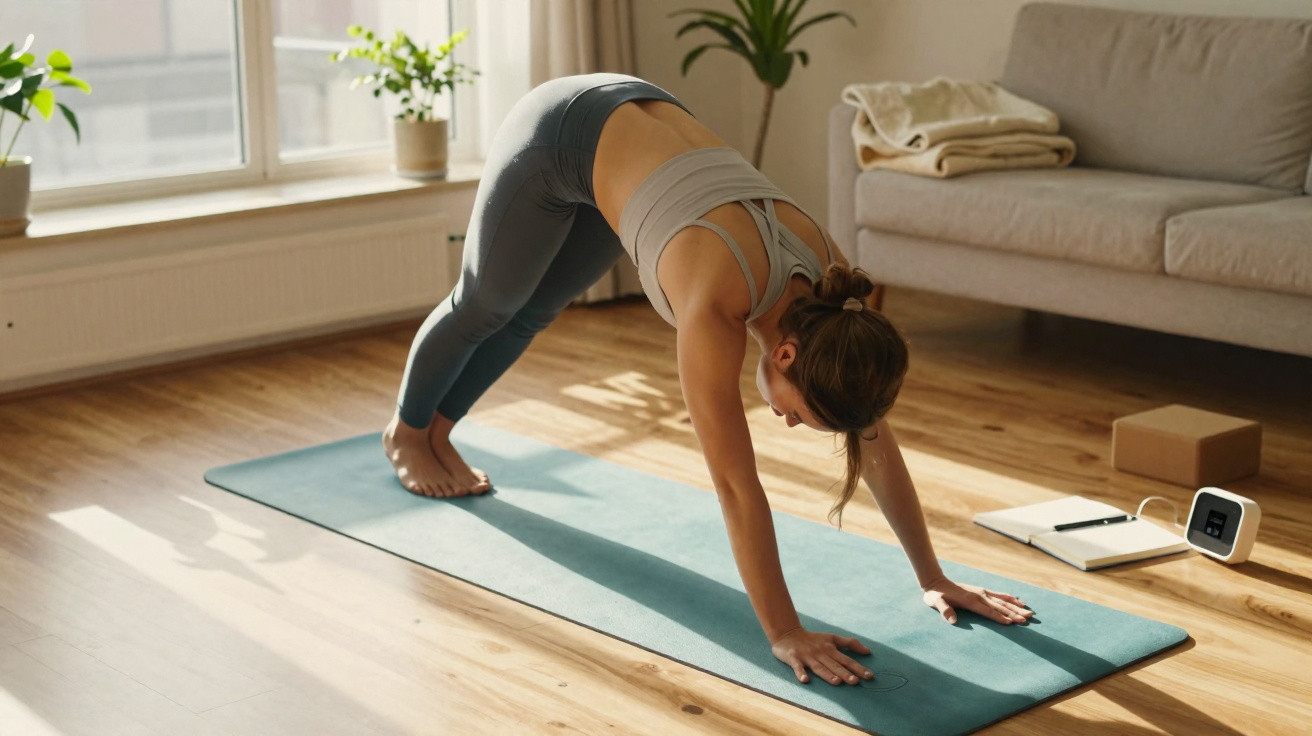
He highlights prolonged forward bends that make faces redden and neck veins stand out. He points to deep breath holds presented as spiritual progress, and quick shifts from the floor to standing that leave participants unsteady. It may appear “gentle” from the outside. Within the chest, however, blood pressure can rise sharply and the body's oxygen requirements can increase.
When families select yoga rather than a gym, they believe they are choosing safety. In many cases, they are instead choosing a misleading sense of reassurance.
Mehta sees these same older patients in his clinic after something has gone wrong: a 74-year-old who collapsed during a “restorative” session; an 82-year-old with a history of angina who attempted an inverted pose because “everyone else could do it”; and a widow in her late 60s who followed a YouTube “heart opening” routine before developing crushing chest pain two hours later.
None considered what they were doing to be dangerous. In their minds, the word “yoga” functioned as a protective charm. It sounded gentle, ancient and almost therapeutic. Their children had often encouraged them to attend, believing it was among the most peaceful gifts they could give.
The evidence gives a more complex answer. Research indicates that yoga may reduce blood pressure and resting heart rate over time. That is true. Yet those same studies note that the intensity, the types of poses and any existing medical conditions can dramatically alter the result. A “gentle” sequence for a 40-year-old is not equally “gentle” for a person with narrowed coronary arteries.
Cardiologists recognise a recurring pattern: the heart responds well to slow, steady effort, but reacts badly to sudden strain, breath-holding and abrupt pressure surges. Some common yoga instructions combine all three. Extended breath retention, forceful deep twists or repeated movements from lying down to standing may each become minor triggers. For a healthy heart, they can be exercise. For a diseased heart, they can be landmines.
The real scandal is not yoga itself, but how casually we throw fragile hearts into it without a real plan.
How to make yoga safer when a heart problem is already there
Mehta’s “shocking” verdict is not that seniors with heart problems should avoid yoga altogether. His message is more straightforward, and more difficult to hear: “Yoga is a treatment. Treat it like a treatment.” That requires rules, boundaries and discussions nobody particularly wants once the membership fee has been paid.
The first step takes place well before anyone reaches a mat: have a proper conversation with the cardiologist. It should not be a hurried corridor question of “Can I do yoga?” Instead, ask in detail: “What level of effort is safe for me? What symptoms should stop me instantly? Are there positions I must avoid?” The response will differ greatly between someone with stable mild hypertension and someone who has recently received a stent or has advanced heart failure.
Only then should step two follow: finding an appropriate class and a suitable teacher, rather than simply choosing the nearest softly lit studio.
In practical terms, heart-safe yoga looks nothing like Instagram yoga. It involves more chair work and less time on the floor; more awareness of breathing and less breath control. The movements should be slow, clear and almost unexciting. Poses can be assisted with blocks, bolsters, walls and chairs. There is no competition, including against the version of yourself from the previous week.
Picture a 79-year-old with a pacemaker arriving at a studio. In a high-risk class, they may be encouraged into deep forward folds that compress the chest, or partial inversions that rush blood towards the head. In a safer setting, they might practise seated mountain pose, gentle neck rolls and slow supported standing with a wall behind them.
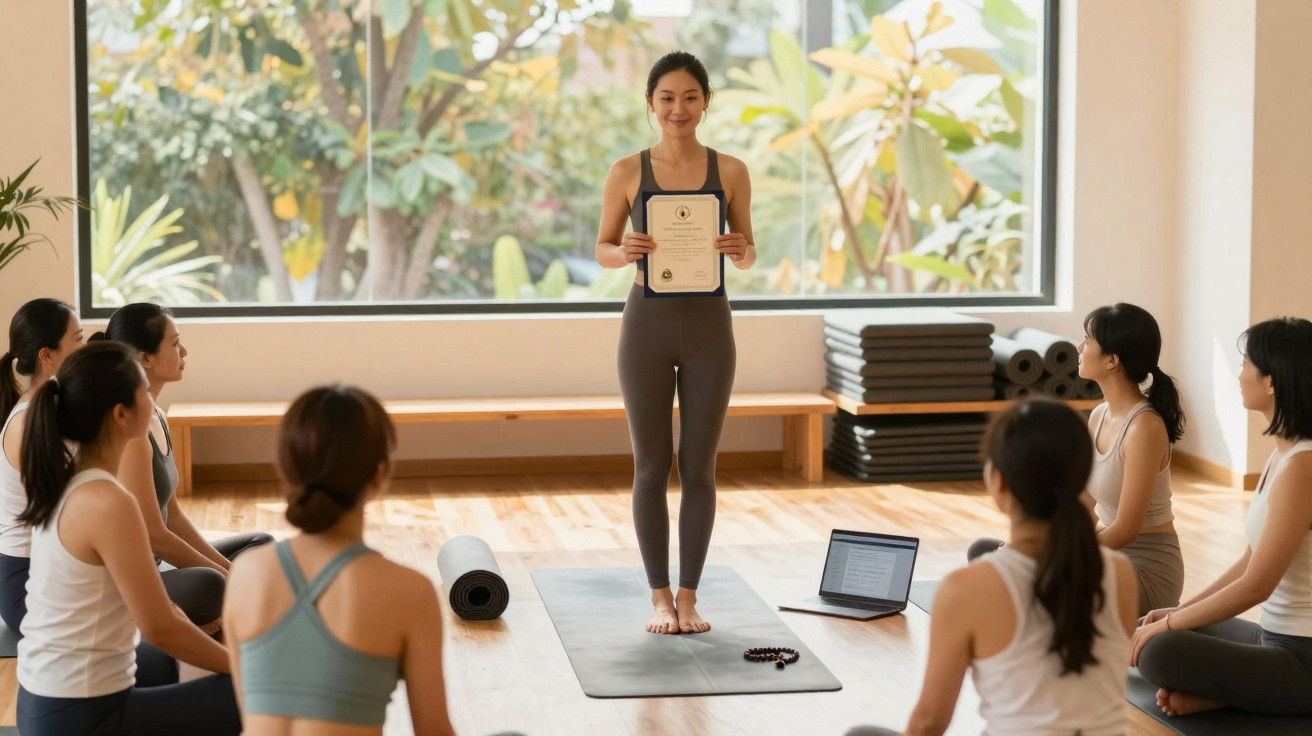
Teachers who understand heart health continually offer alternatives: bend the knees, shorten the stance or miss out the twist if breathing becomes tighter. They steer clear of lengthy breath holds and forceful “fire” breathing. They watch facial colour more closely than whether a pose appears “beautiful”. They frequently ask, “How does your chest feel?” and take the response seriously.
Common sense may sound unremarkable, until you recognise that it separates a restorative activity from a quiet emergency developing at the back of the room.
Families are often caught between promoting independence and worrying about a 10 p.m. phone call from A&E. On a positive day, yoga can be a lifeline for older people whose world feels increasingly limited. It can offer routine, companionship and a sense of agency over a body that continues to change.
On a difficult day, that same class may be where a long-hidden heart condition makes its most obvious appearance. Anger begins when people learn that no one warned them plainly, that nobody said: “For you, this pose is not spiritual, it’s risky.”
One older patient told Mehta, “I thought pain in yoga was normal. The teacher said it was ‘emotional release’. My chest hurt, my arm felt heavy. I thought I was just being dramatic.” We are so accustomed to “pushing through” that early alarms are relabelled as personal growth.
“Yoga is not the villain,” Mehta says. “Neglect is. We hand older, fragile hearts a powerful tool with no manual, and then act surprised when something cracks.”
- Do not hold your breath: breathe normally, even when others are practising lengthy retentions.
- Avoid rapid movements from the floor to standing: move slowly and use a chair or wall for support.
- Chest, jaw or arm pain, or sudden breathlessness, is a firm boundary rather than a challenge.
- Begin with 10–15 minutes rather than a full hour, increasing only if you continue to feel well after the class.
- Select teachers who ask about your heart, medication and limits - and genuinely adjust the session accordingly.
The verdict that stings: families are doing the right thing… the wrong way
The line that provokes so many families is blunt: “You’re not paranoid enough,” says Mehta. Parents and grandparents are surrounded by precautions around driving, stairs and even certain foods. But as soon as the word “yoga” appears on a leaflet, those defences disappear.
We place fragile hearts in group sessions without understanding what the class truly requires. We do not sit in and observe. We fail to ask, “What happens if my mother feels dizzy?” A soothing voice and a gentle playlist are mistaken for evidence of safety. They are not.
At a human level, this is understandable. We are exhausted, they are lonely, and we want to give them something that feels modern and hopeful. And let’s be honest: no family member will read every clinical guideline or attend every session with them. Life is complicated, timetables conflict, and love becomes entangled with guilt.
Those most likely to be harmed are often the least vocal. It is the grandfather who does not want to “make a fuss” halfway through class, or the widow who has finally found somewhere people know her name and does not want to become “the sick one”. They smile, agree and stretch slightly further, even while their chest is telling them not to.
We also fail to appreciate the strength of group pressure, even at 75. When everyone else can reach the floor, the body remembers youth and attempts to keep up. On a yoga mat, pride is dressed very politely: a soft smile followed by a small extra push into an unsafe range.
The cardiologist’s shocking verdict is not chiefly about prohibiting yoga. It is about confronting our collective carelessness around it. We prefer simple categories - good, bad, safe and dangerous - but reality is more slippery. Yoga resembles a medicine: dose, circumstances and the underlying condition change everything.
Yoga appears tranquil on a screen. The experience inside a heart that has endured decades of stress, cholesterol and perhaps one or two heart attacks can be very different. Blood vessels are less flexible, rhythms are more delicate and the margin for error is narrower. A pose that calms one person may push another into arrhythmia.
There is also a broader social issue. We have outsourced so much elder care to “programmes” and “activities” that we no longer ask difficult questions about what happens inside those rooms. Yoga for seniors becomes a product and a marketing category, rather than an adapted practice for a particular person with a complicated medical history.
On a personal level, the outrage conceals an uncomfortable hope: many families quietly wish yoga could repair what medicine, diet and time have not repaired. They imagine a gentle miracle, once a week at 10 a.m., that will keep the heart functioning for a few additional years. When a cardiologist says, “It doesn’t work like that,” it is more than a health warning. It is a small grief.
Perhaps the discussion should shift from “Is yoga good or bad for seniors with heart problems?” to “How honest are we willing to be about risk, effort, and responsibility?” When a 78-year-old unrolls a mat, they are doing more than stretching muscles. They are negotiating with their heart, previous choices and the time remaining to them.
We can make that negotiation wiser, kinder and better informed. We can advocate for heart-aware classes, expect studios to request medical details and insist that breathwork is adapted for cardiac patients. We can sit with an ageing parent and say calmly, “If anything feels off in your chest, you walk out. No guilt. No heroics.”
On a quiet Tuesday morning in a bright, sunlit room, that could be the difference between a beautiful practice and a hospital story no one wants to tell later.
| Key point | Detail | Why it matters to the reader |
|---|---|---|
| Yoga is not automatically “gentle” | Certain poses, transitions and breathing practices can raise blood pressure and cardiac strain | Understand why a “gentle” class may still endanger a fragile heart |
| Adaptation comes first | Choose the class carefully, have an assessment with a cardiologist, modify poses, slow the pace and avoid breath retention | Gain a practical guide to making a loved one’s practice safer |
| Be honest as a family | Discuss limits, warning symptoms and the right to leave a class without embarrassment | Help protect parents or grandparents without taking away their autonomy or enjoyment |
FAQ:
- Can seniors with heart problems practice yoga at all? Often yes, but with medical clearance, adapted poses, and classes truly designed for cardiac or low-mobility students, not generic “all levels” flows.
- Which yoga styles are generally safer for heart patients? Chair yoga, gentle restorative sessions without inversions, and slow, breath-aware classes that avoid intense flows or power sequences.
- Are breathwork and pranayama risky for the heart? Long breath holds and very forceful breathing can be stressful; soft, natural breathing and short, comfortable exercises are usually better tolerated.
- What warning signs during yoga mean “stop now”? Chest pain or pressure, pain radiating to arm, jaw or back, sudden shortness of breath, intense dizziness, palpitations, or feeling faint.
- How can I check if a teacher is really heart-aware? Ask directly how they adapt for cardiac issues, if they avoid breath holds, what they’d do if someone feels unwell, and whether they’ve worked with heart patients before.


Comments
No comments yet. Be the first to comment!
Leave a Comment