
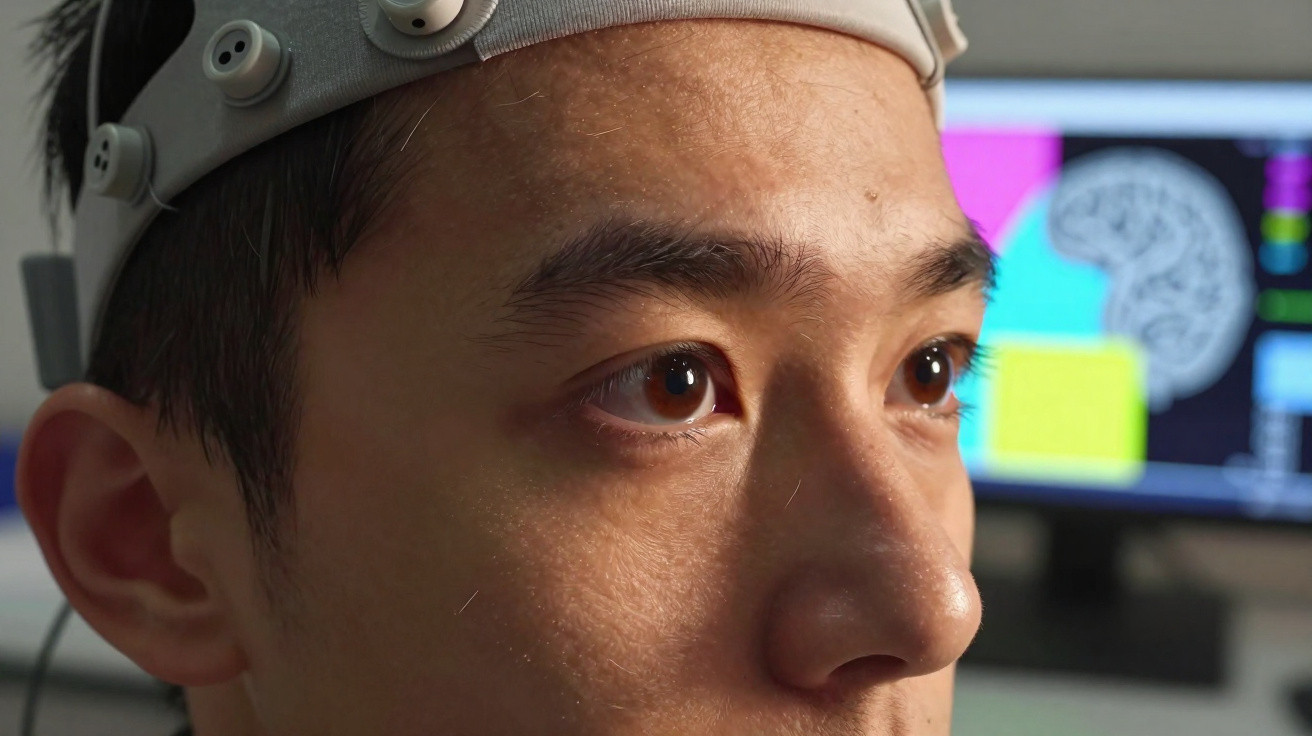
Pupil dilation and the brain's response to surprise
When you walk into a dark room, your pupils rapidly widen to admit extra light and improve your vision. In brighter surroundings, they narrow again.
This reflex is familiar, yet pupils can widen for several other, less apparent reasons.
For instance, surprise can cause our pupils to dilate as though darkness has suddenly fallen. This is part of a brief arousal response, whose purpose and behavioural consequences are still not well understood.
A new study has clarified the connection between surprise and pupil size. Its findings suggest that widened pupils - and the wider arousal response they indicate - may be important for helping us respond to unforeseen events.
After something surprising occurs, the brain appears to enter a "refresh" mode, says co-author Matt Nassar, an associate professor of neuroscience and of cognitive and psychological sciences at Brown University. Dilated pupils are among its most clearly observable signs.
"Pupil dilation signals a spike in arousal, and our findings support the idea that these rapid fluctuations in arousal are doing something useful in the brain," Nassar says.
"They're enabling us to deal with a world that often changes from one context to another context."

(Deagreez/iStock/Getty Images Plus)
Research has shown that pupil dilation is more complicated than it may appear. Beyond its well-known link to light levels outside the body, it may reflect a range of internal factors.
Pupils may dilate in response to cognitive effort, physical exertion, or emotional arousal, for example, as well as because of certain medicines. Their size can also offer hints about what you are imagining, or which memories you are revisiting during sleep.
Pupil size also changes routinely in step with breathing: they generally widen when we breathe out and constrict at the beginning of an inhalation.
The locus coeruleus and transient arousal
Some of the arousal fluctuations that follow surprise are mediated by the locus coeruleus, a small group of neurons in the brainstem.
This structure is the body's principal source of norepinephrine, a neurotransmitter and hormone involved in the "fight or flight" response.
The locus coeruleus commonly becomes active after an unexpected event. Its heightened activity is associated both with shifts in pupil size and with certain brain waves that can be measured using electroencephalography (EEG).
Previous research has identified evidence of surges in norepinephrine and other indicators of arousal after surprising events, Nassar notes. However, the role these changes fulfil and the ways they could affect behaviour have remained uncertain.
To explore this question, Nassar and colleagues enlisted 63 healthy adult participants for an experiment in which they made predictions about coloured stimuli shown on a screen.
Participants viewed sequences of coloured patches. At first, they were simply asked to remember the colours they had just seen. Later, using patterns learnt from earlier images, they had to predict which colours would be shown in the next image.
While they completed these tasks, the researchers collected physiological measurements - including EEG signals and pupil-diameter changes - to investigate how the brain responds when something unexpected happens.
"We wanted to capture the phenomenon associated with two overarching ideas about how the arousal system affects behavior," says co-author Harrison Marble, a research assistant and manager in Nassar's lab.
"One of them is related to learning, and the other is related to perceptual bias."

How surprise helps pupils and predictions reset
The study found that when screens presented surprising colours that contradicted participants' predictions, their pupils did indeed dilate. They also showed increased levels of particular brain waves associated with transient arousal and activation of the locus coeruleus/norepinephrine system.
People who displayed this response appeared to gain an advantage: they made learning adjustments suited to the conditions and showed less perceptual bias.
As images matched their expectations, participants became more biased. But an unanticipated image appeared to jolt them out of that pattern. The pupil and brain-wave results indicate that they learnt from surprises and applied that information to later predictions.
This process may act somewhat like a refresh mechanism in the brain, allowing us to discard outdated expectations and preparing us to begin learning new ones.
Related: Do Eyes Really See The World Upside Down? Here's The Science.
"The brain holds on to some mental context, and then when it recognizes that you're in a new situation, you replace that context. Changes in pupil diameter, as well as specific EEG readings, are external markers of the brain that shows it's loading that new context," Nassar says.
"This both limits the effect that the previous context had on perception and also provides a clean slate, unencumbered by previous expectations, thereby allowing one to learn faster," he adds.
The study appeared in Nature Human Behaviour.
This article was fact-checked by Fiona MacDonald and edited by Fiona MacDonald. Although we take pride in our process, we are only human. If you notice an error, please let us know.






Comments
No comments yet. Be the first to comment!
Leave a Comment