
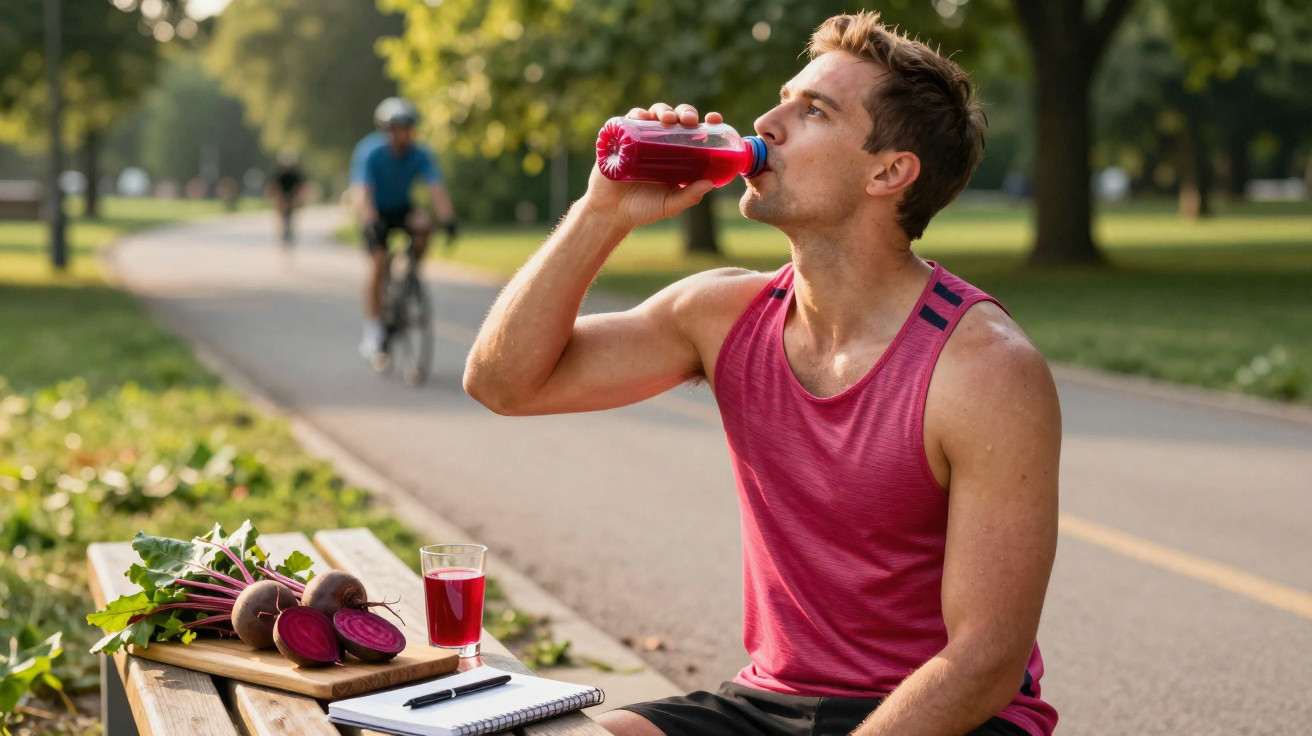
Beetroot is increasingly being used as a performance aid by athletes and by people seeking an edge in running and cycling.
Some choose to juice beetroot, others eat it, while some make a drink using beetroot powder. But can it genuinely make a noticeable difference to how fast we race or cycle uphill?
Beetroot performance benefits: modest gains for some
A major systematic review published in 2020 examined 80 clinical trials in which participants were randomly allocated to consume beetroot juice or not. It concluded that beetroot juice could improve athletic performance.
In sports where every second or centimetre matters, even a small gain can be important. During a 16.1 kilometre (10-mile) cycling time trial, the improvement associated with beetroot consumption was equal to 48 seconds.
However, when the researchers assessed subgroups within the studies, beetroot juice did not appear to work for women or elite athletes. This may have been because too few participants from these groups were included to reach firm conclusions.
A further large systematic review, published in 2021, considered 73 studies involving endurance athletes who run, swim or cycle over long distances. It reported similar findings. Beetroot supplementation, along with other nitrate-rich vegetables, increased time to exhaustion by an average of 25.3 seconds and distance covered by 163 metres.
These benefits were found among recreational athletes, but not elite athletes or sedentary people. The review did not specifically examine women.
Why beetroot may improve exercise performance
Beetroots contain high levels of nitrate and anthocyanins. While both offer health benefits, nitrates are chiefly responsible for the performance effects.
After it is consumed, nitrate is converted into nitrite by bacteria in the mouth. The acidic environment of the stomach then converts nitrite into nitric oxide, which is absorbed into the bloodstream.
Nitric oxide widens blood vessels, allowing oxygen to reach the muscles more rapidly so that energy can be used to power exercising muscles.
As a result, less energy is required for the same performance, meaning fatigue takes longer to develop.
How to use beetroot juice for training and competition
The Australian Institute of Sport (AIS) has evaluated beetroot and placed it in its Group A supplement category. This classification indicates strong scientific evidence for its use in particular sporting situations.
According to the AIS, beetroot supplementation may help with exercise, training and competitive events lasting 4–30 minutes, as well as team sports involving intermittent activity.
For performance effects, the AIS recommends choosing a beetroot product - whether juice, powder or food - containing between 350–600 mg of inorganic nitrate. Check the label, as several concentrated juices are available.
Beetroot provides around 250 mg of nitrate per 100 g, meaning you would need to eat at least 200 g of baked beetroot to achieve the same effect.
To allow sufficient time for nitrates to be converted into nitric oxide and absorbed into the blood, consume the product 2–3 hours before training or competition. Drinking beetroot juice for several days before training or an event may provide additional benefits.
Avoid antibacterial products such as mouthwash, chewing gum or sweets, however. They can kill the oral bacteria required to convert nitrate into nitrite.
Potential drawbacks of beetroot supplementation
Your urine may become red, making it harder to tell whether you are dehydrated. Your stools may also turn red.
Some people experience stomach upset after drinking beetroot juice. Try it during training first to find out whether it causes any problems - rather than discovering this on competition day.
Nitrate from the rest of your diet
Although it is difficult to consume enough nitrate from vegetables alone to directly enhance athletic performance before an event, eating five portions of vegetables each day can help maintain raised nitric oxide levels in the blood.
Vegetables with higher nitrate levels include celery, rocket, spinach, endive, leek, parsley, kohlrabi, Chinese cabbage and celeriac. There is no clear evidence on how cooking and storage affect nitrate content, so it is probably best to eat them in whichever form you enjoy most.
It is best, however, to avoid cured meats containing added nitrate. This additive prevents bacterial growth and provides flavour and colour, but the sodium nitrite produced can raise the risk of cancer.
Although beetroot may offer a small boost to performance, the rest of your training should also be tailored appropriately. Make sure you consume enough carbohydrate and protein, and drink sufficient water. You may need to consult an exercise scientist and an accredited practising sports dietitian to achieve the best result.
Evangeline Mantzioris, Programme Director of Nutrition and Food Sciences, Accredited Practising Dietitian, University of South Australia
This article is republished from The Conversation under a Creative Commons licence. Read the original article.
An earlier version of this article was published in February 2023.





Comments
No comments yet. Be the first to comment!
Leave a Comment