
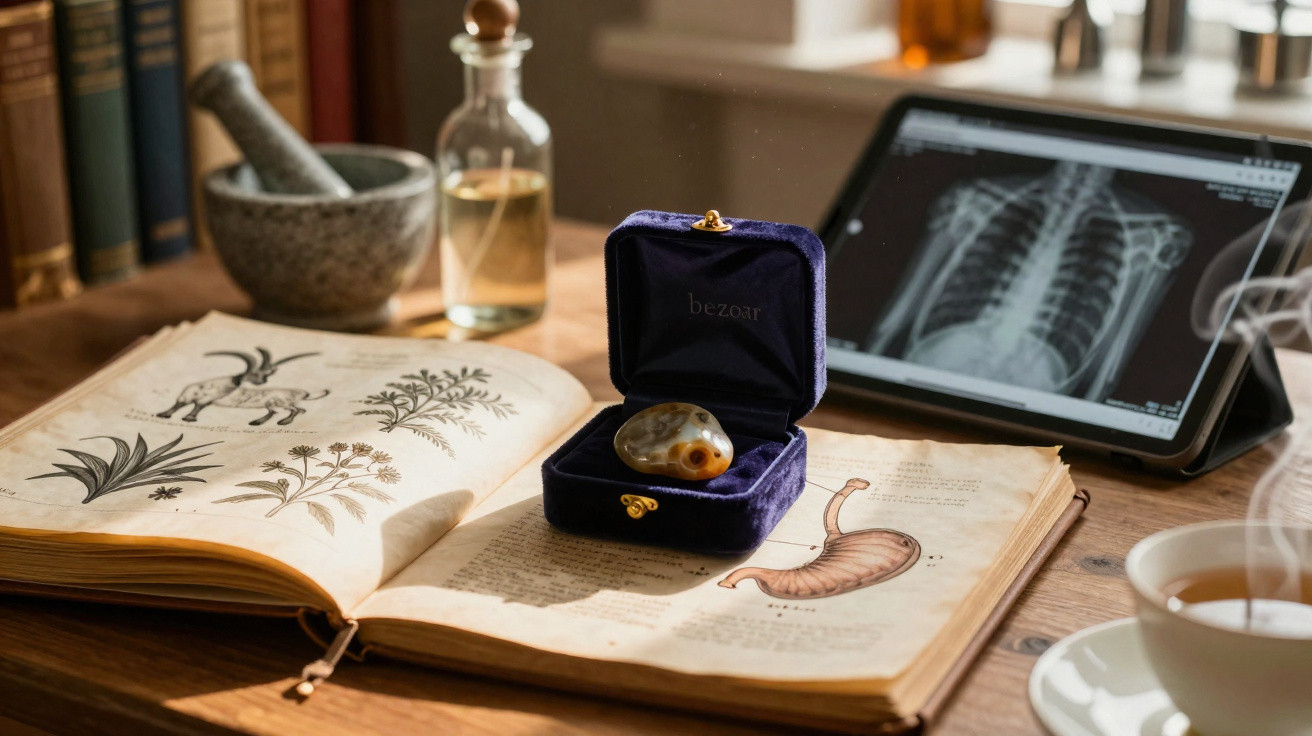
In the first Harry Potter novel, Professor Severus Snape tries to humiliate Harry by testing his knowledge of bezoars. Snape describes them as stone-like lumps found in a goat’s stomach that can serve as an antidote to most poisons. Later in the series, a bezoar saves Ron Weasley after he is poisoned.
The word bezoar derives from Persian and Arabic, where it translates as "antidote" and "against poisons" – likely the source of J.K. Rowling’s inspiration. Yet many Harry Potter readers may be unaware that bezoars are not simply an invention of Rowling’s imagination.
Although they can indeed occur in the stomachs of goats and other animals, people can also develop bezoars – though rarely – in the stomach, intestines, gullet and even the windpipe.
Bezoars vary greatly in both size and weight. In July 2024, surgeons removed a 40.6cm mass of hair weighing 0.9kg from the stomach of a 24-year-old woman in Manabí, Ecuador. In March 2024, doctors in Newcastle extracted a 15.2cm hairball from the stomach of a seven-year-old girl. Reports stated that it occupied 80 percent of her bowel.
Often stone-like in appearance, bezoars can consist of any substance that cannot be digested or absorbed through the gut wall. The material therefore builds up in the lumen – the gut’s hollow interior – and steadily becomes larger.
Developing a bezoar requires particular circumstances. It usually involves consuming indigestible matter while having a sluggish digestive system, meaning the material cannot be moved through the gut and passed out as faeces.
Types of bezoar
There are numerous types of bezoar, generally categorised by their contents. Plant-based phytobezoars are one example, as plant matter is largely made of cellulose, a compound humans cannot digest.
Eating persimmon can, however, lead to diospyrobezoars – a type of phytobezoar specifically linked to excessive consumption of this fruit. Persimmons contain particularly high levels of tannins, which give them their bitter taste, especially when unripe. These tannins have been recognised as posing a high risk of bezoar formation.
Many other substances can turn into bezoars. Fibres from fruit and vegetables, milk, medicines and gums – including swallowed chewing gum – may create an indigestible mass in the stomach. Swallowing inorganic materials, including paper, polystyrene and plastic, can also result in bezoars.
This is especially linked with pica, a condition involving cravings for inedible items or substances with no nutritional value, and is most commonly seen among pregnant women.
Not every bezoar is stony. Trichobezoars consist of swallowed hair, which may gather in the body in much the same way as a cat’s hairball. Over years of hair swallowing, this may cause Rapunzel syndrome, named for the fairytale character, in which the bezoar increases in length and size.
Some patients need surgery to remove a large mass of hair from the bowel, said to resemble Rapunzel’s long plait.
Bezoars through the ages
Stone-like bezoars taken from animals were once sought-after collectors’ objects, largely because people believed they could treat poisoning.
They probably existed as collectables in the Middle East long before reaching medieval Europe. During the era of kings, lords and merchants – when many people were preoccupied with the threat of assassination by poison – placing a bezoar in a drinking vessel was viewed as a form of protection. It would, unfortunately, have been completely ineffective.
Even so, bezoars remained valued curiosities. Some were fashioned into jewellery or embellished with gold and gems for collections. They are still exhibited in certain medical museums, including London’s recently refurbished Hunterian Museum.
Modern-day bezoars
As with other stone-like masses in the body, including gallstones and renal calculi, bezoars may cause no symptoms unless they move into narrower areas and become trapped. They can consequently remain undetected for years.
When bezoars do create issues – including nausea, abdominal pain and vomiting, or even gastric ulcers and bleeding – several removal methods are available. A sufficiently small bezoar can be extracted with an endoscope, an instrument fitted with a camera that allows clinicians to see inside the gut and remove the stone. Larger bezoars may need to be removed surgically.
One non-invasive treatment for certain bezoars, including persimmon stones, involves trying to dissolve them using salt solutions, enzyme preparations and, unexpectedly, cola.
However, medical opinion remains divided over whether dissolving bezoars in this way is effective. More concerningly, if these treatments might dissolve a stone, what else could they be doing to the stomach?
If you are susceptible to bezoars or concerned that you may develop one, avoid foods carrying a greater risk, such as persimmons, celery, pumpkin, prunes and sunflower seed shells. Chew food thoroughly before swallowing, avoid swallowing indigestible non-food items such as hair, and seek medical advice if you are worried about pica.
Dan Baumgardt, Senior Lecturer, School of Physiology, Pharmacology and Neuroscience, University of Bristol
This article is republished from The Conversation under a Creative Commons licence. Read the original article.





Comments
No comments yet. Be the first to comment!
Leave a Comment