
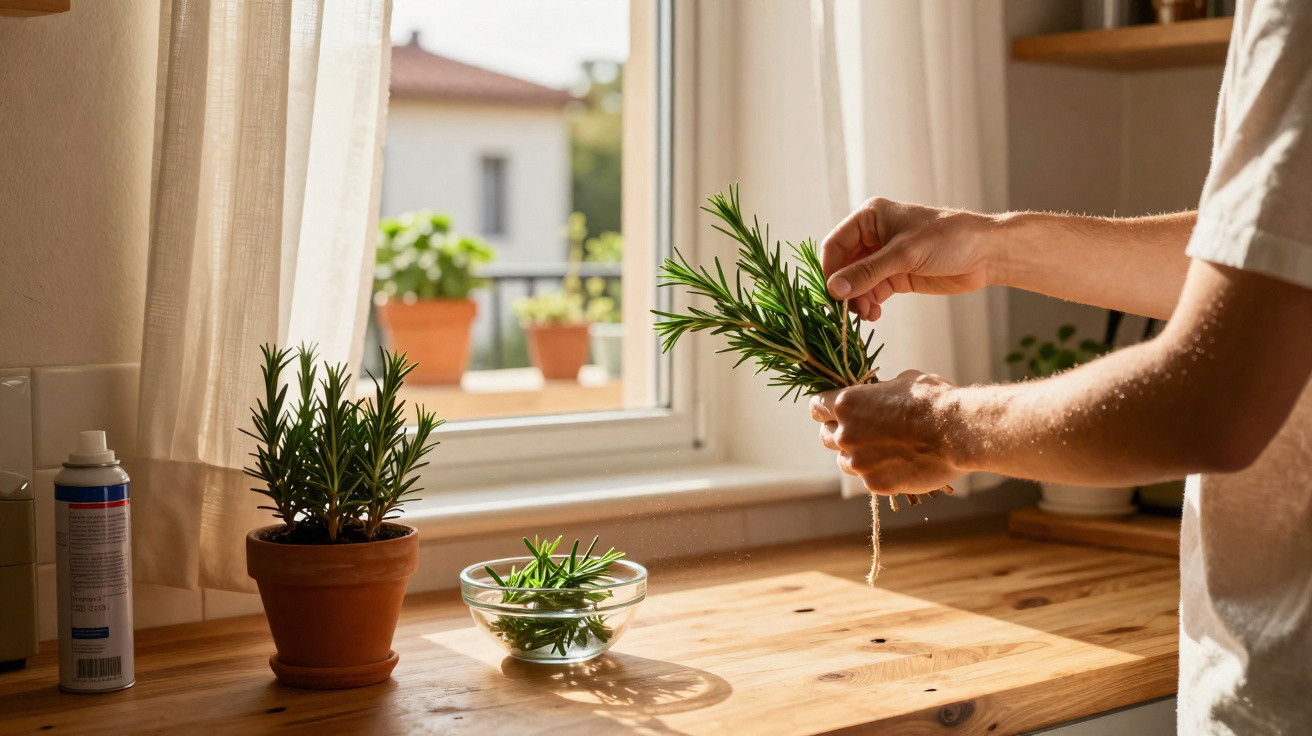
For centuries, an unassuming green sprig has subtly influenced how people felt, slept and even maintained their health indoors.
Well before synthetic air fresheners and plug-in diffusers became commonplace, households throughout Europe used rosemary to make their homes seem fresher, more restful and, in some way, safer. The practice has largely disappeared, but scientific attention is once again turning towards this traditional domestic helper.
A plant woven into memory, medicine and daily life
Rosemary has always been more than a culinary herb. In ancient Greece and Rome, it was associated with remembrance and protection. Students would place sprigs in their hair ahead of examinations. During periods of illness, families burnt it in the belief that the smoke would cleanse the air.
Throughout the Middle Ages, rosemary was widely kept in homes affected by epidemics. People had no understanding of viruses or bacteria, yet they recognised that stale air could be dangerous. They therefore burnt branches by windows and doorways, or placed them in bedrooms.
Even into the early 20th century, keeping a handful of rosemary in a sickroom was a familiar custom across southern Europe. Its purpose was straightforward: “purify the atmosphere” and hold illness at a distance.
Today’s research on indoor air and microbes suggests those old instincts were not entirely wrong.
Rosemary’s distinctive fragrance is created by compounds including 1,8-cineole, camphor and rosmarinic acid. Researchers have examined these molecules for antibacterial, antifungal and mild antiviral properties. They will not miraculously sterilise a room, but they may affect the balance of microbes in the air and on household surfaces.
Freshening indoor air without aerosol sprays
Modern homes contain numerous synthetic scents, from aerosols and plug-ins to scented candles and fabric sprays. Many release volatile organic compounds (VOCs), which may irritate the lungs, particularly for children, people with asthma and pets.
Rosemary provides a more understated alternative. Whether fresh or dried, its sprigs gradually emit aromatic compounds without requiring solvents, propellants or intense perfumes.
How a rosemary sprig works
In a warm, dry space, minute quantities of rosemary’s essential oils evaporate from the plant. Air movement then disperses those molecules around the room.
This gentle diffusion can help reduce certain airborne microbes and soften unwanted smells, without coating the room in fragrance.
There is no need to heat oils in a diffuser. Indeed, concentrated essential oils may cause headaches or irritation in some individuals. The whole herb is gentler and generally easier to live with.
For anyone sensitive to fragrance, one modest bundle of rosemary can feel considerably less intrusive than a synthetic room spray. Its aroma is herbal and faintly resinous, rather than intensely floral or sweet.
Straightforward ways to use rosemary as a home purifier
- Set a small dish of dried rosemary close to a radiator, allowing the warmth to gently spread its scent.
- Suspend a tied bundle from a hallway hook, where it catches air as people enter and leave.
- Put several sprigs into a breathable fabric sachet, then place it in shoes or beside the laundry basket.
- For a more intensive refresh, allow a dried twig to smoulder briefly as incense, before ventilating the room thoroughly.
These approaches are not substitutes for fresh air or routine cleaning, but they may make an airless room seem easier to breathe in and less stale.
A Mediterranean aroma that affects the mood
Passing a rosemary bush in summer can produce an almost bodily response. Its fragrance is crisp, pine-like and lightly floral, awakening the nose before settling gently into the background.
Laboratory research into 1,8-cineole and other rosemary compounds has associated the aroma with greater alertness and improvements in some aspects of memory. People exposed to it occasionally demonstrate quicker reaction times or stronger recall in basic tasks.
In a home office, a quiet sprig of rosemary near the keyboard can offer a small, caffeine-free lift.
Naturally, the result is modest. It cannot take the place of proper sleep. However, people working remotely often say that a herb on the desk – rosemary, mint, thyme – reconnects them with the physical world and interrupts the repetition of screen-based work.
In a bedroom, its character can feel different. Combined with dimmer light and cooler air, rosemary is often experienced as soothing rather than energising. Some people place a small sachet of dried leaves beneath the pillow, creating a steady, subtle scent that gradually disappears overnight.
Where rosemary has the greatest effect in the home
| Room | How to use rosemary | Potential benefit |
|---|---|---|
| Bedroom | Sachet beside the pillow or a branch on the headboard | Gentler atmosphere, less “musty” odour, a bedtime ritual |
| Home office | Small pot on the desk or a sprig in a cup | Slight support for concentration, screen-time fatigue feels less burdensome |
| Kitchen | Bundle hung near the cooker or window | Helps disguise lingering cooking odours and keeps a culinary herb close by |
| Hallway | Decorative bouquet by the door | Inviting aroma, symbolic “protective” gesture, insect deterrent |
From folklore protection to useful pest control
For generations around the Mediterranean, rosemary has been regarded as a plant of protection. Families fastened branches above doorways, sewed leaves into children’s clothing or stored sprigs in wardrobes. The intention was to repel illness and bad fortune.
Beneath that belief lies a practical advantage: insects do not like its scent. Moths, mosquitoes and certain flies generally avoid places where strongly aromatic herbs are kept.
A dry bouquet in a wardrobe can reduce moth damage to wool and natural fibres without chemical mothballs.
During summer, rosemary, lavender and basil pots on window sills can create a fragrant sort of barrier. They will not prevent every mosquito from entering, but they can often reduce the number that hum through open windows in the evening.
Once again, this is no replacement for nets or other physical defences. It does, however, encourage a different approach to protecting the home: relying less on harsh biocides and more on several mild deterrents working together.
Reintroducing rosemary to everyday interiors
From a practical perspective, rosemary is a forgiving plant. It enjoys light, copes with a degree of neglect and grows successfully in containers.
Growing and using one rosemary plant indoors
A sunny windowsill and a pot that drains well are all that is required. Rosemary does not tolerate waterlogged roots, making a gritty compost blend the most suitable choice. Water it once the surface of the compost feels dry, and provide as much direct sunlight as possible in your home.
After the plant has become established, you can trim small stems on a regular basis. Use the tender tips in food, while reserving the woodier stems for drying into bundles and sachets.
- To freshen the air, hang stems upside down in a cool, shaded spot for roughly a week.
- For cooking, cut fresh sprigs and keep them in a glass of water on the worktop for up to a couple of days.
- To support the mood, display one short stem in a small vase wherever you read or work.
This double function – flavouring and fragrance – turns rosemary into more than decoration. Like a kettle or a much-loved mug, it becomes part of the household routine.
What science does and does not promise
It is worth keeping expectations realistic. Rosemary cannot sterilise a house, treat illness or stand in for medical care. Research demonstrating antimicrobial or cognitive effects is typically undertaken in controlled settings, sometimes using concentrations higher than those produced by a single potted plant.
Think of rosemary as one supportive element in a healthier indoor environment, alongside fresh air, cleaning and low-toxicity materials.
Those with asthma or fragrance sensitivities should still proceed carefully. Although whole herbs are usually less irritating than concentrated oils or candles, individual responses differ. Begin with a small sprig in a well-ventilated room, then observe how your body reacts.
Everyday situations where rosemary quietly shines
Consider a rented flat without a garden, with thin walls and persistent odours from neighbours’ cooking. A pair of rosemary pots on the window ledge, together with opening the windows during cooler parts of the day, can make the space feel more personal. The scent has character without becoming overpowering.
Alternatively, imagine a family seeking to reduce the number of household chemicals they use. Rather than buying a strongly scented wardrobe freshener, they combine dried rosemary and lavender in little cotton bags. Their clothes take on a clean, herbal aroma. Moth damage decreases, while they avoid the sickly fragrance that many commercial products leave behind on fabrics.
For parents working at home while children are nearby, a rosemary plant on a shared table can become a small object of ritual. Before starting homework, a child crushes a leaf between their fingers, breathes in and begins work. The fragrance marks “focus time”, gradually becoming a habitual signal.
Such small, nearly unnoticed actions are what secured rosemary’s role in earlier homes. It was not a miracle treatment, but a dependable living presence that made rooms seem slightly fresher, calmer and better cared for.






Comments
No comments yet. Be the first to comment!
Leave a Comment