
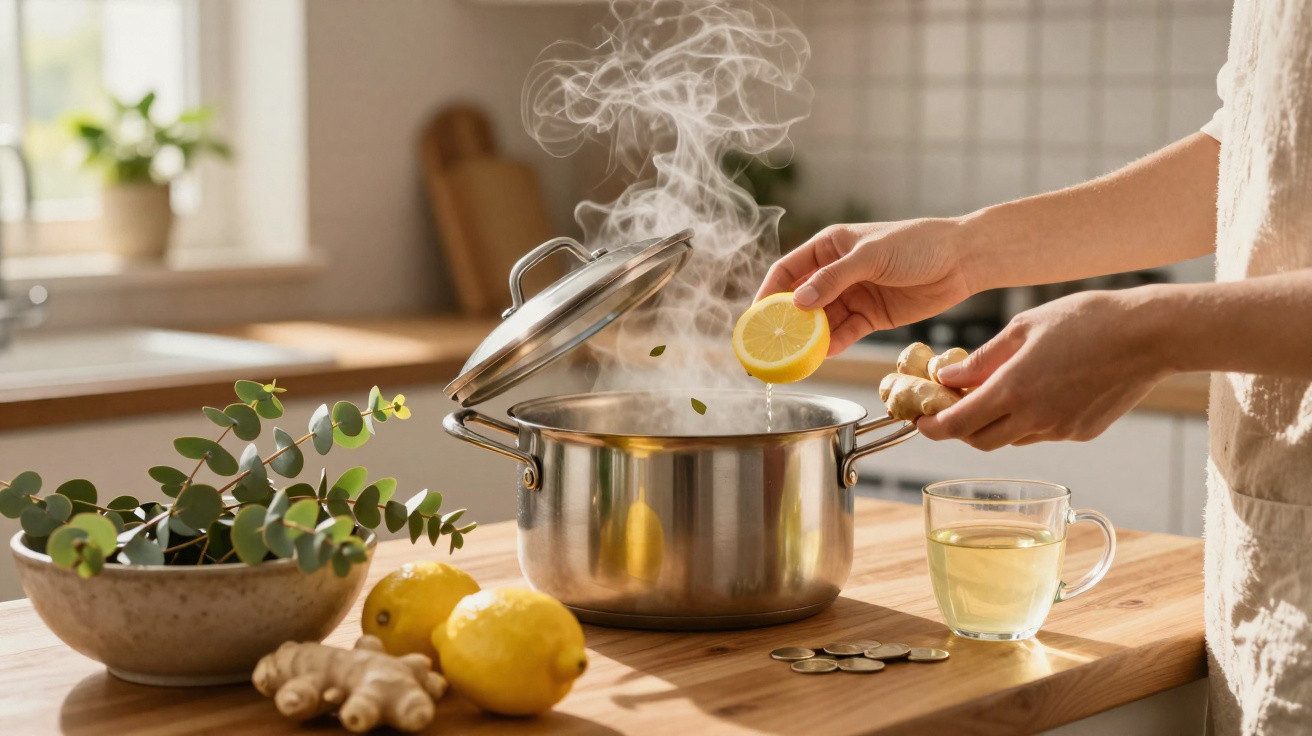
Boiling eucalyptus leaves with ginger and lemon is a household trick used to scent the home in winter and lessen the feeling of stuffy air. The steam releases strong aromas and makes the space feel more refreshing.
Why boil eucalyptus with ginger and lemon?
Eucalyptus gives off a powerful herbal fragrance that is linked with the sensation of clearer airways. Combined with ginger and lemon peel, its steam develops warm, citrusy and fresh notes that can help neutralise odours and freshen the room.
Eucalyptus is part of the Eucalyptus genus, a group of trees recognised for their aromatic leaves. In the home, boiling them chiefly makes use of the fragrance released by the leaves; it does not turn the blend into a medicine or treatment.
This combination is used for the following reasons:
- Eucalyptus: releases a fresh, herbal scent into the steam.
- Ginger: adds a warm, slightly spicy fragrance.
- Lemon: its peel produces a citrus scent and a clean feel.
- Steam: gradually disperses the fragrance around the home.
- Care: never leave the pan unattended on the hob.
What is the ideal ingredient ratio?
For a small to medium-sized home, use 1 litre of water, 5 to 8 thoroughly washed eucalyptus leaves, 3 to 4 thin slices of ginger, and the peel from 1 lemon. This quantity scents the space without making the aroma too strong.
It is best to use lemon peel rather than much juice, as the aromatic oils are mainly found in the outer layer. For a more citrusy fragrance, add extra strips of peel, but avoid using too much lemon, which can create bitterness.
How can you boil it without wasting the fragrance?
Place all the ingredients in a pan with the water and heat until it reaches the boil. Then reduce the heat and let it simmer gently for 10 to 15 minutes, allowing enough time for fragrant steam to emerge without the mixture drying out.
Natural fragrance for cold days
The key is a low heat and a short cooking time.
Boiling for too long concentrates the scent and may cause the pan to boil dry.
Keep the room ventilated and switch off the heat when finished.
Once the simmering time is over, turn off the hob and leave the pan somewhere safe so the scent can continue to spread. Never bring your face close to hot steam, as it may cause irritation or a burn to the skin.
Prepare it in this order:
- Wash the eucalyptus leaves and lemon peel.
- Pour 1 litre of water into an uncovered pan.
- Add 5 to 8 leaves, sliced ginger and lemon peel.
- Simmer over a low heat for 10 to 15 minutes.
- Turn off the heat before the water reduces too much.
How does it differ from commercial air fresheners?
This homemade blend releases fragrance through evaporation, without aerosols, intense synthetic perfumes or fixatives. The scent is generally gentler and short-lived, making it suitable for scenting a home for a few hours, though it will not last as long as commercial air fresheners.
It also offers more control over the ingredients. With a pan, you can alter the amount of eucalyptus, ginger and lemon to suit the size of the home. In return, this approach requires a hob, constant attention and responsible use.
In practical terms, consider the following:
- Natural simmering: fresh, temporary and adjustable fragrance.
- Commercial air freshener: longer-lasting but more intense scent.
- Essential oils: concentrated, requiring care around children and animals.
- Fragrance pan: needs supervision to prevent accidents.
When should you avoid this mixture at home?
As with the trick of boiling a sprig of rosemary at home, the aim is to scent the room cautiously. People with asthma, respiratory allergies, babies, pregnant women and sensitive animals may react badly to intense vapours.
If breathlessness, wheezing, eye irritation or worsening respiratory symptoms occur, turn off the hob and air the room. The mixture may provide aromatic comfort, but it is not a replacement for medical advice, proper treatment or health care.



Comments
No comments yet. Be the first to comment!
Leave a Comment