
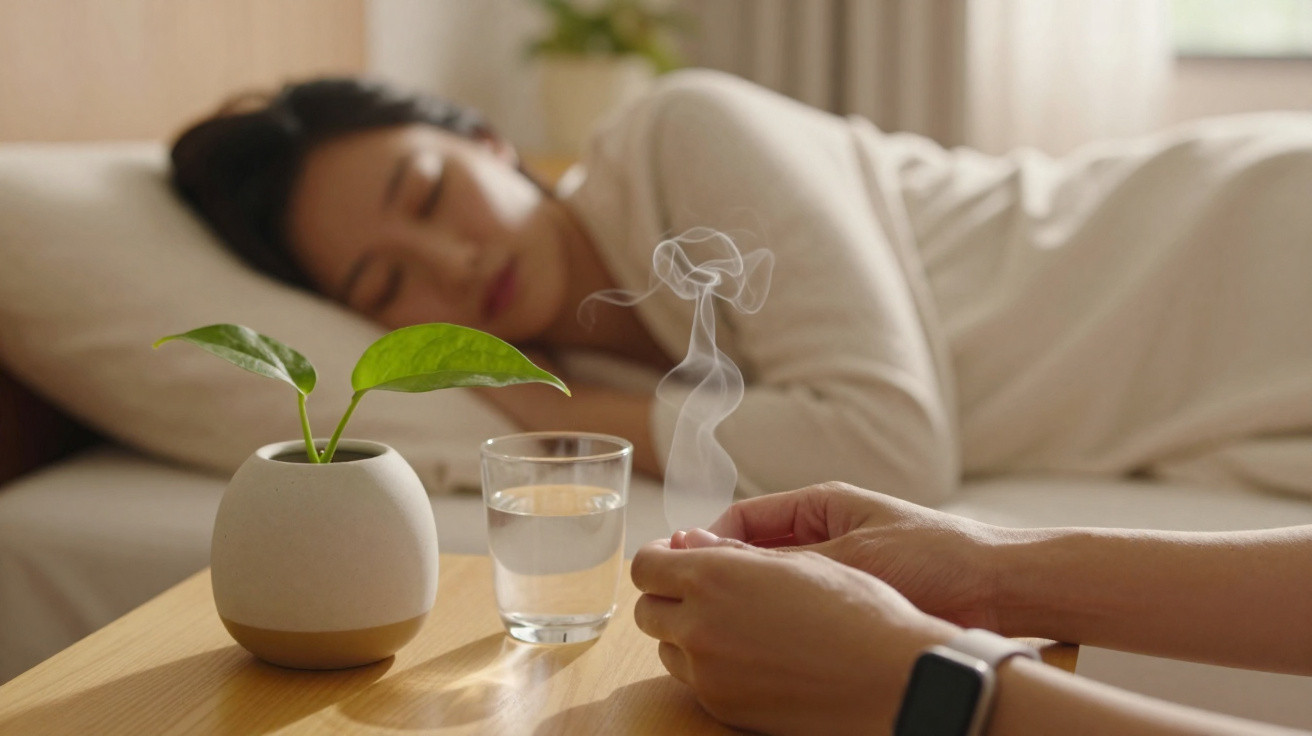
The night the plant arrived, the bedroom barely looked any different.
The unmade duvet was still there, as was the stack of books and the streetlamp glow slipping past the curtains. The only addition was a plain green pot on the bedside table, its leaves shining beneath the warm light. There was no device, app or replacement mattress. Only a plant.
Three weeks on, the sleep tracker was showing another picture. Deep sleep lasted longer, wake-ups were less frequent, and mornings no longer felt quite so much like dragging yourself out of wet concrete. Nothing else in the routine had shifted. Bedtime remained too late and Netflix was still too hard to resist. Yet one colour on the phone graph had risen: deep sleep.
NASA’s 2025 study emerged quietly amid an obsession with wearables and melatonin gummies. Hidden in its charts was a figure that seemed implausible: test subjects with a single bedroom houseplant were linked to a 37% increase in deep sleep phases. One pot. One plant. A third more deep sleep.
That little patch of greenery beside the bed may be doing more than enhancing the room.
How one quiet plant rewired the night
Imagine a NASA sleep laboratory at 2:47 a.m. The room is dark, illuminated only by subtle sensors and dim monitor screens. A volunteer lies still, electrodes attached to their scalp, breathing deeply and slowly. In a corner beside the bed, an ordinary houseplant rests in a white pot, its leaves scarcely stirring in the air-conditioned quiet.
In the control room, the brain-activity traces begin to change. Deep sleep starts: the slow, valuable waves that restore body and brain. Researchers note the time and measure it against nights spent without plants. The same trend emerges again and again. When a plant is present in the room, the period of deep sleep expands.
Initially, the team wonders whether it has misread the data. A 37% rise is not a minor improvement. It is the kind of increase associated with prescription sleep medication, not a fern sitting on a shelf. Something in the room was altering the way the brain relaxed.
A 34-year-old engineer taking part in the trial kept a sleep diary. She did not know which nights included plants and which did not. “On some nights,” she wrote, “I woke up feeling like I’d actually been offline. Not just lying there with my thoughts.” Those entries corresponded, almost without exception, to the “plant nights”.
Elsewhere in the NASA facility, a control group slept in matching rooms with no plants. Temperature, bedding and noise levels were identical. Their deep sleep remained persistently low, while their trackers displayed the familiar pattern of brief, interrupted stages. The contrast was clear. Across several weeks, the “plant rooms” delivered an average 37% increase in total deep-sleep minutes.
The explanation is less mystical than it may sound. Plants alter a room’s chemistry. They absorb carbon dioxide, release oxygen and interact with volatile organic compounds in the air from paint, furnishings and textiles. NASA had investigated this decades earlier for space habitats. Its 2025 study took the idea further, examining not only air quality but also sleep architecture.
Deep sleep responds strongly to small stressors. Slightly higher CO₂, a little too much dryness or a faint chemical odour can all register with the brain, even when you are unaware of them. Researchers found that a single medium-sized plant flattened overnight CO₂ peaks. Humidity increased just enough to reduce the scratchy, dry-throat sensation. The setting became fractionally more “forest-like”. Our nervous systems, shaped in natural environments, appear to recognise that signal and lower their defences.
Turning your bedroom into a micro-sleep lab
The NASA protocol with the strongest results was remarkably straightforward: position one medium-sized plant within two metres of the sleeper’s head, roughly at chest or eye height when lying down. There was no need for a jungle or a green wall. A distinct but modest presence in the breathing zone was enough.
Several species were tested, but three repeatedly featured in the best nights: snake plant (Sansevieria), peace lily and pothos. Each coped well with low light, inconsistent watering and standard indoor air. Researchers described them as “space-worthy plants” – robust, dependable and quietly useful. Put simply, they are plants unlikely to die within a week.
Timing also played a part. Participants were asked to lower the lights an hour before going to bed and not to keep moving the plant. The bedroom became a consistent, slightly greener cocoon. There was no elaborate ritual or spiritual element, merely a small living feature grounding the room each night.
At a practical level, the simplest way to begin is almost unremarkable: purchase one plant, place it beside the bed and keep it there. There is no need to redesign the whole home. Begin with a single pot on the bedside table rather than a complete “urban jungle”. Give your nervous system three to four weeks to assess it quietly.
There is one inconvenient detail: the benefit diminished when people treated the plant as decoration and stopped paying attention to it. If they watered it once and then neglected it for a month, the effect faded. The NASA team recorded this too: a limp, dying plant offered zero benefit and, in some instances, appeared to make participants subconsciously uneasy. Something dying nearby hardly communicates safety to the brain.
Let’s be honest: nobody truly manages that every day. Daily misting, flawless watering timetables and app reminders all lose out to everyday life. That is why resilient species matter here. A snake plant will tolerate a great deal of neglect. A peace lily droops dramatically when it needs water, then recovers once you remember it.
One researcher expressed the finding in a memorable way:
“We thought we were just tweaking air chemistry. What we saw looked more like emotional safety. A single living thing made the room feel less like a lab and more like a place where the nervous system could stand down.”
That emotional dimension appears in ordinary homes as well. During a calm evening, a plant can become a silent companion. You lower the lights, turn your phone face down and catch the soft green outline in the corner of your vision. It does not judge your bedtime or buzz with alerts. It simply remains there.
- Select one hardy plant: snake plant, peace lily or pothos.
- Keep it within two metres of your pillow, ideally at bedside-table height.
- Water it thoroughly every 1–2 weeks instead of giving it a small daily amount.
- Avoid powerful synthetic fragrances or sprays in the bedroom.
- Allow three to four weeks before assessing the outcome.
What this changes in the way we talk about sleep
Viewed logically, the NASA 2025 study offers a quiet small-scale revolution: not every answer to sleep requires a screen, subscription or pill. A plant does not monitor you, send alerts or sell your data. It simply sits there, changing micro-conditions that we are only starting to understand.
The 37% figure will not resonate equally with everyone. Some will think: “I’ve tried everything, one plant won’t fix my insomnia.” For others, it may bring a flicker of hope: one tangible, inexpensive item they can buy on a Saturday and carry upstairs themselves. Something to test that does not add another mental burden or another routine to get wrong.
Most of us know the feeling of entering a hotel room with a slight chemical smell, sealed windows and recirculated air, then finding sleep immediately more delicate. NASA’s data gives that experience numbers. Cleaner, more “alive” air is associated with deeper, steadier slow-wave sleep. A plant is not miraculous, but for some people it could provide the missing 10–20% that helps everything else work.
There is something unexpectedly grounding in the thought that the best sleep you have had in months might come from a £15 plant on a supermarket shelf. It challenges the idea that health must be technologically advanced, costly or complex. It suggests another experiment: rather than asking “how can I hack my sleep?”, ask “what if my bedroom felt just 5% more like a safe, natural place?”
So picture it: tonight, you shift the lamp a little, remove the old coffee cup from the bedside table and set a small green pot beside your book. You turn off the main light, and the room becomes softer. No grand statement or promises. Just you, a bed and a quiet plant breathing alongside you through the night.
| Key point | Detail | Benefit for the reader |
|---|---|---|
| Single bedroom plant | One pot, positioned within 2 m of the head, increases deep-sleep phases by an average of 37% | A simple, affordable option that can be acted on immediately |
| “NASA-friendly” species | Snake plant, peace lily and pothos showed the most consistent effects in the 2025 study | Guides readers towards practical options that tolerate neglect and last well |
| Night-time microclimate | Fewer CO₂ spikes, a slight rise in humidity and lower levels of volatile chemical compounds | Explains why air affects sleep quality, not merely its duration |
FAQ:
- Does the plant really need to be in the bedroom? Yes. The study’s deep-sleep effect appeared when the plant was in the same enclosed room as the sleeper, within a couple of metres of the bed.
- Is it safe to sleep with plants since they also “breathe” at night? For typical household arrangements, yes. The oxygen plants use is negligible compared with the fresh-air benefit and VOC reduction observed in NASA’s data.
- Will a plant replace my sleep medication or therapy? No. It is a complement rather than a cure. It may improve the deep-sleep environment, but persistent insomnia and anxiety still require professional support.
- How long before I notice any change? In the study, patterns began changing after around 10 days and settled by the third or fourth week. Track your sleep if possible, or simply pay attention to how you feel each morning.
- Can I put several plants to “boost” the effect? Surprisingly, more was not necessarily better. The 2025 protocol used one medium-sized plant; crowded rooms sometimes increased humidity too much or triggered allergies.




Comments
No comments yet. Be the first to comment!
Leave a Comment