

Is staying mentally sharp as we grow older a realistic ambition, or merely wishful thinking?
It is entirely achievable, provided we develop habits across our lives that support healthy brain function.
As a cognitive neuroscience researcher specialising in the neuropsychology of ageing, I want to explain, in light of recent scientific progress, how we can protect cognitive health as we age.
The importance of cognitive reserve
Research suggests that one of the most effective approaches is to build and sustain a strong cognitive reserve.
Cognitive reserve is the brain’s capacity to withstand the effects of ageing or neurodegenerative disease without causing major declines in everyday functioning. The concept is now fundamental to efforts aimed at preventing cognitive decline.
In its 2024 update of the report Dementia prevention, intervention, and care, The Lancet noted that tackling 14 modifiable risk factors could prevent or delay 45 per cent of dementia cases.
These factors include physical inactivity, depression and social isolation.
However, one of the earliest and most important factors is a low level of education.
Beyond education
For many years, education has been viewed as the principal marker of cognitive reserve. It represents sustained exposure to intellectually demanding activities that encourage the formation of efficient brain networks.
That perspective is now seen as insufficient. Cognitive reserve is not determined once and for all during childhood or adulthood: it can be developed, preserved and even enhanced throughout life through experiences such as learning, meaningful social contact and mentally stimulating leisure pursuits.
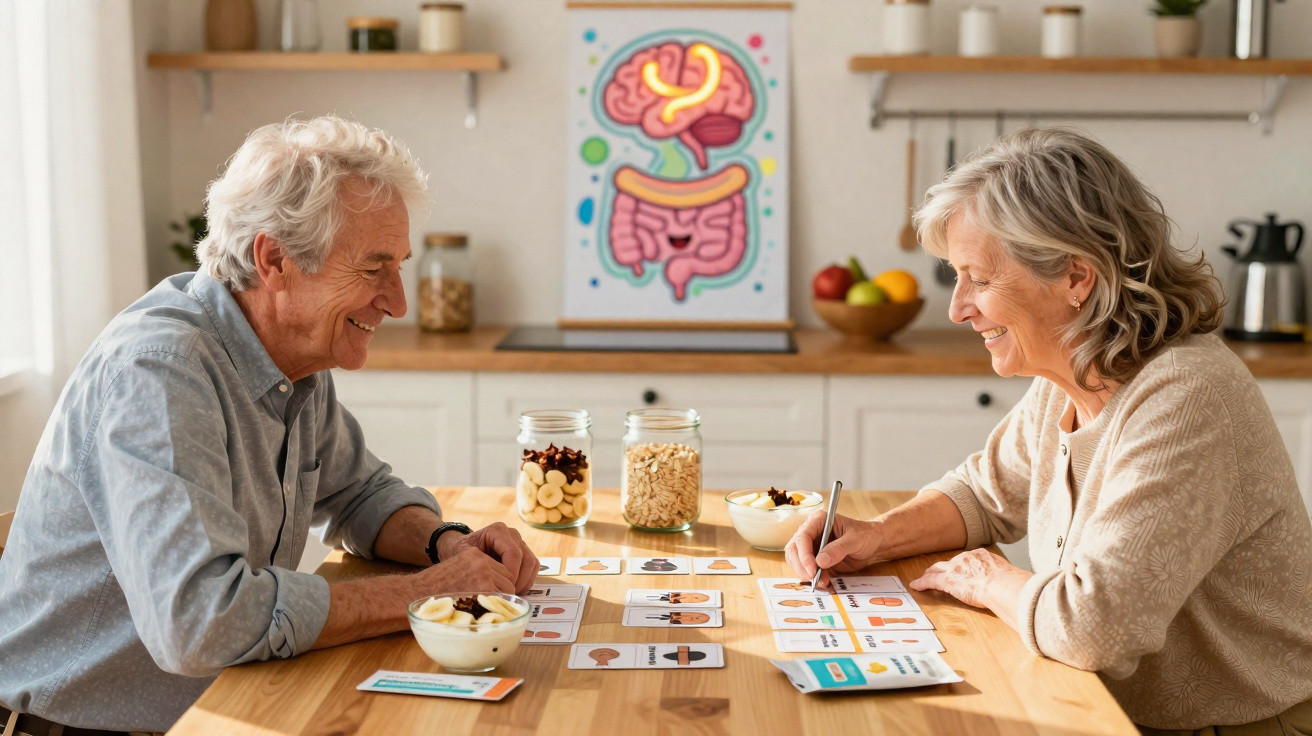
Examples include playing a musical instrument, taking part in complex board games such as chess, or volunteering in roles that call for planning and problem-solving abilities.
Understanding cognitive reserve
Scientific studies provide several complementary ways of explaining the mechanisms behind cognitive reserve.
Some models concentrate on the brain’s physical structure, proposing that features such as neuron numbers affect its ability to tolerate damage. This is the brain reserve model, based on the notion that some people are born with more neurons and are therefore better able to cope with ageing.
Other models suggest that an active lifestyle may reduce the effects of brain ageing by reinforcing biological resilience - for instance, the brain’s ability to remain structurally sound and functional over time, with few observable signs of deterioration despite increasing age. This is the brain maintenance model.
A third group of models focuses on the brain’s functional adaptability, enabling it to deploy resources in different ways or draw on alternative neural networks to offset age-related losses. This is called the cognitive reserve model.
Together, these models sit within a shared conceptual framework that differentiates brain reserve, brain maintenance and cognitive reserve.
Although each model rests on a distinct principle, they complement one another and are backed by empirical evidence.
The cognitive reserve model continues to receive the most research attention, especially because it is associated with modifiable factors, including educational level and regular involvement in cognitively stimulating activities.
Cognitive reserve is dynamic
Making this distinction helps to bring research findings into alignment and direct prevention strategies more effectively. Crucially, it shows that cognitive reserve is not fixed: it changes through interactions with learning and experience, meaning it can be reinforced across the lifespan.
Recent research supports this dynamic understanding. A team of researchers from Québec, of which I am a member, found that structured instruction in memory techniques - including the method of loci, which links each item of information to a familiar location, and mental visualisation, which turns information into images to make it easier to remember - can bring about substantial changes in brain activity.
During the learning and information-recall stages, researchers observed both increases and decreases in activation, including changes in activity levels across different brain areas. This finding indicates that using memory strategies gives the brain greater functional flexibility.
The findings further showed that, among people with more education, particular regions were activated more selectively during learning and recall, suggesting that their brains rely on more efficient strategies.
Other studies have likewise underlined education’s influence on brain structure and functioning. In one study carried out with colleagues, I identified an association between years of education, grey matter volume and brain activation during memory tasks. Another study in which I took part found that more educated people displayed greater flexibility of activation as task complexity changed.
Taken together, this body of research confirms that cognitive reserve can be strengthened through experience and influenced by cognitive training at any age.
Stimulating your brain while having fun
Along similar lines, the Engage study, led by the Canadian Consortium on Aging and Neurodegeneration, examines the behavioural and neurophysiological effects of cognitively stimulating leisure activities among older adults.
This hybrid intervention brings together formal cognitive training, such as memorisation strategies and attention exercises, with organised leisure activities including learning music, a second language or video games.
It provides an ecological model - that is, an approach resembling real-world conditions that is enjoyable, motivating and likely to encourage lasting participation.
If Engage demonstrates that these natural interventions have effects comparable to conventional cognitive training programmes - which often involve repetitive computer- or paper-based exercises targeting functions such as memory and concentration - it could reshape approaches to preventing age-related cognitive decline.
Learning another language
At my NeuroÂge neuropsychology of ageing laboratory at the Université du Québec à Trois-Rivières (UQTR), we are undertaking a complementary project.
Working with Professor Paul John of the Department of Modern Languages and Translation, and Professor Simon Rigoulot of the Department of Psychology, we are investigating how learning English as a second language affects cognition and brain activity in older adults.
Through a protocol combining classes, tutoring, and cognitive and electroencephalography assessments, the project seeks to record the cognitive and neural benefits of learning that is meaningful, motivating and accessible.
Early findings are encouraging and reinforce the view that intellectual engagement can deliver measurable benefits, even when it begins later in life.
Protecting good cognitive health at every age calls for a combination of interventions that are accessible, motivating and stimulating.
Rather than being fixed, cognitive reserve is accumulated over a lifetime. Research advances now provide practical tools for healthy ageing, particularly in relation to cognitive health.
Benjamin Boller, Associate Professor of Neuropsychology, Université du Québec à Trois-Rivières (UQTR)
This article is republished from The Conversation under a Creative Commons licence. Read the original article.





Comments
No comments yet. Be the first to comment!
Leave a Comment