
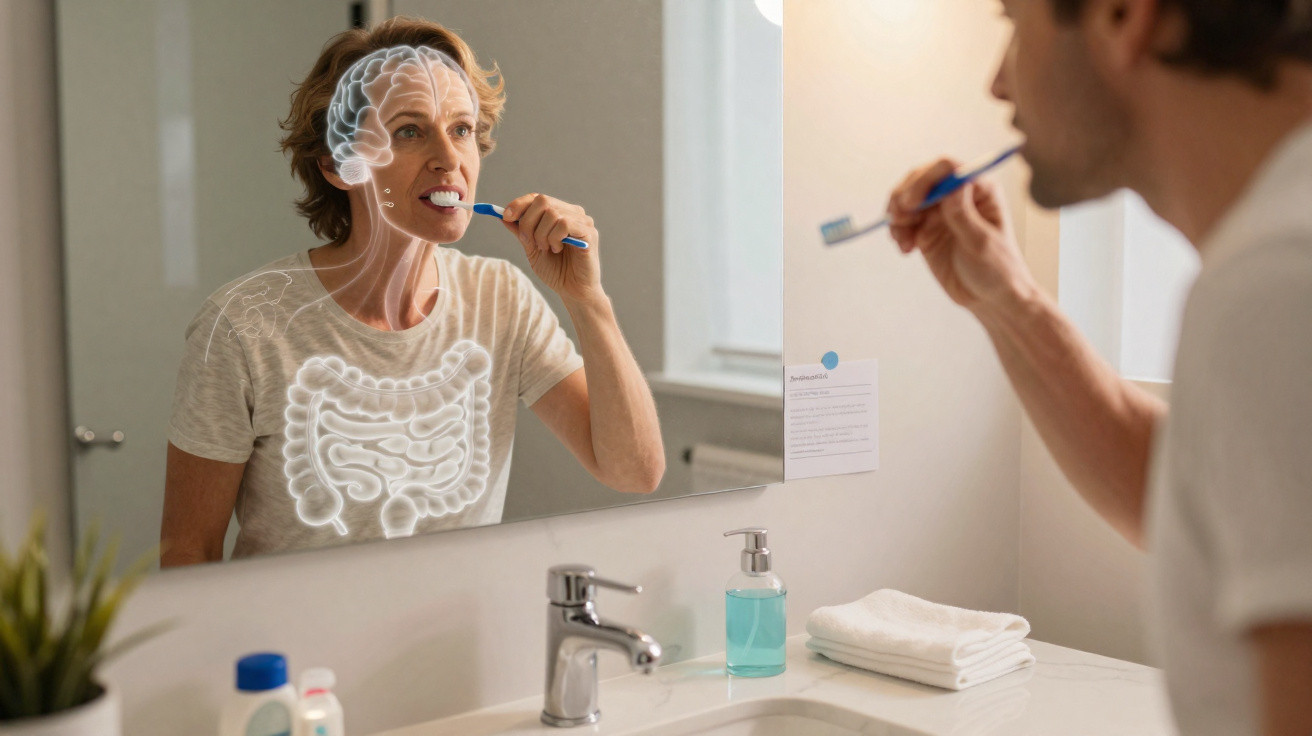
Recent research indicates that a common oral bacterium, best known for causing tooth decay, may move quietly from the mouth into the gut before affecting the brain. This process could potentially steer certain people towards Parkinson’s disease many years before their first tremor.
A dental culprit steps into the spotlight
Parkinson’s disease has traditionally been viewed as an exclusively neurological disorder, caused by the gradual death of dopamine-producing neurons in a deep brain area known as the substantia nigra. However, that understanding is being questioned by research into the “gut–brain axis” and, more surprisingly, the possible role of oral health.
The newest study, published in Nature Communications in 2025, places the familiar tooth-decay bacterium Streptococcus mutans at the heart of this emerging explanation. This microbe is one of the principal causes of dental caries, but the researchers found that it may not always remain in the place where dentists usually encounter it.
Among people with Parkinson’s, S. mutans seems more prone to travelling from the mouth to the intestine, where it may become established and alter the gut microbiome. After colonising the gut, it produces a chemical that appears able to reach the brain and damage susceptible neurons.
Scientists now suspect a “mouth–gut–brain” axis in which a common cavity-causing bacterium may help push the brain toward Parkinson’s.
From plaque to Parkinson’s: how the bacterium might act
The research team set out to trace the complete path taken by Streptococcus mutans and the substances it produces. Through laboratory and animal studies, they examined the consequences of the bacterium becoming firmly established in the intestine.
Their central discovery was that S. mutans makes a particular enzyme that results in the production of imidazole propionate. This compound has previously been associated with metabolic issues including insulin resistance. The new work now connects it with brain health too.
Rather than remaining in the gut, imidazole propionate enters the bloodstream and circulates around the body. It can then cross the blood–brain barrier, the protective biological barrier intended to shield the brain from potentially damaging substances.
Inside the brain: inflammation, protein clumps and neuron loss
In the brain tissue of experimental models, imidazole propionate seemed to interfere with several mechanisms already recognised as part of Parkinson’s disease.
- Gradual loss of dopamine-producing neurons
- Evidence of persistent brain inflammation
- Unusual accumulation of the alpha-synuclein protein
- Declining motor ability and coordination
Alpha-synuclein ordinarily supports communication between nerve cells. When it forms clumps, it creates the characteristic “Lewy bodies” found in the brains of people with Parkinson’s. In these experiments, increased imidazole propionate levels were linked with greater alpha-synuclein build-up and more neuronal injury.
Imidazole propionate, generated in the gut by S. mutans, can cross into the brain and trigger changes that look strikingly similar to early Parkinson’s.
The mTORC1 pathway: a molecular switch under pressure
The scientists next investigated the signalling mechanisms behind these effects. Their attention turned to mTORC1, an important molecular switch that enables cells to manage growth, energy consumption and survival. In neurons, mTORC1 helps maintain the balance of sensitive functions, including protein recycling and repair of damage.
Imidazole propionate seems to overactivate mTORC1. Excessive stimulation of this pathway leaves neurons more vulnerable and less capable of removing harmful protein clumps. In animal models, inhibiting mTORC1 reduced brain lesions and improved movement, even when the bacterial metabolite was present.
| Step | What happens |
|---|---|
| 1. Mouth | S. mutans flourishes in dental plaque, particularly where oral hygiene is poor and sugar intake is high. |
| 2. Gut | The bacterium moves into the intestine and becomes established in the microbiome of certain individuals. |
| 3. Blood | It makes imidazole propionate, which passes into the bloodstream. |
| 4. Brain | The compound crosses the blood–brain barrier, overactivates mTORC1 and places dopamine neurons under stress. |
This sequence supports the possibility that Parkinson’s disease may begin beyond the central nervous system, with silent harm accumulating for years before a diagnosis is made.
Why the mouth and gut matter for a brain disease
This hypothesis does not suggest that one bacterium alone “causes” Parkinson’s. Age, genetics, environmental toxins and lifestyle continue to have major roles. Nevertheless, the findings indicate that microbial factors may accelerate the disease in people who are already vulnerable.
That places the mouth and gut firmly in view as possible early sites of conflict. Shifts in the microbiome, including unusually high levels of Streptococcus mutans, may produce a biochemical setting that gradually damages sensitive brain circuits.
Parkinson’s may be less of a purely brain-based mystery and more of a long, multi-organ story that begins years before diagnosis.
Rethinking prevention: toothbrushes, dentists and beyond
If a bacterium responsible for cavities can help move the brain towards Parkinson’s in some individuals, oral hygiene becomes more than a matter of appearance. It may represent one component of long-term neurological care.
Everyday habits that might cut the risk
On the basis of current evidence, experts are not recommending any new miracle regimen. Instead, they are reinforcing established dental advice, now with a possible neurological dimension:
- Brush teeth at least twice daily using fluoride toothpaste to reduce plaque and the growth of S. mutans.
- Use floss or interdental brushes to break up bacterial colonies between the teeth.
- Go for regular dental examinations so that caries can be identified and treated promptly.
- Reduce sugary snacks and drinks, which feed S. mutans and promote acid attacks on tooth enamel.
- Obtain dental treatment promptly for ongoing gum bleeding, pain or infections.
These actions cannot guarantee protection from Parkinson’s. They may, however, lessen one possible source of chronic microbial stress affecting the brain, while also supporting heart health and general wellbeing.
What this means for treatments and future research
This research is already giving rise to potential treatment approaches. If particular bacterial products speed up neuronal damage, preventing their effects might offer a new way to slow disease progression.
Researchers are exploring several options:
- Targeting S. mutans directly with vaccines or narrow-spectrum antibiotics
- Developing medicines that neutralise imidazole propionate or prevent it from being formed
- Altering the gut microbiome through personalised probiotics or dietary changes
- Adjusting mTORC1 activity to safeguard vulnerable neurons
Every one of these approaches is still experimental. Most early findings come from animal research or small human studies, and large clinical trials will be necessary before any new treatment can be made available to patients.
Key terms patients keep asking about
Some of the technical language used in this research may seem abstract, so it is useful to explain the key concepts.
Microbiome: the enormous community of bacteria, viruses and fungi living in and on the human body. Within the gut, these microbes assist with food digestion, help educate the immune system and generate signalling molecules. Disruption to this community has been associated with obesity, depression and, more recently, neurodegenerative diseases.
Blood–brain barrier: a closely regulated filter created by cells lining the blood vessels of the brain. It allows nutrients to enter while blocking many toxins and pathogens. Certain small compounds, including imidazole propionate, can nevertheless pass through, meaning that changes in the body’s chemistry may affect the brain.
Alpha-synuclein: a protein found in high amounts in nerve cells. If it misfolds and gathers into clumps, it creates deposits that are a defining feature of Parkinson’s and related conditions. Anything that encourages this clumping could potentially accelerate disease progression.
What this could look like in real life
Consider someone in their late 40s who has a family history of Parkinson’s alongside long-term dental difficulties. They experience repeated cavities, attend dental check-ups irregularly and eat a diet rich in sugary snacks. Their mouth provides a favourable environment for Streptococcus mutans. Over time, some of these bacteria may reach the gut, alter the microbiome and increase imidazole propionate levels in the blood.
For years, there may be no outward symptoms. Within the brain, however, dopamine neurons could be exposed to a gradual stream of biochemical stress. When slight movement problems or alterations in smell eventually become apparent, much of the damage may already have occurred. In this situation, improved oral care begun ten years earlier might not have prevented Parkinson’s altogether, but it may have reduced one element of pressure on those neurons.
For those already living with Parkinson’s, this area of research provides a different form of hope. While new medicines are awaited, straightforward measures such as dental check-ups, a healthy diet, physical activity and good sleep may each help reduce the brain’s long-term inflammatory burden in different ways. None of these approaches replaces medication prescribed by neurologists, but together they may influence how rapidly symptoms develop.






Comments
No comments yet. Be the first to comment!
Leave a Comment