
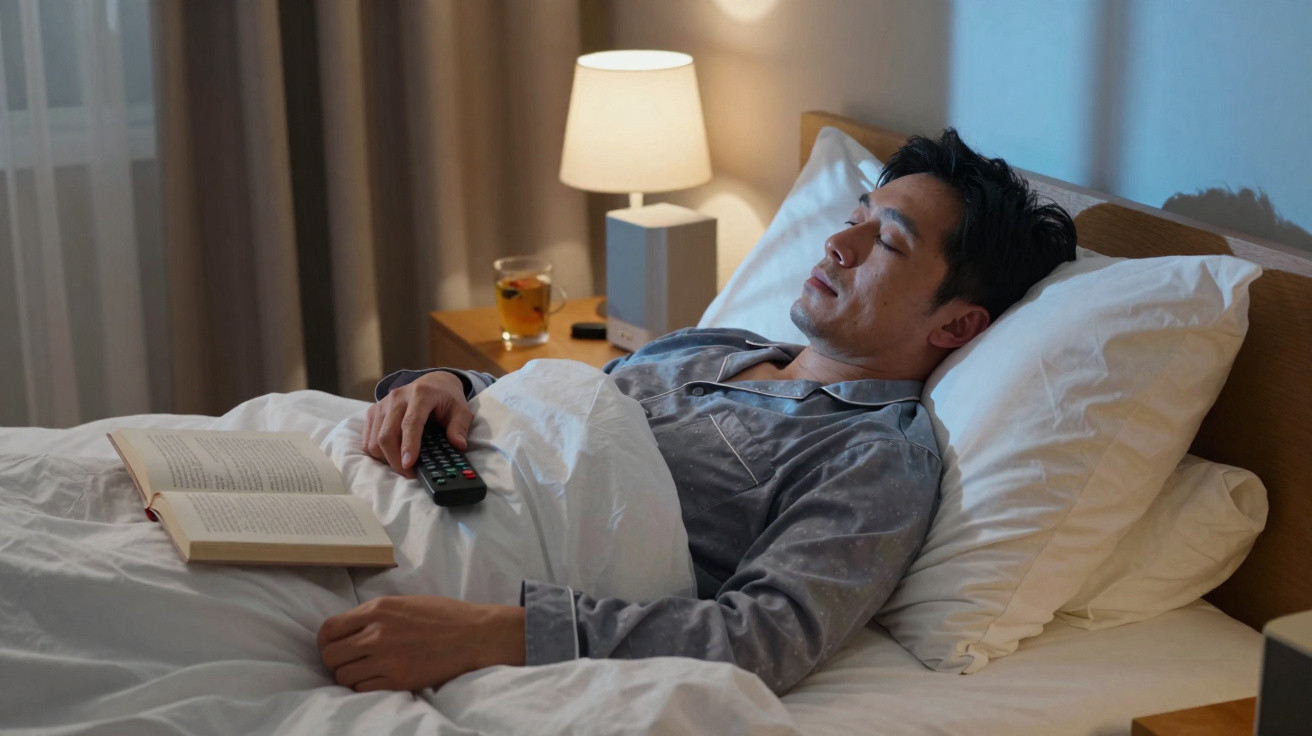
The behaviour may seem straightforward, but the psychology behind it is more complex.
For many people, television serves as a bedtime aid. It takes the edge off silence and occupies thoughts that race at night. Psychologists suggest this behaviour may reveal deeper tendencies in emotional regulation, the search for safety and responses to stress. Sleep researchers, meanwhile, identify genuine consequences for the brain and body. These two realities can coexist.
Why people fall asleep to the screen
Television creates a sense of order. The theme tune returns, the storyline reaches an ending and another episode begins. That familiarity can soothe the nervous system by suggesting that nothing requires immediate attention.
It can also cover up other sounds. A consistent soundtrack may obscure traffic, creaking floors or a loud neighbour. For light sleepers, this low-level hum can function as an inexpensive form of white noise.
Familiar voices can provide a feeling of company. Parasocial comfort - the sensation of “being with” characters - can ease loneliness at bedtime. This response may become stronger after a break-up, house move or other stressful life event.
Background dialogue can soothe an overactive mind by replacing intrusive thoughts with low-stakes, predictable chatter.
Learned association matters too. If you regularly drifted off to cartoons or late-night films as a child, your brain may have connected screen audio with drowsiness. That association can persist.
What psychologists see in the habit
Anxious minds and sensory gating
People with anxiety may find silence unsettling because it leaves space for rumination. Soft background sound can occupy that space and lessen hypervigilance. Those with greater sensory sensitivity may use steady audio to filter out sudden noises that could provoke alertness.
Attachment and loneliness
Comforting, recognisable voices at night may point to a desire for secure closeness. The sense that “someone is up with me” can help people who are lonely, frequently travelling or living by themselves. It may also arise during bereavement or significant life changes.
Control and predictability
Structured programmes establish a rhythm that is easy to expect. This predictability can aid emotional regulation. People who value firm routines may choose the same programme, at the same volume, every evening.
Stimulation seeking and ADHD traits
Some minds relax more readily with a small amount of background stimulation. Mild sensory input can stop thoughts from bouncing rapidly between subjects. Once mental effort eases, viewers may then fall asleep.
Night fears and trauma history
Light and sound may make a dark bedroom feel less frightening. For some people with trauma, continuous audio can reduce the chance of being startled during the night. It remains a coping strategy, even when it is not best for sleep quality.
The habit is not a diagnosis. It’s a window into how you calm yourself, manage noise, and create a sense of safety.
What this does to sleep and health
The comfort may carry drawbacks. Screen light suppresses melatonin, the hormone that helps set your body clock. Even a faint glow can alter circadian cues and postpone the start of sleep.
Sound can interrupt sleep as well. Throughout the night, the brain continues monitoring audio. Changes in dialogue, swelling music and louder advert breaks can produce micro-awakenings that you do not recall, while still reducing time spent in deep sleep.
Exposure to light overnight can leave heart rate slightly higher. Research has associated sleeping in a lit room with poorer insulin regulation the following day. This is particularly relevant for people at metabolic risk.
There can be cognitive consequences too. Broken sleep affects memory consolidation, slows reaction times and makes mood more irritable. Over several weeks, these effects can accumulate.
Even when you feel you “slept through it,” light and fluctuating audio can chip away at restorative stages of sleep.
How to keep the comfort and lose the downsides
If you stick with television, use these safety tweaks
- Set a sleep timer for 30–60 minutes, allowing the light and sound to stop once you have fallen asleep.
- Reduce the brightness and select a warm colour temperature in the settings.
- Disable autoplay and advertisement or trailer loudness normalisation.
- Position the screen further from the bed to lessen the amount of light reaching your eyes.
- Choose gentle programmes with even audio rather than action scenes or laugh tracks.
- Only use subtitles when the volume is low, as reading keeps the brain engaged.
If you prefer a healthier swap
Change the format while retaining the reassurance. Select consistent audio without blue light or unexpected jumps in volume. Pink noise, brown noise and soft nature loops are preferable to dialogue. Podcasts designed for sleepy listening, with a sleep timer, are another possibility.
| Why television helps | What it can signal | Lower-impact alternative |
|---|---|---|
| Covers street noise and sounds around the home | Sensitivity to abrupt changes in sound | Pink noise or a fan at a consistent volume |
| A predictable format feels reassuring | A need for routine and control | A bedtime playlist of soft, repeated tracks |
| Familiar voices offer company | Loneliness or a recent stressor | A companion-style podcast with a 30-minute timer |
| It distracts from racing thoughts | Anxiety or ADHD traits | Guided breathing or body-scan audio |
| It is a conditioned signal from childhood | A learnt bedtime association | A wind-down ritual: light reading, stretching, dim light |
Small changes that make a big difference
Build a wind-down routine
Make the final hour before sleep predictable. Dim the lights, turn down the volume on every device and choose one calming activity, such as reading a paper book, gentle stretching or taking a warm shower. Your body can interpret this sequence as a cue for sleep.
Set your room for sleep
Make the bedroom slightly cooler and use curtains to block outdoor light. If a night light is necessary, choose a warm, low-intensity lamp placed near the floor. Keep the face of your alarm clock dimmed or turned away.
Train a new cue gradually
If silence feels too stark, reduce television use slowly. Cut the TV timer by five minutes each week, and combine it with a new signal such as pink noise. In time, the brain can begin to associate that new cue with sleepiness.
When the habit points to a larger issue
Take note if you need the screen every night but still wake feeling unrested. Ongoing insomnia, loud snoring or gasping may indicate sleep apnoea. Anxiety at night that is connected to trauma may respond well to trauma-informed therapy. Where low mood or attention difficulties dominate daily life, an assessment can help exclude depression, anxiety disorders or ADHD.
Parents may see children falling asleep to cartoons. Bright light and rapid pacing can interfere with children’s sleep more powerfully. Introduce a transition by lowering the lights, reading aloud and using a short story podcast on a timer. This preserves soothing narration without the visual stimulation.
Extra context that helps you decide
The type of noise is important. White noise distributes energy evenly across frequencies and may sound like a hiss. Pink noise places more emphasis on lower frequencies, so it often seems gentler. Brown noise is weighted even further towards low frequencies, and many people consider it more calming. Try each option for two nights and note how you feel the next morning.
Consider a straightforward trial week. For three nights, use your usual programme with a 45-minute timer. During the following three nights, replace it with pink noise at low volume. Every morning, score sleep quality, daytime sleepiness and mood from 1 to 5. The trend that emerges will offer more useful guidance than assumptions.
Also consider the timing. When your day begins early, late-night television may shift your body clock later without being obvious. A modest limit - starting no new episodes after an agreed time - helps safeguard deep sleep and maintain a steady rhythm.




Comments
No comments yet. Be the first to comment!
Leave a Comment