
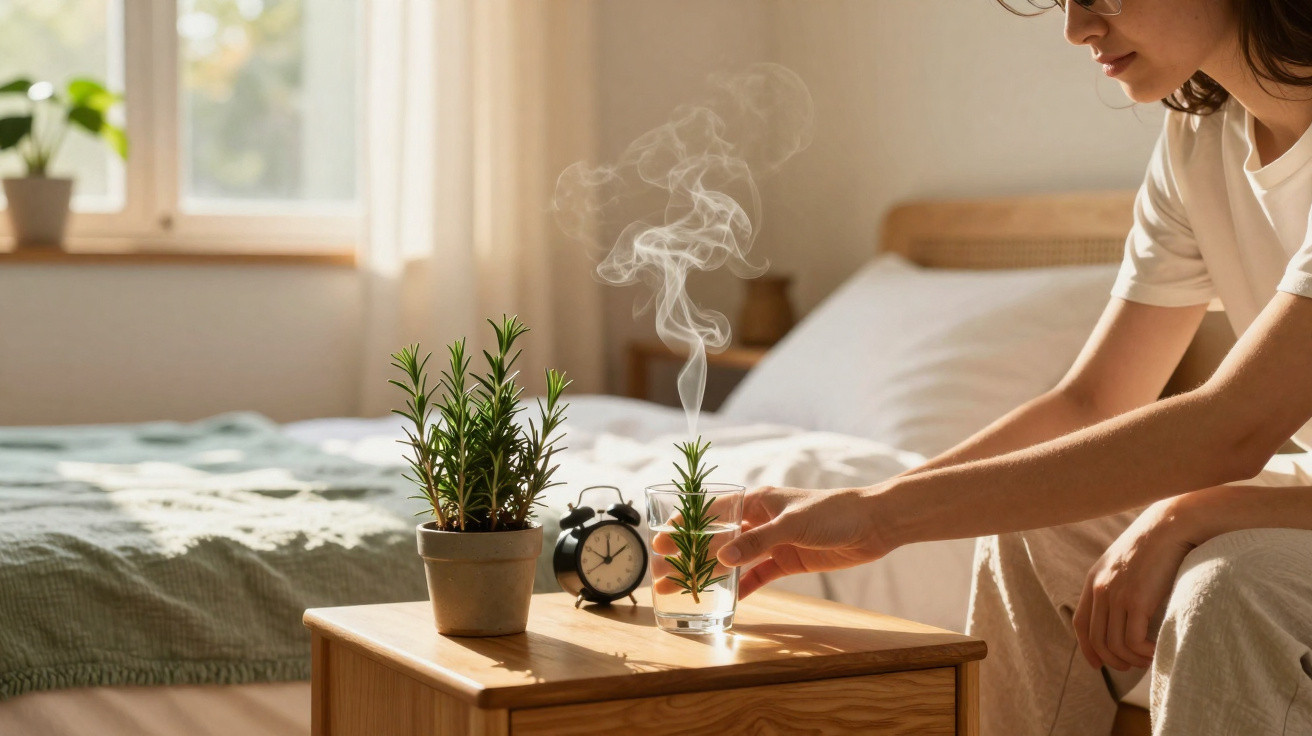
Putting a glass of rosemary in the bedroom has become a familiar practice in many homes, particularly among people who want a more inviting setting in which to rest. The herb stands out for its distinctive fragrance, ease of use and the impression that the sleeping space is being cared for. Specialists stress, however, that it is only an addition and cannot replace essential sleep hygiene habits.
What is the purpose of putting rosemary in the bedroom?
Rosemary’s most obvious role in a bedroom is to perfume the space naturally. Its leaves contain oils that release a recognisable scent, often linked with freshness and lightness, which can make the room more pleasant for the person sleeping there.
In some evening routines, rosemary forms part of a simple wind-down ritual alongside dimmer lighting and light reading. In this situation, its value is mainly connected to the setting: the brain begins to link that combination of actions with slowing down, helping to create a subjective sense of calm before bed.
Does rosemary help with sleep and how does it fit into sleep hygiene?
As of 2026, there is no robust evidence that rosemary directly treats insomnia or sleep disorders. What it may provide is a feeling of comfort and wellbeing which, when combined with other healthy practices, can make falling asleep feel less stressful and more pleasant.
Health professionals point out that sleep difficulties often involve issues such as stress, diet and excessive screen use. Rosemary should therefore be regarded as an aromatic aid within a wider set of measures, including:
- Keeping regular times for going to sleep and waking up;
- Avoiding very heavy meals and caffeine in the evening;
- Cutting back on blue light from mobile phones, tablets and computers before going to bed;
- Ensuring the bedroom is well ventilated, dimly lit and kept at a comfortable temperature.
What benefits can rosemary bring to the bedroom environment?
Early research is examining how the scent of rosemary may affect attention and mood, with findings suggesting it could increase alertness in certain circumstances. Rather than encouraging sleep, it may therefore be more closely connected with an awake mind, leading some people to favour it in offices or study areas.
In a bedroom, rosemary can also serve as a visual sign of order and attention to the space. A healthy potted plant or a glass containing neatly arranged sprigs can make the room feel cleaner and more purposeful, encouraging other helpful routines such as making the bed and keeping the area free from clutter.
How can rosemary be used in the bedroom simply and safely?
Those wishing to use rosemary in the bedroom can place fresh sprigs in a glass of water, keep a small pot near the window, or put sachets of dried leaves in drawers and on shelves. Another possibility is using essential oil sparingly in a diffuser, while ensuring good ventilation and preventing direct contact with sensitive skin, children and animals.
To keep a rosemary plant healthy in a pot, it needs good light, well-drained soil, moderate watering and occasional pruning. This helps it remain attractive and fragrant for longer, making it a simple feature that reinforces the feeling of a well-cared-for sleeping environment, without making miraculous claims about curing sleep problems.






Comments
No comments yet. Be the first to comment!
Leave a Comment