
Our brains contain 86 billion neurons and the trillions of connections linking them, generating a coordinated tempest of electrical activity and chemicals inside a 1.4 kg mass of jelly-like fat, protein and water.
This complex biological apparatus that makes us human takes roughly 20 years to mature – a far longer developmental window than that of most other species.
Because it is also enclosed within our skulls, the developing brain is difficult to access experimentally.
Consequently, scientists are growing brains in laboratories – no big deal.
Miniature brain organoids track time
In research reported in Nature, scientists created miniature brains known as organoids that can 'sense' time passing and preserve a cellular 'memory' of the time they have already spent developing.
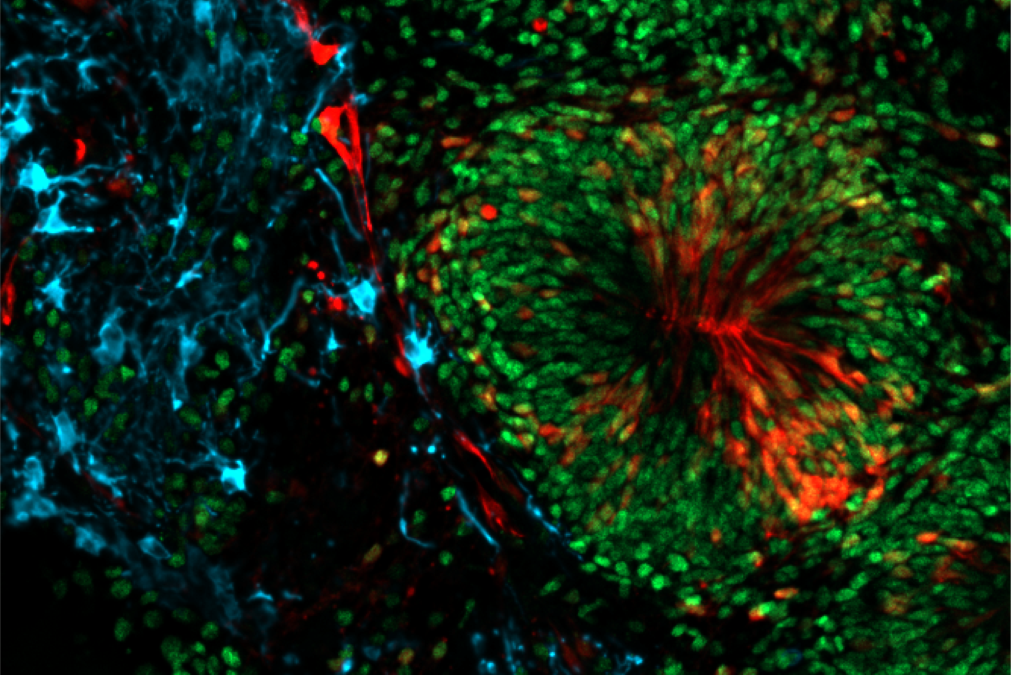
A close-up of an organoid immunolabelled for markers of different cell types. (Irene Faravelli and Noelia Antón-Bolaños)
These stem-cell-derived clusters of brain cells are also the longest-surviving organoids yet documented, having been monitored for almost six years. That duration is unprecedented: many earlier organoid studies lasted only weeks or months.
"The work demonstrates that a diversity of cells in organoids can develop over considerable time periods and are capable of both recording and recalling their developmental age," the researchers explain.
"These systems provide a wealth of data on largely inscrutable periods of postnatal development of the human brain."
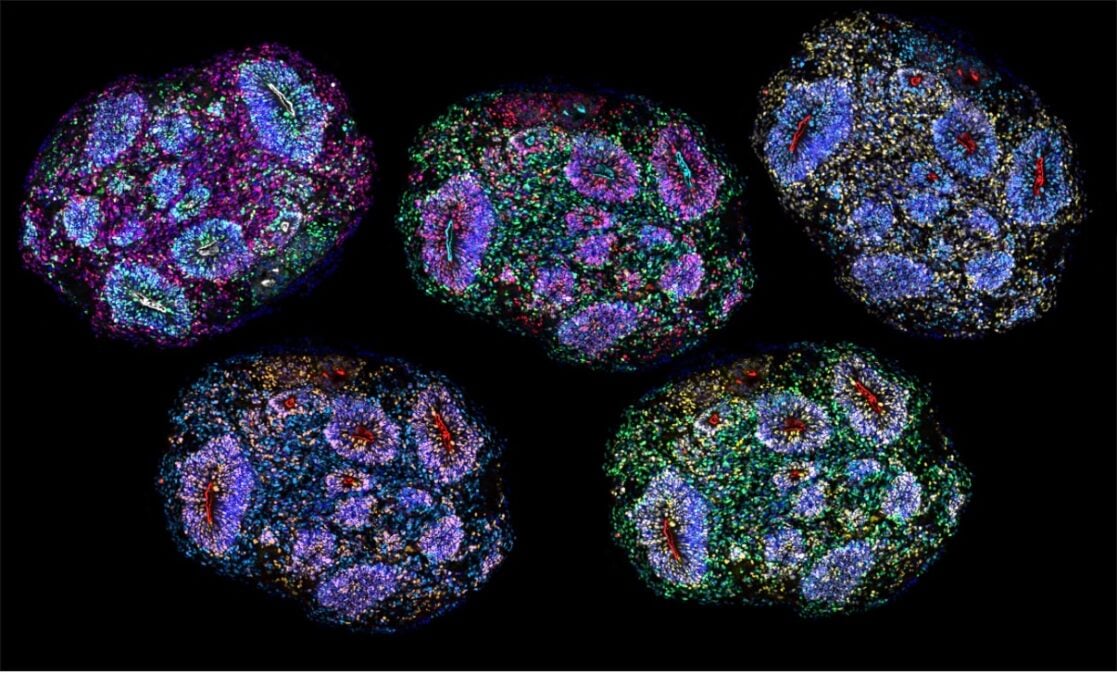
Different sections of an organoid developed to model processes of brain maturation. (Irene Faravelli and Noelia Antón Bolaños)
Scientists have previously created brain-like organoids, including models that grew primitive eyes with brain fibres capable of sharing signals.
However, the latest study represents at least two important advances: lifespan and function.
The team examined the maturation of dozens of organoids using genetic, imaging and electrophysiological methods. Crucially, they used DNA markers as 'epigenetic clocks' to show that specimens grown in culture matured in ways resembling real brains.
Not every cell type is equally likely to persist in organoids. Nevertheless, most broad cell categories continued to mature molecularly throughout the experiment, demonstrating agreement between in vitro and in vivo brain-maturation processes.
That included the appearance of cells such as star-shaped astrocytes, which support and help maintain the blood–brain barrier, and oligodendrocytes, which produce the fatty myelin sheath that insulates nerve fibres.
Although the researchers observed a gradual reduction in the essential but delicate neurons responsible for major brain functions, they found that populations of these cells can remain alive in culture for nearly six years.
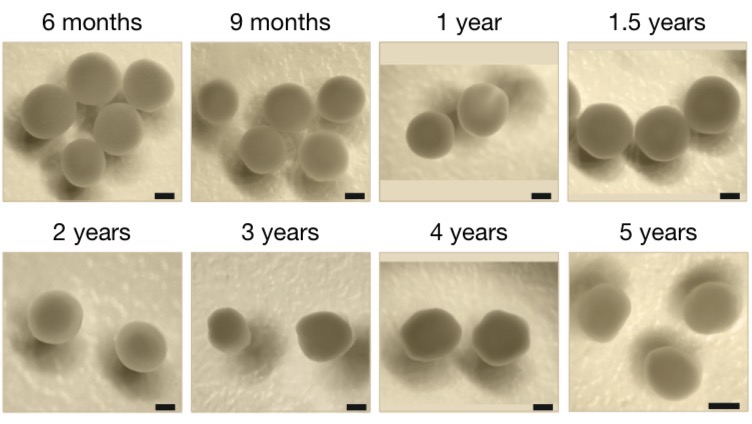
Organoid evolution over time. (Faravelli et al., *Nature, 2026)*
Importantly, the team also showed a way to help neurons endure: keeping them firing spontaneously, rather like doing regular biceps curls to prevent flabby upper arms.
This neural exercise programme is enabled by a specialised culture medium that more faithfully reproduces the chemical environment of the central nervous system.
How organoids retain developmental memory
Most intriguingly, brain cells appear to register elapsed time via "a cell-intrinsic clock that sets the pace of brain development, although its molecular mechanisms and functional significance remain to be elucidated," the researchers write.
To investigate this, they separated organoids at different ages into their individual cells. They then put the cells back together as "chimeroids" – tiny Frankenstein-like constructs assembled from individual parts of varying ages.
Despite being taken apart and re-aggregated, these chimeroids retained a cellular memory of their former developmental age.
For instance, a chimeroid built from old cells generated age-appropriate offspring – new cells such as astroglia – despite maturing for only 15 days after being reassembled.
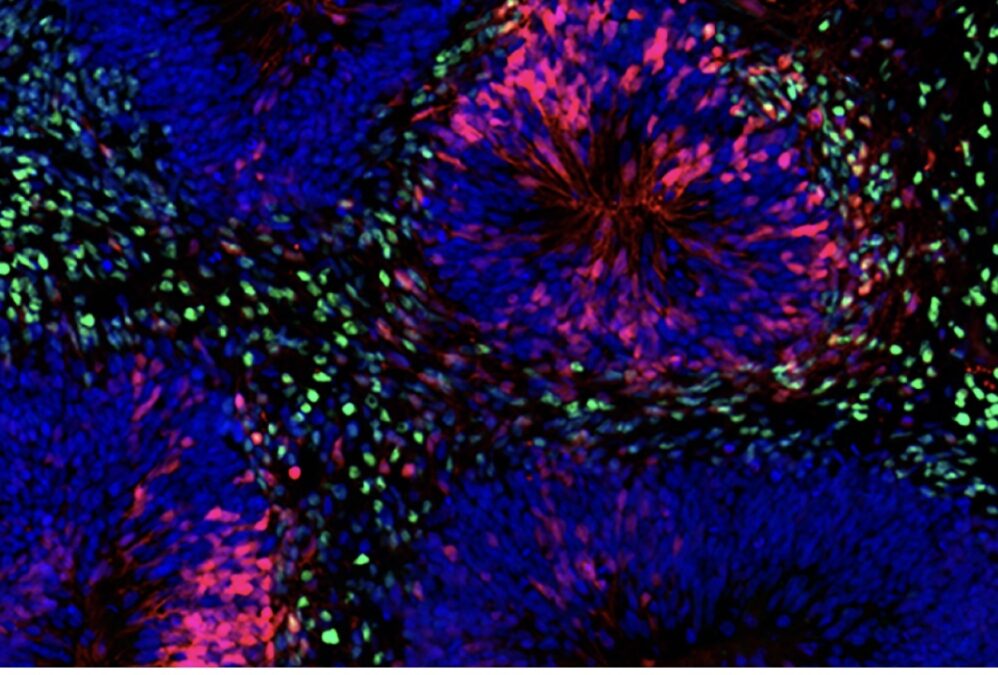
An organoid image made using younger and older cells. Younger cells, taken from an organoid 15 days after re-aggregation, appear in red; deep-layer neurons are green, while nuclei are blue. (Faravelli et al., *Nature, 2026)*
What is more, when they were combined with younger cells, the chimeroids moved towards somewhat younger molecular states, while continuing to show signs of their earlier developmental history.
Thus, older progenitors formed from reassembled old cells 'remembered' their time in culture and bypassed stages they had already completed. Within two weeks, they produced progeny that would otherwise require two months.
A model for postnatal brain-cell maturation
By establishing that organoids can be maintained for such extended periods, the researchers offer a means to model selected molecular, structural and functional aspects of postnatal human brain-cell maturation.
Related: Acupuncture Seems to Rewire The Brain in Depression, Scans Reveal
"Together, organoids cultured over extended timelines and the multimodal wealth of data produced from them represent both a powerful experimental system," the researchers conclude, "and the information to fuel understanding of the largely unexplored mechanisms governing human brain neoteny, maturation and evolution."
This research was published in Nature.
This article was fact-checked by Rachel Garner and edited by Rebecca Dyer. Although we take pride in our process, we are only human. If you notice an error, please let us know.






Comments
No comments yet. Be the first to comment!
Leave a Comment