
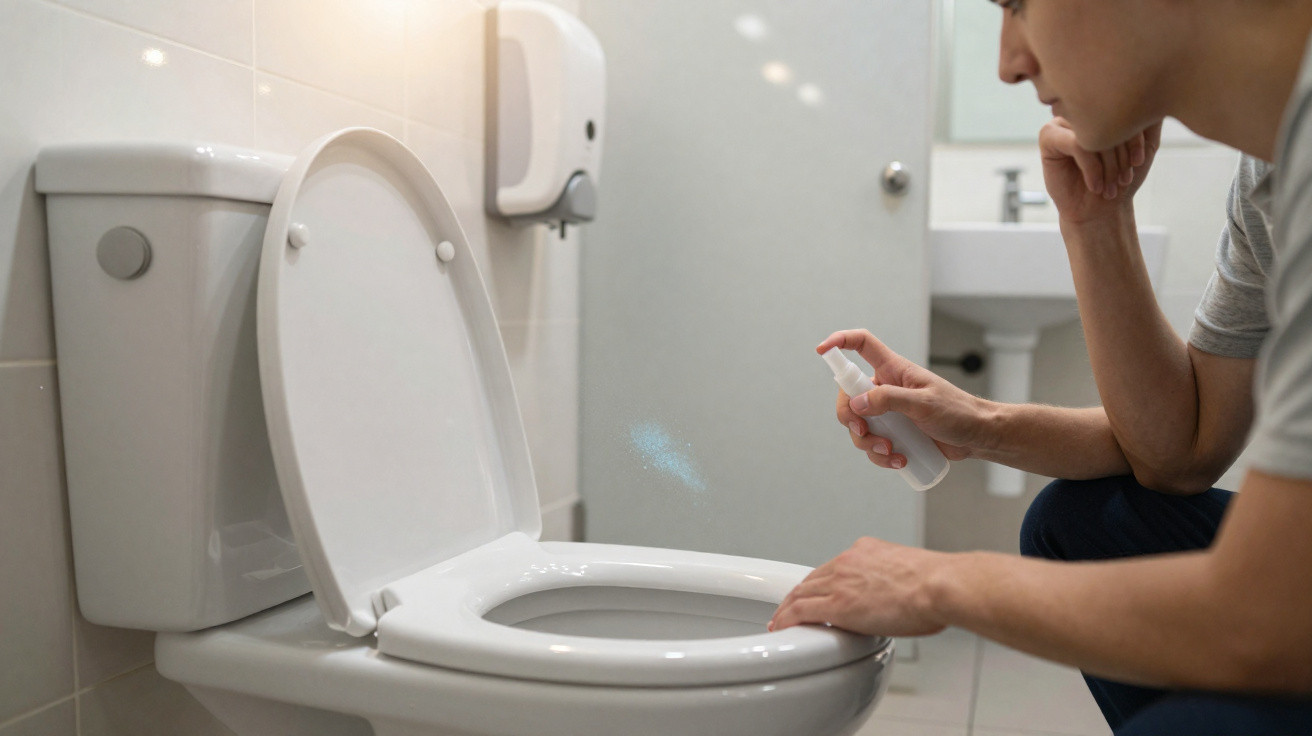
Many people use public toilets every day and try to shield themselves from germs by covering the seat with toilet paper. However, this automatic habit carries serious hidden risks, as the paper’s porous structure retains dangerous microorganisms that cannot be seen with the naked eye.
Why is lining a toilet seat with paper dangerous?
International studies confirm that toilet paper left exposed in public toilets collects an enormous amount of harmful contamination. Rather than forming an effective protective barrier, this practice can expose the body to a concentrated source of highly harmful bacteria.
Sheets are placed over the toilet seat in an uneven, interrupted way. Because the cover is not uniform, several areas of skin remain vulnerable to direct contact with dirty surfaces, completely undermining any attempt at personal hygiene.
The main reasons why this unsuitable habit can compromise collective health include:
- Material porosity: Paper readily absorbs invisible splashes from the surrounding environment.
- Germ build-up: The roll remains exposed to contaminated air inside the toilet.
- Lack of uniform coverage: Layering the paper leaves gaps through which skin is exposed.
- False sense of protection: The impression of cleanliness encourages people to sit down without caution.
- Reverse contamination: The paper can transfer more microorganisms than the ceramic itself.
How does flushing contaminate public toilets?
Flushing a toilet without closing its lid produces a forceful backflow of tiny water droplets. This invisible spray disperses pathogens throughout the room’s air, reaching sinks, walls and the available rolls of toilet paper.
Because of this widespread airborne dispersal, microorganisms can float freely before settling on absorbent surfaces. Using these exposed sheets to wipe or line the seat means bringing hazardous biological elements into direct contact with human skin.
Below is a video from the TV Pajuçara YouTube channel that explores the points discussed in this topic in greater depth:
What are the real risks to human health?
Shared toilets contain a very high load of infectious agents brought in by hundreds of different visitors. Inadequate air circulation makes these spaces ideal environments for the ongoing spread of viruses and bacteria.
Contamination Warning
Invisible Dangers in the Toilet
Studies show that dangerous microorganisms can survive for long periods on the porous, damp surfaces of exposed paper.
Water backflow sprays contaminated particles throughout the shared environment during everyday use.
Cross-contamination can happen unnoticed when someone handles infected materials without understanding the seriousness of the situation. Several severe illnesses and skin infections may result from ongoing contact with unhygienic surfaces in heavily used public establishments.
The main pathogens and risks associated with improper use of this paper include:
- Frequent presence of the HPV virus in contaminated areas of the facility.
- Spread of dangerous faecal bacteria through spray created by flushing.
- Development of urinary infections and severe dermatological complications affecting the skin.
Why are smooth toilet seats safer?
Toilet seats are made from completely smooth materials to prevent bacterial colonies from becoming permanently attached. This manufacturing feature stops microorganisms from penetrating the structure, making cleaning far more straightforward and effective.
Covering this smooth surface with porous paper sheets creates conditions that encourage moisture retention. Constant dampness directly supports the rapid multiplication of germs, cancelling out the natural protection provided by the ceramic surface itself.
The smooth design of sanitary ware offers the following advantages against germs:
- It cannot absorb moisture or contaminated vapours from the air.
- Residue can be removed easily using suitable cleaning products.
- The time microorganisms survive on the surface is drastically reduced.
How should you protect yourself properly in shared toilets?
The main recommendation from public health specialists is never to sit directly on toilet seats in shared facilities. Keeping the body away from the ceramic surface removes any possibility of direct contamination by dangerous pathogens dispersed in the toilet environment.
Carrying antiseptic wipes in a handbag or rucksack is an excellent alternative for cleaning surfaces before necessary use. Changing old automatic habits provides a much safer routine and helps protect wellbeing during daily activities.
Read also: I realised far too late why the toilet lid needs to be closed before flushing



Comments
No comments yet. Be the first to comment!
Leave a Comment