
Paris Olympics and alternative therapies
The Paris Olympics have highlighted not just athletic achievement, but also treatments including ice baths and osteopathy that, experts say, have scant medically proven value.
Olympic competition has long provided fertile territory for questionable treatments, with athletes looking for every possible means of enhancing performance and reducing pain.
“In sport there is a lot of propaganda for all kinds of 'alternative medicine' – there is a lot of demand from athletes,” French neurologist and pain specialist Didier Bouhassira told AFP.
At the Rio Games eight years ago, cupping emerged as the fashionable pseudoscientific treatment.
Although it was championed then by athletes including US Olympic swimming star Michael Phelps, there is little scientific evidence that placing heated cups on the skin delivers benefits beyond those of a placebo.
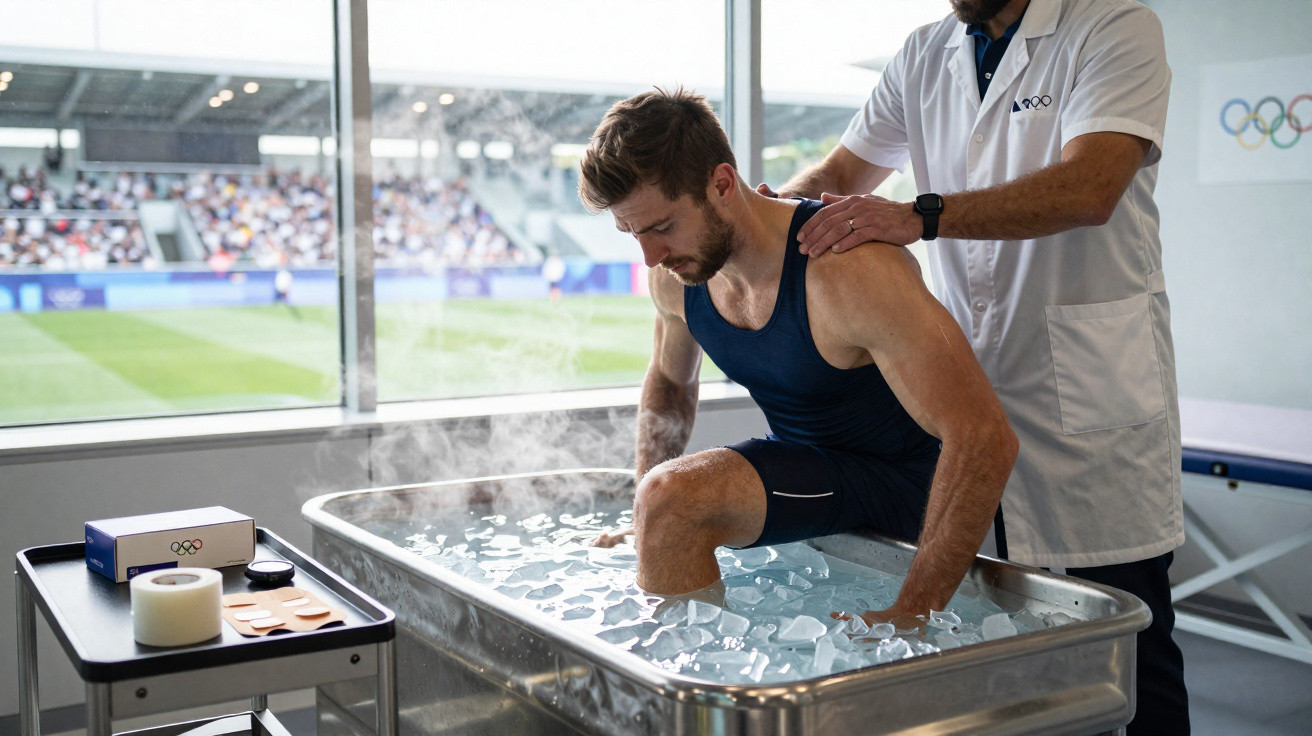
At this year’s Games, which began in Paris on Friday, ice has become the major trend.
Cryotherapy – encompassing cold-water swimming, ice baths and more sophisticated cooling chambers – is promoted as a way to aid athletes’ recovery after intensive exercise.
The new ice age
A recent editorial in the British Journal of Sports Medicine said that the federations competing at the Paris Games collectively asked for more than 16,000 tonnes of ice, costing 2.5 million euros ($2.7 million).
As no supplier could provide such an enormous quantity, the Olympics will instead have to manage with 650 tonnes, according to the editorial. Even so, this is 10 times the amount needed for the Tokyo Games only three years earlier.
The editorial’s authors objected to the habitual use of cryotherapy by athletes in the intervals between training sessions.
Although ice baths can be used to treat certain problems, including heat stroke, athletes frequently use them “to obtain benefits which are not evidence-based,” they wrote.
“Ice could have the opposite effect to that expected such as delayed tissue regeneration or impaired recovery.”
The authors also underlined the environmental consequences of making, transporting and storing such large volumes of ice.
Osteopathy remains ‘long way from science’
Osteopathy, another alternative therapy sought by athletes, has been present at the Olympics for some time.
Osteopaths form part of federation staff and are incorporated into teams at the official Olympic clinic, which checks athletes every day.
However, osteopathy’s claim that bodily manipulation can restore health has limited scientific support, and its effectiveness continues to be strongly disputed.
Research employing rigorous methods has concluded that extensive areas of the practice, including “cranial” and “visceral” osteopathy, have no effect at all.
Other osteopathic techniques, which more closely resemble those used by physiotherapists, seem to offer no specific benefit over standard evidence-based physiotherapy.
A randomised clinical trial published in JAMA Internal Medicine in 2021 assessed osteopathic manipulation against “sham” treatment, such as light touch, in 400 people with back pain.
The study found that the distinction between the two approaches was “likely not clinically meaningful”.
Pascale Mathieu, president of France’s council of physiotherapists, said osteopaths give athletes a sense of “well being without curative properties”.
Mathieu said she was not especially concerned by osteopathy’s prominence at the Olympics, where routine treatment commonly combines physiotherapy with osteopathy.
“What I'm really fighting for is to prevent osteopathy from entering hospitals,” she said.
Sanofi patch draws criticism
Several companies have also faced allegations that they are using the Olympics to market products with questionable medical value.
French pharmaceutical giant Sanofi was criticised ahead of the Games for advertising Initiv, a “pain-relieving” patch.
Backed in advertising by athletes including French Olympian Kevin Mayer, the patch is said by Sanofi to contain particles that reflect infrared energy produced by the body back towards a specific area to ease pain.
Sanofi told AFP that a clinical trial involving the patch had been “received favourably by the scientific community”.
Pain specialist Didier Bouhassira, however, remained unconvinced.
“A product is being touted as a miracle, but it's pure PR and a long way from science,” he said.
© Agence France-Presse


Comments
No comments yet. Be the first to comment!
Leave a Comment