
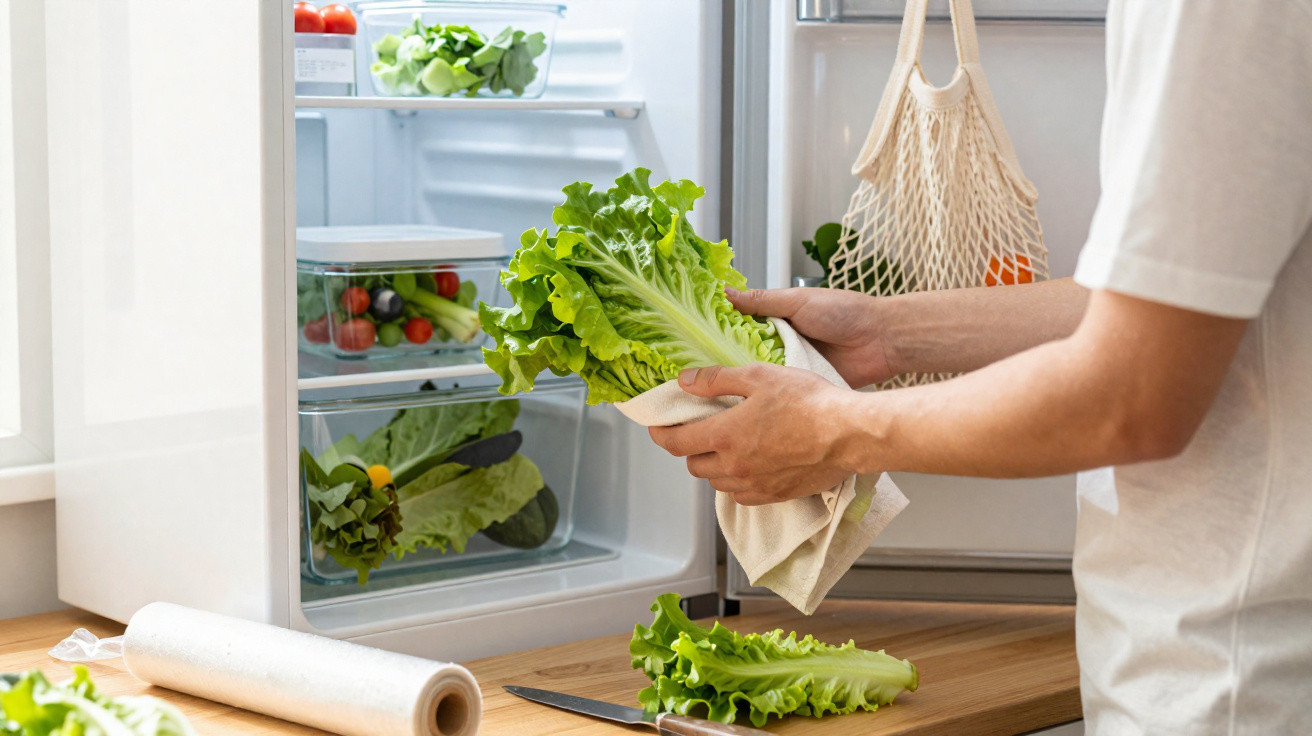
You take a lettuce from the fridge, your fingers sliding over its damp wrapper, and for a moment it appears absolutely fine. Then you pull back the film and find drooping outer leaves, browned tips and a smell that is not quite off, only… worn out. You pause, discard half of it and put the remainder into another bag “to keep it fresh”. Forty-eight hours later, it is beyond saving.
Picture opening that same fridge to find an unwrapped, slightly dusty lettuce that is still crisp to the touch. No plastic and no guilt: simply leaves that have somehow lasted longer than the packaged one. It can seem almost unnatural, as though you have found a loophole. In a sense, you have.
Why your unwrapped lettuce lasts longer than the wrapped version
In any supermarket, the produce aisle can resemble a plastic aquarium. Lettuce heads are shrink-wrapped, salad leaves sit in misted clamshell packs, and everything quietly sweats beneath chilly lights. It appears clean, contemporary and “fresh”. But the plastic holds moisture, ethylene gas and bacteria directly against the leaves. In effect, the lettuce is stewing in its own breath.
The same thing often happens at home. You put the still-packaged lettuce in the crisper drawer and leave it there. A few days later, tiny droplets have covered the inside of the bag. That is not a sign of freshness; it is the plant gradually being deprived of air. Lettuce remains alive after harvest, and wrapping it too tightly makes it deteriorate sooner.
At a small UK organic farm, growers carried out a straightforward comparison. They picked two batches of romaine lettuce: one batch was packed in plastic, while the other remained loose in reusable crates before going straight into customers’ fridges. Five days later, the plastic-wrapped heads were noticeably slimier around their cores. The loose heads looked less bright on the outside, but still made the same sharp crunch when sliced. Their explanation was simple: lower trapped humidity meant less decay.
Some households have noticed a similar result. A French home-cooking blogger weighed her weekly food waste and found that pre-wrapped supermarket lettuce accounted for the greatest volume. She switched to market lettuce and kept it completely unwrapped in the crisper drawer. Her waste fell enough for her to stop buying bagged salad altogether. There was no miracle involved: she had simply stopped putting her lettuce in a plastic sauna.
The reasoning is fairly simple. Lettuce releases water and respires through minute pores in its leaves. When it is enclosed in non-breathable plastic, that moisture cannot escape. It condenses, encourages bacteria and mould, and makes delicate edges brown and slimy. Meanwhile, oxygen levels in the bag fall, carbon dioxide rises, and the plant tissue breaks down more quickly.
When left unwrapped in the fridge, lettuce still gets older, but it does so more slowly and in drier conditions. Its outside leaves may wilt slightly, while the centre remains firm. Think of damp clothes drying on a washing line compared with being shut in a plastic bag: one dries and the other rots. Your fridge is already a protective environment. The wrapper can often create the very issues it was intended to prevent.
How to store lettuce without plastic (and without losing your mind)
The easiest approach is almost comically basic. Once home, take off any genuinely damaged outer leaves and put the entire lettuce straight into the crisper drawer. No bag, no film: just room for air to circulate in the cool, mildly humid conditions your fridge already offers.
If your fridge dries produce out particularly quickly, put the lettuce in a large bowl and rest a plate loosely over it. Do not seal it; simply place it on top. Air can still circulate, moisture does not vanish too rapidly, and sweaty condensation is not held against the leaves. It may look rather old-fashioned, but salad leaves are not concerned with appearances.
For loose leaves, such as those bought at a farmers’ market, give them a quick rinse, then spin or pat them dry. Spread them in a shallow container lined with a clean tea towel. Put a second tea towel over the leaves and leave the lid slightly open. The cloth absorbs excess moisture, while the opening allows airflow. This gives you ready-to-use salad without the build-up associated with plastic.
People often make lettuce storage overly complicated, then abandon the effort. There are tips involving vinegar baths, ice-water shocks and neatly folded paper towels that must be changed every other day. Let us be honest: nobody really does that every day. If the process is too fiddly, the lettuce will quietly perish at the back of the drawer while you have pasta instead.
Concentrate on only two things: get rid of pooled water and do not suffocate the leaves. That is all. If the lettuce is wet when you unpack it, shake it briefly or pat it dry, then allow it some air. If you use a container, do not fasten the lid tightly; leave it slightly open. Treat lettuce as something that needs a little airflow, not as though it were a leaking shampoo bottle in a suitcase.
We have all opened the fridge before dinner, already hungry, only to discover a sad, forgotten lump of green mush. That does not mean you are “bad at food”. It is the result of a system based on packaging that seems reassuring in the shop yet quietly works against you at home.
“Once we stopped wrapping every lettuce in plastic, our customers complained less about ‘bad salad’ and started buying more, not less,” says an Italian greengrocer who runs a small shop in Bologna. “They trust what they can see breathing.”
There is a change in mindset, too. When lettuce sits unwrapped in the crisper drawer, you notice it whenever you open the fridge. It becomes a visual reminder to use it. When hidden in opaque plastic, it is easy to overlook: out of sight, out of mind, then into the bin.
To make moving away from plastic more tangible, here is what can change in everyday life once you let lettuce breathe:
- You can immediately see what needs eating first when you open the fridge, rather than trying to work it out through fogged-up bags.
- You no longer buy more lettuce when you already have some, because it is not concealed inside anonymous packaging.
- You waste fewer partly used heads that become slimy before you have even had the chance to make a salad.
Small daily choices that quietly cut plastic and waste
Once you realise that lettuce can survive, and even do well, with little or no plastic, supermarket displays start to look different. The shiny film feels less like protection and more like clutter. You may find yourself choosing the loose head in a crate: the one that looks a little dusty, but still alive.
That single choice will not save the planet. It can, however, show shops that unpackaged produce sells and reshape a small habit in your own kitchen. Perhaps you take a cloth bag next time, or ask at the market whether they have lettuce that has not yet been wrapped. These small decisions tend to last far longer than sweeping declarations kept for only a week.
Lettuce is a minor thing, but it is where plastic, food and everyday life meet, right at eye level in the fridge. Take away the wrapper and the situation is remarkably straightforward: a plant, cold air, a little care and several days of proper freshness. The sort that needs no slogan printed on a bag, because you can feel it in your hands.
| Key point | Details | Why it matters to readers |
|---|---|---|
| Avoid plastic wrap altogether for whole heads | Put the lettuce head unwrapped in the crisper drawer, or in a large bowl with a plate resting loosely on top. Remove only severely damaged outer leaves and keep the rest intact. | Keeps it crunchy for several extra days while reducing plastic waste for that item to zero, with almost no additional effort in your routine. |
| Manage moisture, not “freshness” | Shake away visible water, spin or pat dry if it has been pre-washed, then store it where condensation can escape: in a slightly open container, with a cloth lining or without sealed bags. | Limits slime and brown edges, meaning fewer leaves are thrown away and more of the lettuce you paid for gets eaten. |
| Choose breathable containers for loose leaves | Arrange leaves in a shallow box, line it with a clean tea towel, cover with another towel and leave the lid askew. Use no plastic film and no airtight seal. | Keeps salad ready to use on busy evenings without the rapid spoilage commonly associated with supermarket salad bags. |
FAQ
- Does lettuce really last longer without plastic wrap? In many home fridges, yes. Plastic holds condensation against the leaves, accelerating rot and slime. When kept unwrapped in the crisper drawer, the outer leaves may wilt a little, but the centre normally stays crisp for longer.
- What if my fridge dries everything out? If your fridge is especially drying, use a bowl or container with a loose lid and a clean cloth inside. The cloth retains gentle moisture, while the lid reduces strong airflow without trapping humidity as plastic does.
- Should I wash the lettuce before storing it? You can, provided you dry it thoroughly. A quick rinse followed by a good spin or pat dry is enough. The problem is standing water left on the leaves, not washing itself.
- Can I still use reusable plastic boxes? Yes, but do not clip them completely shut for lettuce. Leave a small opening or use a vented lid so the leaves can breathe and condensation does not accumulate inside.
- How long can unwrapped lettuce keep in the fridge? Whole heads often remain pleasantly crisp for 4–7 days when stored unwrapped in the crisper drawer, depending on their freshness when bought and on how cold your fridge is.




Comments
No comments yet. Be the first to comment!
Leave a Comment