
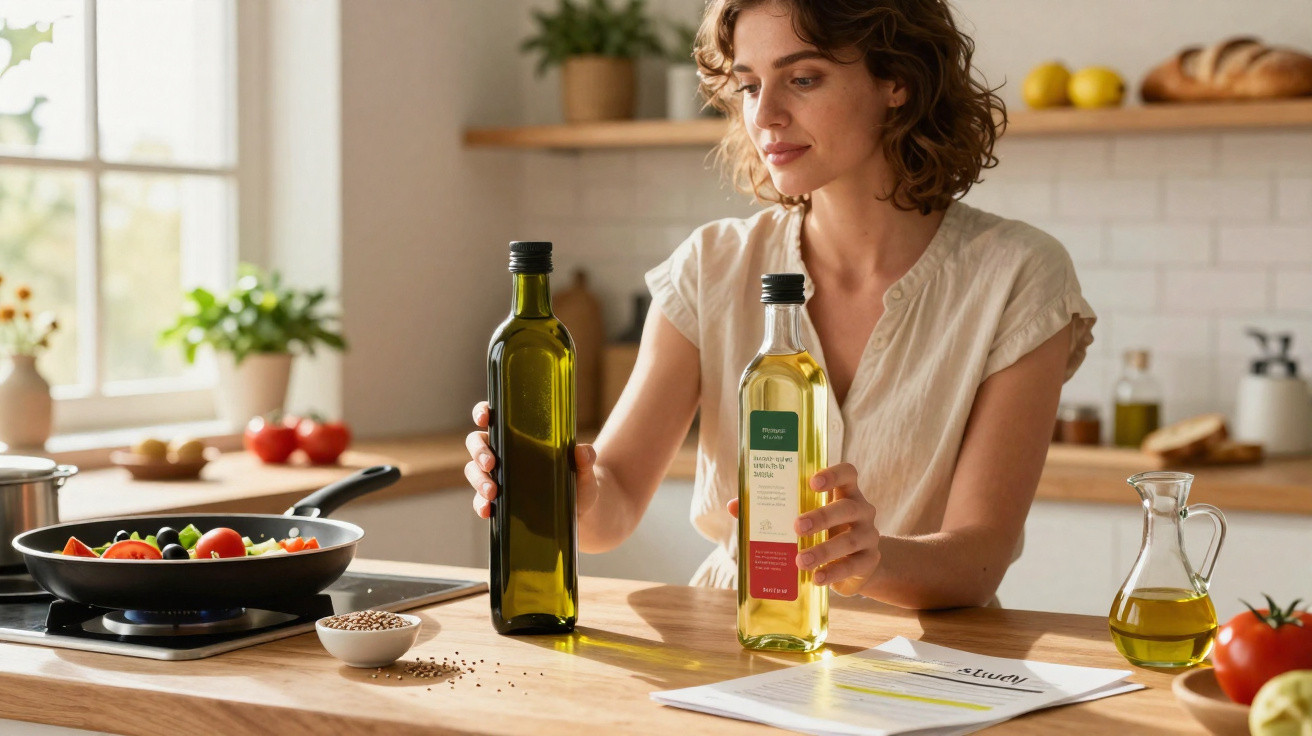
The waiter seemed almost insulted when I ordered the grilled vegetables “without olive oil, please.”
In a small family-run trattoria on the Amalfi Coast, forks paused halfway to mouths, a grandmother scowled, and somebody at the neighbouring table muttered something that plainly meant: “Poor thing, she has no idea.”
The devotion to that dark-green bottle is genuine. Olive oil is not merely a condiment; it is practically a creed, particularly among those who regard the Mediterranean diet as the benchmark for health and a long life.
Yet an emerging body of research is quietly challenging that untouchable status. It points towards a very inexpensive, distinctly unglamorous fat that appears to meet more health criteria on paper. And committed Mediterranean diet followers are not all pleased about it.
Olive oil knocked off its pedestal? The study that lit the fuse
This was not a dramatic claim from a wellness influencer. It came from nutrition scientists who undertook the comparison nobody was especially keen to see: everyday cooking fats assessed side by side for heart risk, inflammation and practical everyday use.
Their charts were not topped by cold-pressed extra-virgin olive oil from a Cretan hillside. Instead, plain, mass-produced and budget-friendly seed oil came out ahead - exactly the type of oil that many health-conscious shoppers have regarded with suspicion for years.
The finding travelling quickest across social media is that a cheap, high-oleic, refined seed oil can, in certain settings, appear every bit as favourable for the arteries as costly olive oil. Sometimes it even performs marginally better for LDL cholesterol and oxidation markers.
Nutrition Twitter erupted. Supporters of the Mediterranean diet began sharing photographs of Sardinian centenarians as though presenting evidence for the defence. “Explain them,” one user wrote, enlarging an image of a 102-year-old woman soaking bread in green oil.
Beneath the outrage, however, were some noteworthy figures. In one widely shared meta-analysis, participants who replaced a combination of saturated fats - such as butter and lard - with a neutral high-oleic seed oil experienced a bigger reduction in LDL cholesterol than those making the traditional switch to olive oil. The oil concerned was the sort sold in large plastic bottles at discount supermarkets for a small fraction of the cost.
In the bloodstream, it performed almost identically to olive oil. At the till, it cost three times less.
So why might this be happening? For a start, olive oil has never been solely responsible for the benefits associated with the Mediterranean diet. Vegetables, beans, nuts, walking uphill, chatting in the street, long lunches, smaller portions and a low intake of ultra-processed food all play their part.
Secondly, this new research focuses closely on one particular factor: fatty-acid balance and its effects on cholesterol and inflammation. High-oleic seed oils are developed to contain more monounsaturated fat - the same fat family that helped make olive oil famous - while remaining more stable at high temperatures.
That leaves a neutral-looking bottle of high-oleic sunflower or rapeseed (canola) oil able to compete credibly with “liquid gold” on important biomarkers. The science is not taking a swipe at your Italian uncle; it is simply pointing out that molecules are indifferent to marketing.
The dirt-cheap fat the data actually likes (and how to use it)
Which fat is unexpectedly taking the crown in these studies? There is nothing obscure about it: rapeseed (canola) oil and high-oleic sunflower oil frequently emerge as quiet front-runners when researchers examine LDL, HDL and stability in real cooking conditions.
They are easy to find, typically refined and almost frustratingly flavourless. That makes them well suited to high-temperature cooking, stir-fries, roasting and baking. Their fatty-acid profile is weighted towards monounsaturated fats, while rapeseed oil also provides some omega-3 and both are comparatively low in saturated fat.
In practical terms, the approach is straightforward: reserve flavoursome olive oil for drizzling over cold salads, soups and grilled vegetables. Use inexpensive high-oleic seed oil in frying pans, woks and roasting trays. You retain olive oil’s fragrant appeal when you can appreciate it, while relying on the cheaper fat for calm, low-smoke cooking at the highest temperatures.
Many people feel a pang of guilt merely reading that. Nutrition discussions carry an unspoken sense of shame: unless you are pouring small-batch olive oil from an idyllic village over everything, you are somehow making a less healthy choice.
The simple reality is this: most households simply can’t afford to deep-fry their potatoes in premium extra-virgin every weekend. Researchers understand that. Behind many of these papers lies a very practical question: which fats can ordinary people use widely without damaging either their arteries or their finances?
The usual error is to leap from one extreme to another: from “olive oil is a miracle, everything else is poison” to “seed oils are the real superfood now, throw away the green bottle.” Everyday life occupies the untidy middle ground, where both oils can have a sensible place in a practical kitchen.
“Olive oil works beautifully in a traditional Mediterranean pattern,” one cardiologist told me on the phone. “What the newer studies are saying isn’t ‘grandma was wrong.’ They’re saying, ‘If you don’t have a Tuscan hillside, you can still protect your heart with affordable options.’”
- Use olive oil where you will genuinely taste it
Cold dishes, finishing touches, bread dipping and quick medium-heat sautés. - Use cheap high-oleic seed oil for high-heat cooking
Roast potatoes, seared meat, tray-baked vegetables and homemade chips. - Look for “high-oleic” on the label and fewer ingredients
Choose a short ingredient list, avoiding flavoured blends and “mystery mixes” containing several oils. - Consider the entire plate, rather than only the bottle
Vegetables, pulses, wholegrains, sleep and stress: the familiar, unexciting but powerful essentials. - Do not panic about perfection
Honestly, nobody eats as though they are in a clinical trial every day.
What this fight over olive oil really reveals about us
The hostility prompted by this research is not purely about molecules. It also concerns identity, memories and the small routines that reassure us we are doing something beneficial for ourselves. Seeing a slender stream of emerald olive oil fall across ripe tomatoes is more than a nutritional choice; it is a modest expression of faith.
When a graph indicates that a grandmother’s “liquid gold” may, in some nutritional respects, resemble an unbranded bottle of rapeseed oil from the discount shelf, it can feel as though culture is being reduced to chemistry. People resist because they are protecting something that exists far beyond a laboratory.
At the same time, another quieter story is playing out in smaller kitchens far from the Mediterranean coast. A lone parent comparing prices in the cooking-oil aisle. A student in a shared flat trying to roast vegetables on a limited budget. An older person facing both increasing cholesterol and increasing energy bills.
For those people, the findings can be unexpectedly freeing. If an affordable neutral fat can support their heart almost as effectively as the glossy bottle in the “fancy” section, each supermarket trip carries a little less moral pressure. Good health is not exclusive to people who can pay €12 for 500 ml of cold-pressed green romance.
Most of us know the moment: quietly returning the expensive bottle to the shelf and choosing the one we can realistically afford.
Somewhere between the sunlit mythology of a Mediterranean table and the fluorescent glare of the discount aisle is a more truthful relationship with food. Olive oil can retain its poetry and its spot at the table. Cheap high-oleic seed oils can handle the demanding work in the pan without embarrassment.
The meaningful change is not simply “goodbye olive oil, hello budget bottle.” It is abandoning the notion that health depends on one magical ingredient rather than hundreds of small, repeatable decisions.
The next time you choose an oil, perhaps the more useful question is not “Which fat is the purest?” but “Which habit can I actually live with, week after week?” The answer will vary between Naples, New York and your own kitchen - and that is when this story becomes personal.
| Key point | Detail | Value for the reader |
|---|---|---|
| Olive oil is not the only “heart-healthy” fat | High-oleic seed oils, including rapeseed (canola) and high-oleic sunflower oil, often deliver comparable results in research on cholesterol and inflammation | Reassurance that lower-cost choices can still contribute to long-term health |
| Use different oils for different tasks | Use olive oil for flavour and low- to medium-heat cooking, and neutral seed oils for high-heat cooking and larger quantities | A practical way to balance flavour, health and budget without anxiety around food |
| Context matters more than one ingredient | Your overall eating pattern, stress, activity and intake of ultra-processed food count for more than a single bottle of oil | Encourages sustainable habits instead of pursuing miracle foods |
FAQ:
- Question 1 Are seed oils now “healthier” than olive oil according to research?
- Answer 1 Not quite. Certain high-oleic seed oils perform very similarly to olive oil on measures including LDL cholesterol and oxidation, and can occasionally have a slightly stronger effect when they replace saturated fat. That does not cancel out the benefits associated with olive oil in Mediterranean diet research; it simply broadens the range of fats that may fit within a heart-friendly eating pattern.
- Question 2 Which cheap fat are researchers usually talking about?
- Answer 2 Much of the discussion centres on refined rapeseed (canola) oil and high-oleic sunflower oil. They are low in saturated fat, reasonably high in monounsaturated fat and stable for daily cooking. Standard, non-high-oleic sunflower oil or corn oil has a different profile, with more omega-6, and features in fewer of the comparisons directly against olive oil.
- Question 3 Should I throw out my olive oil now?
- Answer 3 No. Olive oil remains an excellent fit within a healthy diet and offers both polyphenols and flavour. A more balanced approach is to save olive oil for salads, finishing dishes and quick cooking, while using a cheaper high-oleic seed oil for high-heat cooking or recipes requiring larger volumes.
- Question 4 What about all the scary posts saying seed oils cause inflammation and disease?
- Answer 4 Most large, well-designed studies in people do not support the most alarming claims. When seed oils replace saturated fats such as butter or lard, markers of inflammation often improve or remain neutral. Much of the alarm comes from animal studies, extreme doses or online echo chambers. Your broader diet and lifestyle influence inflammation far more than one tablespoon of oil.
- Question 5 How do I choose a decent everyday oil without going broke?
- Answer 5 For cooking, select a neutral, affordable oil marked “high-oleic” - commonly rapeseed (canola) or sunflower - in an amount you will genuinely use within a few months. For flavour, choose a modest bottle of extra-virgin olive oil whose taste you enjoy. Keep both away from heat and light, then concentrate on putting plants, wholegrains and foods you truly like into the rest of your trolley - that is where the major health gains lie.





Comments
No comments yet. Be the first to comment!
Leave a Comment