
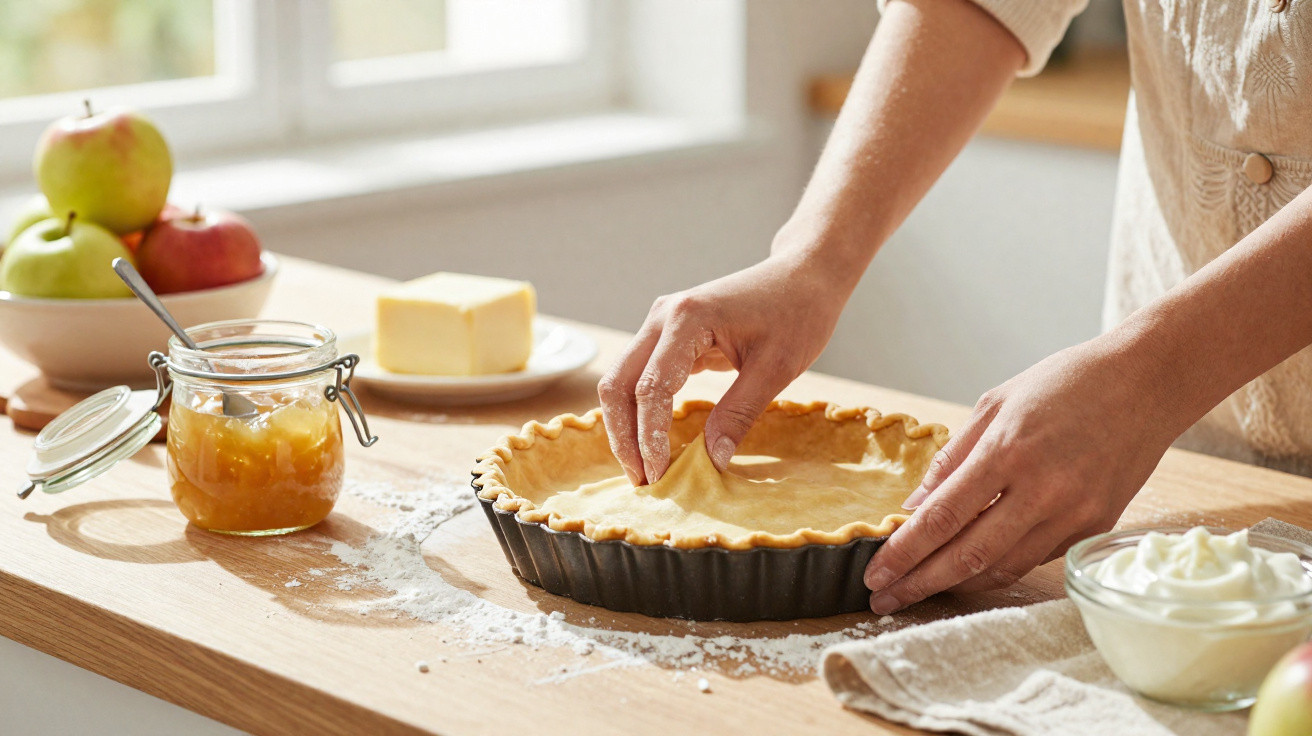
A low-cost fruit trick can make tart pastry unexpectedly tender.
Anyone who enjoys baking will know the problem: butter is becoming more expensive, shortcrust pastry can turn crumbly or tough, and it hardly feels like a light option. For some time, a practical tip has been circulating in nutrition circles that tackles several issues at once: less fat, a lower shopping bill and pastry that is soft, moist and remarkably reliable – without the usual butter-heavy approach.
Butter in tart pastry: expensive, fatty and often overrated
For many people, butter is as essential to baking as flour and sugar. Yet the figures explain why more home bakers are looking for alternatives:
- Around 82% fat
- Approximately 715 kcal per 100 g
- Often €8–10 per kilogram in shops
A straightforward tart or quiche base can easily use 100 to 150 grams. That affects both calorie intake and the cost at the till. At the same time, many amateur bakers complain about dry, crumbly bases that may be crisp but no longer feel properly tender.
“A fruity substitute from a jar cuts the calories by almost a factor of ten – and makes the pastry noticeably softer.”
That is where this increasingly recommended approach comes in: a fruit product that is usually already sitting in the cupboard and costs well under two euros per tub or jar at the supermarket.
The secret substitute: apple compote instead of butter
The key ingredient in this method is unsweetened apple purée, or apple compote with no added sugar. Best known as a childhood staple, it proves to be a surprisingly flexible replacement for butter in baking.
The nutritional values make the difference clear:
- Unsweetened apple purée: around 70 kcal per 100 g
- Butter: approximately 715 kcal per 100 g
For the same weight, the energy density falls to roughly one tenth. Anyone who bakes regularly can therefore save a noticeable number of calories over weeks and months, without feeling that they have given up enjoyment altogether.
There is a benefit for the budget too. While butter prices fluctuate and generally remain high, apple purée in jars or tubs is often available for less than two euros, and may cost even less in larger packs.
“Apple purée replaces butter at a 1:1 ratio – the pastry keeps its shape but becomes significantly softer and moister.”
For savoury recipes such as quiche, plain yoghurt with no added ingredients is a suitable alternative. Its flavour is neutral, and it also produces a tender, lightly short base.
Why apple purée makes tart pastry so tender
In traditional shortcrust pastry, fat has one principal role: it coats the flour particles and limits gluten development. When too much gluten forms, the pastry becomes chewy, shrinks and later feels hard.
Apple purée addresses this in a different way. It offers three important properties:
- Pectin as a natural binder: The pectin structure found in apples acts like a gentle adhesive, holding the mixture together without making it rubbery.
- Retained moisture: The purée holds water and releases it gradually during baking. Rather than drying out, the base stays moist.
- No hard fat crystals: Saturated fats such as those in butter set in the fridge. Pastry containing plenty of butter becomes firm and crumbly after chilling. Apple purée stays soft, making the dough easier to roll out.
The outcome is a base that is easy to handle and has a pleasant bite when eaten – neither rubbery nor powder-dry.
Yoghurt as a savoury option for quiche and more
For savoury tarts, quiches and vegetable flans, plain yoghurt without added sugar works particularly well. Its mild acidity acts as a gentle tenderiser for the flour. The pastry becomes short, meaning that it breaks finely and melts more quickly in the mouth.
Those wanting the classic shortcrust texture with a little crispness can make use of two small additions:
- Add ½ teaspoon of baking powder to the dough
- Add 1 tablespoon of rapeseed or olive oil
The baking powder provides minimal lift, while the oil adds a subtle extra crispness – with predominantly unsaturated fatty acids, which are viewed favourably in many dietary recommendations.
How to make tart pastry with apple purée: step by step
Switching from butter to apple purée or yoghurt is less difficult than many people assume. One simple principle is enough.
The basic rule: replace 1:1 and halve the liquid
- Choose apple purée: Use a variety with no added sugar, ideally finely blended. When using yoghurt, avoid “0% fat” products, otherwise the pastry will become too watery.
- Replace the butter 1:1: If a recipe specifies 100 g of butter, use 100 g of apple purée or 100 g of yoghurt in the dough.
- Reduce other liquids: Cut the milk, water or egg in the recipe by around half, as apple purée and yoghurt already add plenty of moisture.
- Mix the dough briefly: Combine the ingredients quickly using fingertips or a fork, rather than kneading for a long time, as this makes the mixture tough.
- Allow it to rest: Shape the dough into a ball, cover it and leave it to relax in the fridge for about 30 minutes.
- Roll it out gently: Lightly flour the work surface and roll the dough carefully. It is usually more pliable than conventional shortcrust pastry.
Depending on the filling, blind baking the base may be worthwhile – for example, with particularly wet toppings such as juicy fruit or very liquid quiche mixtures.
Practical example: butter-free quiche pastry
A reliable basic recipe is as follows:
- 250 g wheat flour (Type 405 or 550, or alternatively spelt flour)
- 125 g plain yoghurt
- 1 pinch of salt
- Optional: 1 tbsp rapeseed oil and ½ tsp baking powder
Briefly combine all the ingredients, form the dough into a ball, chill for 30 minutes, roll it out and place it in the tin – done. The texture will be softer and less crumbly; the base holds the filling well and remains stable when sliced without becoming rock-hard.
Health considerations: less saturated fat, more lightness
Nutrition professionals have pointed out for years that many households consume too much saturated fat. A high intake of certain fatty acids is associated with an increased risk of cardiovascular disease when it remains excessive over the long term.
“Anyone who partly or completely replaces butter with apple purée or yoghurt in baking recipes noticeably reduces the proportion of saturated fats – without having to give up favourite dishes.”
The change is particularly useful for people who bake often or have family members who eat a lot of cake and quiche. Apple purée also brings a little natural fruit sweetness, which means that the added sugar can be reduced slightly in some recipes.
Where the trick works best – and where it has limits
The apple purée trick does not suit every recipe, but it is especially effective for:
- Sweet tarts with fruit toppings
- Cake bases that should be moist rather than crumbly
- Muffins and sponge cakes with a tender crumb
- Quiches and vegetable flans, using yoghurt rather than apple purée
Anyone expecting a distinctly buttery flavour – as with classic butter biscuits or puff pastry – will not achieve the same taste with apple purée. In these cases, a partial substitution is more appropriate: replace, for instance, half the butter with apple purée. This lowers the fat and calorie content while leaving the characteristic flavour clearly noticeable.
Practical everyday kitchen tips
A few simple measures make it easier to use this substitute in everyday cooking without frustration:
- Plan trial runs: Start with a familiar recipe using half the usual butter and half apple purée, then increase the amount gradually.
- Adjust the spices: Cinnamon, vanilla and lemon zest all pair very well with the subtle apple flavour in sweet tarts.
- Prioritise neutrality: For savoury versions, choose yoghurt instead, as apple flavour may not suit certain fillings.
- Watch the consistency: If the dough becomes too soft, add an extra tablespoon of flour; if it seems too dry, add another teaspoon of apple purée or yoghurt.
Once the two-euro trick becomes familiar, many people automatically reach for the jar in the cupboard when baking instead of taking out a fresh block of butter from the fridge. It saves money, eases the calorie balance and creates tart bases that do not disintegrate into crumbs when cut, but give pleasantly under the fork.





Comments
No comments yet. Be the first to comment!
Leave a Comment