
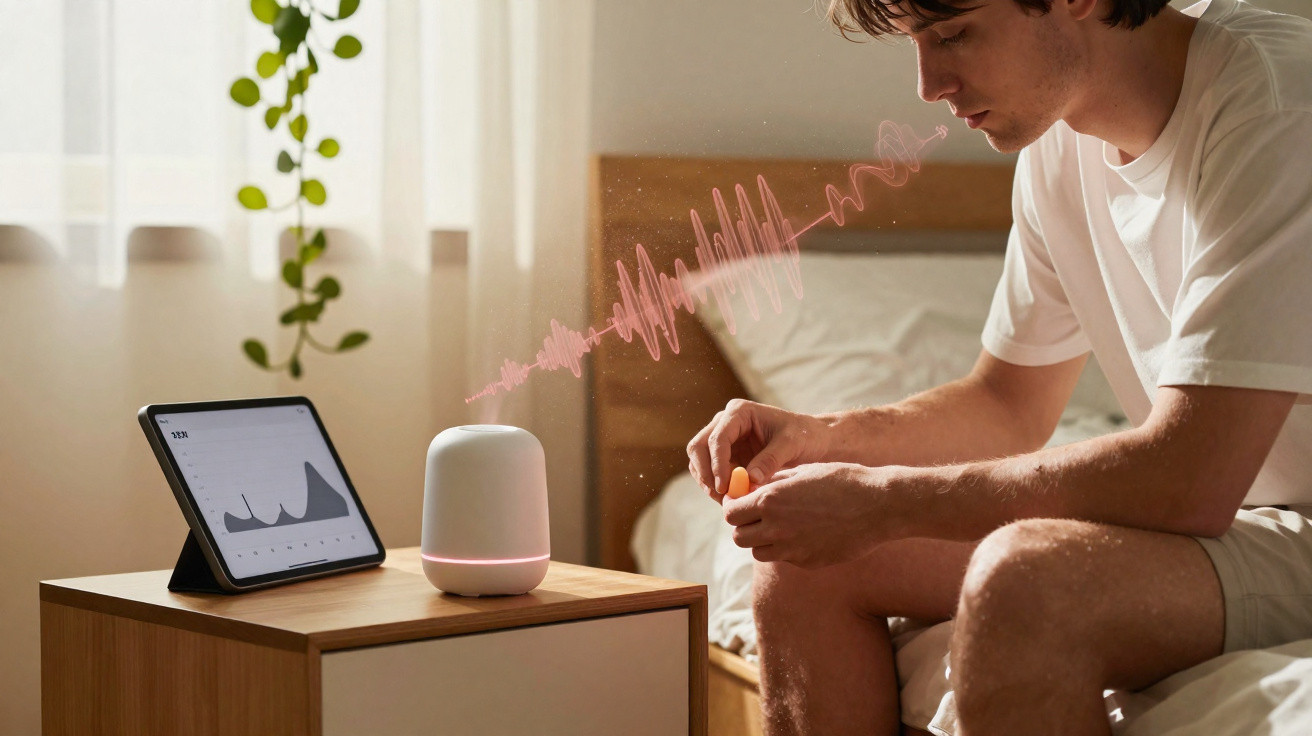
For years, millions of people have drifted off with soft hissing, whirring fans and repeating “sleep sounds” playlists in the background. Pink noise in particular has been sold as a gentle, natural route to more restful sleep. But new research indicates that the reality may be much less calming than the advertising suggests.
What pink noise is – and why people use it
Pink noise is sound in which low frequencies are slightly more prominent than high frequencies. It is generally heard as fuller and less abrasive than traditional white noise.
It can resemble steady rain, a far-off waterfall or the low hum of a fan. Rather than rising and falling sharply, it fills a space with an even acoustic “fog”. Many users find that it covers up traffic, snoring and neighbours returning home late at night.
Streaming services and apps have transformed this preference into a major audio market. Pink-noise recordings on Spotify, YouTube and TikTok receive millions of listening hours each day. Purpose-built sleep machines are now common on bedside tables, in prams and on office desks.
Pink noise became a sleep bestseller long before rigorous research caught up with the hype.
Much of its popularity comes from individual accounts rather than controlled studies. Until lately, only a small number of research groups had examined what happens in the brain across a night of sleeping with pink noise.
The University of Pennsylvania study on pink noise and sleep
Researchers from the University of Pennsylvania set out to examine the trend under laboratory conditions. Published in the journal Sleep, their study investigated how different sound settings influenced the way sleep unfolds overnight.
The researchers enrolled 25 healthy adults with no reported insomnia or other sleep conditions. Every participant spent seven nights in a sleep laboratory while connected to monitors measuring brain activity, breathing, eye movements and muscle tone.
During the week, the researchers alternated between several sound environments:
- Total silence
- Recorded aircraft noise
- Pink noise at 50 decibels (roughly the level of light rain)
- Aircraft noise combined with pink noise
- Silence while wearing foam earplugs
Because each volunteer experienced the various conditions, the team could assess how every sound setting affected their share of light sleep, deep sleep and REM sleep – the stage most closely linked to vivid dreams.
Pink noise reduced dream sleep
The central result was that pink noise did not have a neutral effect.
When played at 50 decibels, pink noise reduced REM sleep by an average of about 19 minutes a night. Although nineteen minutes may seem insignificant, REM periods are closely controlled by the brain and occur in clusters. Losing part of this sleep stage can have effects.
REM sleep, the stage where most dreams occur, plays a key role in emotional regulation and memory consolidation.
Earlier studies have connected lower amounts of REM sleep with increased emotional reactivity, mood changes and trouble dealing with stressful experiences. REM sleep is also closely linked to brain development in children and teenagers.
The outcome was worse when the researchers added pink noise to aircraft noise – a frequent real-world situation for people living in cities close to airports. Volunteers had less deep sleep and less REM sleep, while also spending more time awake at night.
The participants could sense a problem without seeing the figures. On nights with pink noise, particularly when aircraft sounds were also present, they described lighter, more interrupted sleep, more awakenings and less of a refreshed feeling by morning.
Why earplugs performed better
One element of the trial appeared almost traditional beside app-based sleep solutions: foam earplugs.
When participants used earplugs during noisy nights, their sleep patterns more closely resembled those seen in silence. In particular, deep sleep was more successfully maintained despite aircraft noise.
Unlike pink noise, earplugs add no new stimulus for the brain to process – they simply reduce incoming sound.
This difference is important. The brain does not entirely switch off while asleep: it continues to monitor its surroundings and respond to changes. Even a soft, uninterrupted added sound remains information that the brain must filter and interpret.
Rather than covering unwanted sound with another layer, earplugs dampen it and may therefore lessen the burden on the sleeping brain. This could explain their stronger performance than the fashionable alternative in the study.
Should parents be concerned about baby sleep machines?
Pink noise and devices marketed as “soothing sounds” are widely promoted for nurseries. Many parents position compact speakers or white-noise toys near a baby’s cot to block household sounds and promote longer naps.
That practice may need reconsidering.
Young children spend a greater proportion of the night in REM sleep than adults do. Their brains are quickly creating and pruning neural connections. Any reduction in REM sleep could, in theory, influence the development of those networks.
Continuous sound near infants’ ears might not be benign, especially if used for many hours, night after night.
This latest study involved adults rather than babies, so it cannot support direct conclusions about infants. Nevertheless, its authors advise caution before treating loud or continuous sleep sounds as normal for children, particularly at high volumes or close range.
How pink noise changes the idea of “good” sleep sounds
Pink noise has often been grouped with white noise and soft ambient recordings as a broadly useful sleep aid. The findings from this trial point to a more complicated picture.
Some people with insomnia say they fall asleep more quickly when background sound is present. In particularly noisy places, a consistent audio layer can soften the impact of sudden sound spikes, such as a slammed door or a car horn at 2 am.
However, the Pennsylvania team’s data suggest there may be a trade-off: potentially easier sleep onset on one hand, and possible disruption to deeper sleep architecture on the other, notably REM sleep and deep slow-wave sleep.
| Sleep aid | Main action | Potential downside |
|---|---|---|
| Pink noise | Covers environmental noise with continuous audio | Reduced REM, lighter sleep, more time awake |
| White noise | More high-frequency sound with a similar masking effect | Often experienced as harsher; limited long-term data |
| Earplugs | Physically blocks outside noise | Can be uncomfortable for some people; hygiene concerns when reused |
What you can do tonight
Assess your bedroom soundscape
First, pay attention to the true noise level in your bedroom at night. A smartphone decibel-meter app can provide a rough indication. The pink noise in the study was played at around 50 dB, comparable with light rainfall or a quiet conversation. Many low-cost sleep machines can reach higher volumes.
If pink noise is part of your routine, consider lowering the volume and moving the device further from your head. Sound that is only just audible may be less disruptive to REM sleep than a powerful blanket of noise.
Remove sound before adding it
Before introducing more audio, consider how you could reduce existing noise:
- Try soft silicone or foam earplugs if they are comfortable for you.
- Shut windows facing noisy roads and use thicker curtains.
- Position the bed away from shared walls in flats.
- Discuss straightforward adjustments with housemates or neighbours, such as closing doors more quietly at night.
These practical changes do not add more audio for the brain to process. Instead, they make the surroundings quieter.
Sleep terms that explain the pink-noise research
Sleep science can use technical language that hides simple concepts. These terms help show what pink noise may affect.
- REM sleep: The stage involving rapid eye movements and vivid dreams. It is associated with emotional processing, learning and memory.
- Deep sleep (slow-wave sleep): The deepest and most restorative stage. During it, the body repairs tissue and the brain removes metabolic waste.
- Sleep architecture: The overnight pattern and order of light sleep, deep sleep and REM sleep.
In this research, pink noise chiefly lowered REM sleep. When paired with aircraft noise, it also reduced deep sleep. Both stages are important for feeling rested and mentally alert the following day.
What this could mean for long-term health
A single short-term laboratory experiment cannot forecast effects across a lifetime. Yet research in other fields provides some indications if lower REM and deep sleep were to become a nightly pattern.
Long-term restriction of these stages has been linked with a greater risk of depression, weaker memory, slower responses and metabolic problems including weight gain and glucose intolerance. The body and brain seem to require regular full sleep cycles, rather than simply enough time spent in bed.
For a person using loud pink noise every night over many years, especially in a noisy city, the modest nightly reductions recorded in the laboratory could build up. That possibility has not yet been comprehensively investigated, but it poses a sensible question over whether continuous sound is as “harmless” as it appears when used indefinitely.
Until larger studies provide firmer conclusions, the safest option may be unexpectedly low-tech: a quieter bedroom, improved soundproofing where feasible and, where outside noise cannot be managed, an affordable set of earplugs instead of another streamed playlist.






Comments
No comments yet. Be the first to comment!
Leave a Comment