
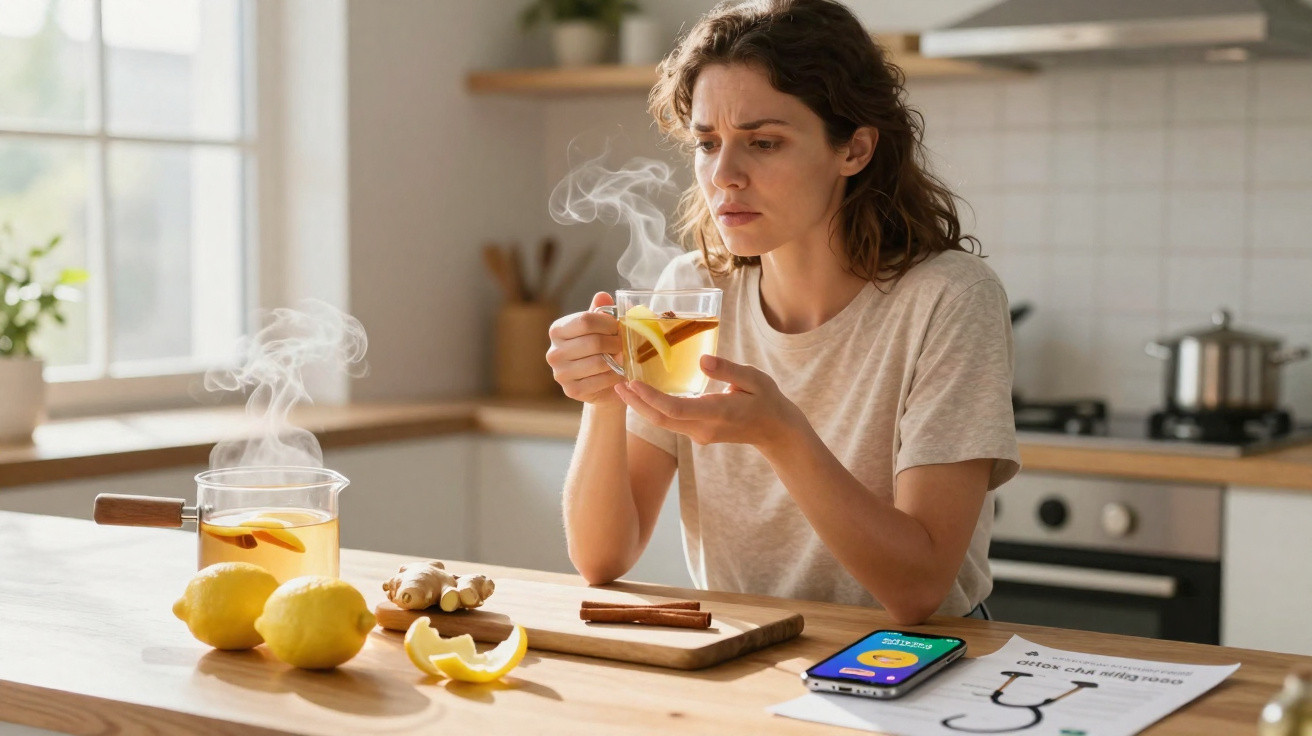
The kettle starts whistling in a cramped kitchen at 6:30 a.m., with the outside world not quite awake. Sitting on the worktop are a peeled lemon, a bent cinnamon stick and a knobbly piece of ginger, cut into slightly lopsided slices. This same scene fills TikTok and Instagram, where it is said to deliver slimmer waists, “detoxed” livers and radiant skin within seven days. No exercise, no blood tests - only a hot mug and a measure of belief.
Before leaving for work, you scroll through the clips, your thumb lingering over replay as you wonder whether this modest-looking brew might be the answer you have overlooked.
Doctors are seeing those videos too. Their response could not be more different.
Why everyone is suddenly boiling lemon peel with cinnamon and ginger
The instructions seem almost too charming to challenge: simmer lemon peel, cinnamon sticks and fresh ginger in water for 10 to 15 minutes, leave it to infuse, then drink it warm in the morning and evening. Your social feed labels it “miracle detox water” or “belly fat tea”, alongside polished before-and-after images and striking personal claims.
You see strangers raising their tops to reveal narrower middles and apparently flat stomachs. They say bloating, cravings and tiredness have all disappeared.
It presents wellness as something made in a single saucepan.
Keep scrolling and the narrative plays out again in kitchens everywhere. A young woman in London records her “day 3 detox diary”, holding a cup and insisting that her jeans now fasten more easily. In Texas, a father hoping to undo years of fizzy drinks and fast food decants the brownish infusion into a mason jar to last the week.
One video promises “3 kilos in 10 days”; another declares, “I fixed my liver”, without referring to either a doctor or laboratory results. Medical histories and medicines are never part of the conversation.
Gentle lo-fi music plays in the background. The accompanying health promises are far less gentle.
The trend is built partly on real information woven together. Lemon peel does contain antioxidants and flavonoids. Ginger has anti-inflammatory qualities. For some people, cinnamon may assist with blood-sugar control. These points are true in laboratory settings and when the ingredients are used moderately.
The problem begins when “has some benefits” is turned into “detoxes every organ” in a 20-second video. That is the point at which specialists become concerned.
Online, detox is an especially persuasive term. In medical practice, it generally refers to something quite different.
How to use lemon peel, cinnamon and ginger safely
If the ritual of a warming, spiced drink appeals to you, you can enjoy it without allowing it to become a risky fixation. Regard it as flavoured water rather than medical care. Add a small piece of lemon peel, a short cinnamon stick and two or three slices of fresh ginger to a litre of water.
Heat it slowly until boiling, allow it to simmer for around 10 minutes, then leave it covered to rest. Spread it across the day instead of drinking it in one go.
Sip it rather than knocking it back like a shot.
The main danger lies in quantity and expectation. Someone may begin with one comforting cup, then progress to two litres daily on the basis that “if a little helps, a lot must transform me”. This is how heartburn, stomach irritation and medicine interactions can quietly become part of the story.
Some people drink it on an empty stomach despite also taking medicines that thin the blood or reduce blood-sugar levels. Others miss meals because they believe the brew will “clean” them internally.
Let’s be realistic: nobody follows a video perfectly every day without taking shortcuts or testing the limits.
“Detox is not a tea, it’s what your liver and kidneys do 24/7,” explains a French hepatologist I spoke with. “What worries me is not the ingredients themselves, but the belief that this can replace food balance, sleep, or proper medical follow-up.”
Treat it as a drink, not a remedy
For most healthy adults, one or two cups daily is more than enough.Pay attention to your body
A burning chest, nausea, palpitations or unusual dizziness are not “toxins leaving your body”. They are signs that something may be wrong.Speak to a professional if you have health conditions
Diabetes, anticoagulants, pregnancy and gastric problems are all reasons not to experiment alone with potent herbal infusions.Keep an eye on sugar
Plenty of recipes mask bitterness with honey, agave or sugar. Eventually, the drink is little more than a dessert.Do not describe it as a detox
Call it what it is: an aromatic infusion that may replace fizzy drinks or juice, with nothing more mystical attached to it.
What this “detox tea” trend really says about us
Beyond the steam and saucepan, the craze has less to do with lemon peel than with a desire to feel in control. Life can seem disordered, bodies can feel uncertain, and healthcare can appear remote or costly. Repeating an uncomplicated recipe each morning can offer routine, optimism and the sense that you are taking meaningful action for yourself.
Most of us know the feeling: during a chaotic week, one small habit can seem like a lifeline.
Doctors are not dismissing people simply for drinking ginger tea. Their concern is the absolute and judgemental language surrounding it. “Good” bodies detox, while “weak” ones supposedly fail to. When the drink does not “work”, people tend to blame themselves rather than the hollow promise.
The straightforward reality is that a hot drink may be soothing, contribute to hydration and perhaps support gentle digestion. It cannot undo ultra-processed food, ongoing stress, insufficient sleep or an undiagnosed illness.
Perhaps, then, the more useful question is not “Does lemon peel with cinnamon and ginger detox my body?” but “What do I want this drink to solve in my life?” If you want better hydration and a more pleasant morning ritual, that is a safe expectation. If you expect it to resolve “my liver, my weight, my anxiety, my blood tests, and my future”, a mug of tea has been given far too much responsibility.
Your liver, kidneys and gut carry out their work quietly every minute, without the aid of any viral recipe. Booking a doctor’s appointment, eating a more unhurried evening meal or getting ten additional minutes of sleep may be less glamorous than a trending detox, but your cells recognise those signals perfectly.
| Key point | Detail | Value for the reader |
|---|---|---|
| Detox is a biological process, not a drink | The liver, kidneys, lungs and skin continuously filter and remove waste | Lessens guilt and the pressure to “purify” yourself using extreme recipes |
| Moderation matters with “natural” ingredients | Large quantities of lemon peel, ginger and cinnamon may irritate, interact with medicines or influence sugar levels | Allows you to enjoy the drink safely, without overlooked risks |
| Ritual is often the real benefit | Warm, flavoured water can take the place of sugary drinks and provide a calm moment | Supports lasting habits rather than the pursuit of miracle cures |
FAQ:
Can boiling lemon peel, cinnamon and ginger really detox my liver?
No. Your liver detoxifies your body continuously through complex biochemical pathways. The drink may support hydration, but it does not “clean” your liver as though a filter were being rinsed.Is it safe to drink this every day?
For a healthy adult, one or two moderate cups daily is generally fine. Stop and speak to a healthcare professional if you develop heartburn, stomach pain or feel unwell.Can this tea help with weight loss?
It may offer a small benefit if it replaces sugary drinks and helps you feel fuller, but it does not burn fat on its own. Lasting weight change depends on overall lifestyle, not a single drink.Are there people who should avoid this recipe?
Yes. Anyone with stomach ulcers, reflux, kidney or liver disease, people taking blood thinners or diabetes medicines, and pregnant women should consult a doctor before using it regularly.How can I enjoy this trend without falling for the myth?
See it as an enjoyable herbal drink: use modest quantities, ignore extravagant promises, and pair it with practical basics such as varied food, movement and regular medical check-ups.




Comments
No comments yet. Be the first to comment!
Leave a Comment