
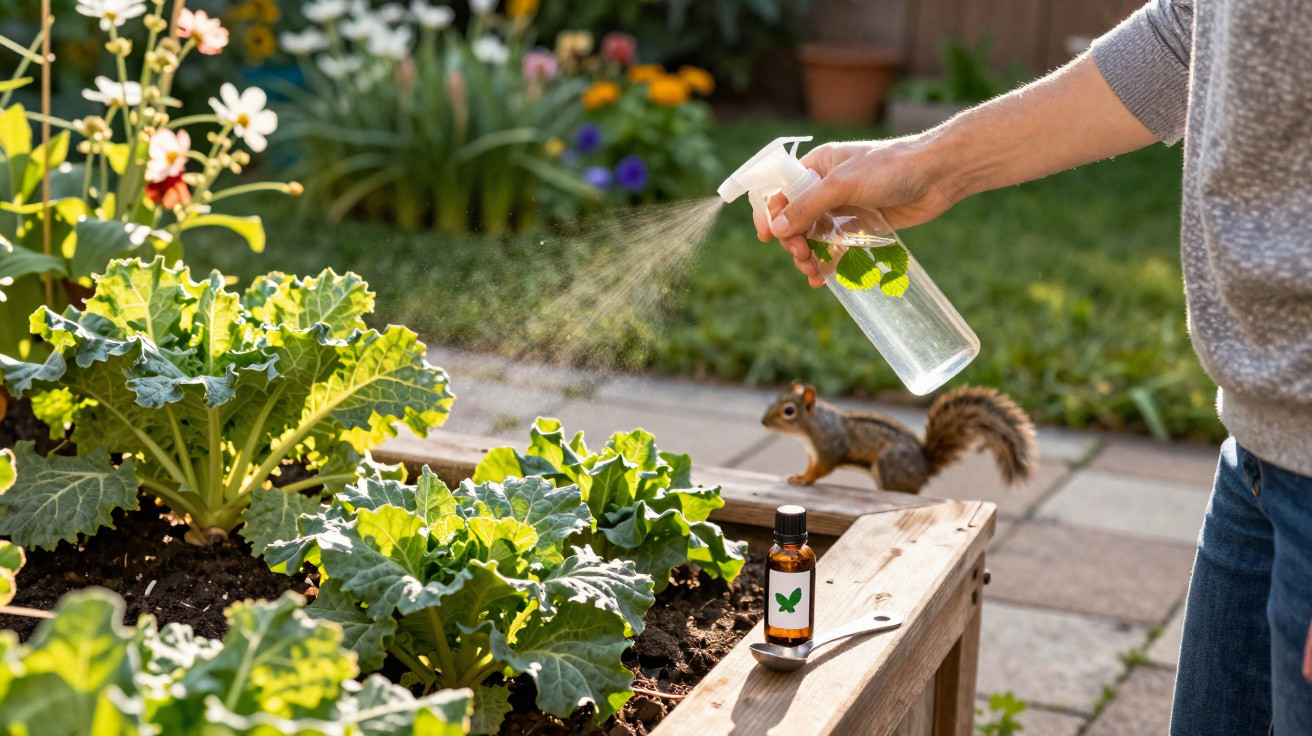
Squirrels can be pleasant to watch, until they dig up flower bulbs, raid bird feeders and gnaw on wood or cables. Anyone who does not want to trap or harm them will soon come across supposedly “natural” home remedies. Peppermint essential oil is high on that list. Its intense scent is said to drive the animals away without harming them. But is a little minty fragrance really enough to keep these agile rodents at a distance?
How peppermint oil affects squirrels
Peppermint oil contains menthol and menthone. These compounds create its characteristic cool mint scent and stimulate certain sensory receptors in mammals, including squirrels.
Peppermint oil irritates the animals’ highly sensitive sense of smell and can make areas temporarily less appealing.
Squirrels rely heavily on their noses. They locate food, detect predators and remember safe routes through scent. When this refined sense of smell encounters an unusually powerful aroma, many animals initially keep their distance:
- They avoid the treated area for a short time.
- They look for different routes or food sources.
- Later, they cautiously check whether the irritant is still present.
Research into scent-based deterrents for rodents indicates that strong aromas can disrupt behaviour - but generally only temporarily. Animals often become accustomed to them, especially if the location still offers something particularly tempting, such as sunflower seeds or newly planted bulbs.
How long peppermint oil lasts in the garden
Peppermint oil’s biggest drawback outdoors is its limited staying power. Wind, rain and sunlight quickly break down the scented compounds. The following factors are particularly important:
| Factor | Effect on performance | Typical duration |
|---|---|---|
| Rain | Washes oil off surfaces | 1–2 days |
| Direct sunlight | Speeds up evaporation of scent compounds | 2–4 days |
| High temperatures | Causes even faster evaporation | 3–5 days |
| Sheltered areas | The scent lasts noticeably longer | 7–10 days |
It is also worth noting that squirrels do not all react in the same way. Some give strongly scented locations a wide berth, while others approach gradually and disregard the smell after a few days. Animals that already have regular feeding spots or nesting places in your garden are especially persistent.
Correct use: how to apply peppermint oil in the garden
Anyone choosing peppermint oil needs a plan rather than random spraying. Concentration, target areas and a consistent application schedule all matter.
Spray mixture for beds and paths
A straightforward spray solution has proved useful:
- 1 cup of water
- 10–15 drops of pure peppermint oil
- a squirt of washing-up liquid as an emulsifier
The washing-up liquid helps the oil combine with the water instead of simply floating on top. Shake the mixture thoroughly, then spray it onto the following areas:
- Soil above freshly planted flower bulbs
- Along fence lines and common travel routes
- Around bird feeders and feeding areas, but not directly on food
- At the base of timber posts, patio edges or garden sheds
During busy periods, such as spring and autumn, applying it every few weeks will not be enough. Depending on the weather, two applications per week are sensible. Following heavy rain, it will need to be reapplied considerably sooner.
Stronger options for problem areas
For particularly vulnerable spots, a more concentrated approach can be used:
- Soak cotton wool balls: Place cotton wool soaked in undiluted oil inside small containers or old jam jars, make holes in the lids and position them in at-risk corners.
- Herb sachets: Fill small fabric bags with dried mint leaves and a few drops of oil, then place them near nesting sites or food sources.
- Mix it into mulch: Blend a few drops of oil into mulch or compost and spread it around sensitive plants.
- Combine it with technology: Used alongside motion-activated water sprinklers or light deterrents, the discouraging effect increases noticeably.
- Rotate scents: Switch occasionally to other smells, such as garlic oil or clove oil, so animals are less likely to become accustomed to them.
Why peppermint oil alone is rarely enough
Peppermint oil is not an invisible fence. It alters behaviour, but it does not physically prevent access. Hungry animals, or those already used to visiting the property, are often only mildly affected by unpleasant smells.
Peppermint oil may take the fun away for squirrels - but not the opportunity.
The situation is particularly difficult if you:
- already have a large number of squirrels on the property;
- provide plentiful food sources, including nuts, bird food or compost;
- have mature trees and dense hedges that offer ideal shelter in the garden.
Cost is another consideration. High-quality essential oils are not cheap. Anyone spraying large areas throughout the gardening season will quickly notice the expense. Treating only occasionally, meanwhile, usually produces barely noticeable results.
A smart combination: scent, barriers and food management
Homeowners tend to achieve far better results when peppermint oil is used as just one of several measures. A multi-step approach may include:
- Physical obstacles: Wire baskets or close-mesh netting over flower bulbs, sturdy metal roofs on bird feeders and metal collars around posts.
- Targeted scents: Apply peppermint oil in places where a fixed barrier is impractical, such as paths or around particular beds.
- Reducing food sources: Cover open compost heaps, limit or temporarily stop putting out bird food, and promptly collect fallen fruit.
If you only change the scent, the real incentives remain. Remove anything that resembles a free buffet and reinforce this with scented disruptions, and the chances increase that the animals will seek out a more “rewarding” territory.
When peppermint oil is worthwhile - and when it is not
Peppermint oil is most useful in these situations:
- Your garden has only had occasional squirrel visitors so far.
- You want to protect sensitive areas, such as new plantings, for a short period.
- You are looking for an addition to fences, mesh barriers and technical deterrents.
It is less suitable if:
- a large, established squirrel population lives nearby;
- numerous trees, loft spaces or crevices provide ideal nesting places;
- you expect a “spray once and enjoy permanent peace” effect.
Anyone who understands that peppermint oil is a deterrent rather than a miracle solution can use it selectively and effectively.
Practical guidance, risks and additional tips
A few points are often overlooked online but matter in practice:
- Dosage: Too much oil can damage plant leaves, particularly in direct sunlight. Test it on a small area first.
- Pets: Cats and dogs vary in their sensitivity to essential oils. Ventilate indoor spaces well and avoid direct skin contact.
- Beneficial insects: The scent of peppermint can also disturb insects. Do not spray widely over flowering plants used by pollinators.
Those exploring natural deterrents in more depth often also use plants that rodents tend to dislike, such as strongly scented herbs including mint, thyme or sage around the edges of vulnerable beds. They do not completely replace peppermint oil, but they help create an environment that feels less comfortable for squirrels.
Ultimately, peppermint oil is one tool among several. Used correctly, it can reduce damage, limit frustration and at least buy time until more robust measures take effect. Anyone expecting a simple miracle spray, however, may soon be proved wrong by these clever climbing specialists.





Comments
No comments yet. Be the first to comment!
Leave a Comment