
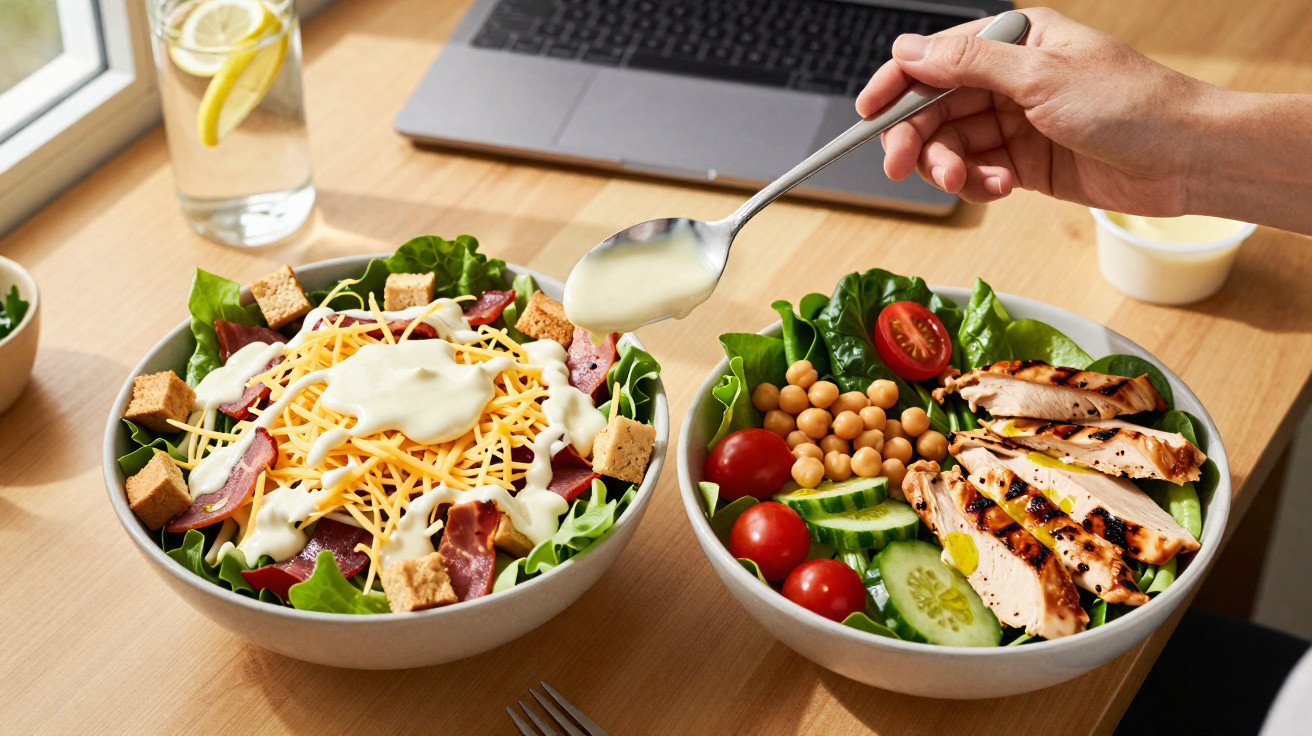
Many people choose an XXL salad bowl at lunchtime and assume it is the safe option – but it often contains more than expected.
A large plate of leafy salad, toppings and dressing is widely seen as the ultimate light lunch. The thinking is: “It’s only salad, so it can’t make you gain weight.” In practice, however, it can quickly become a calorie-heavy meal that easily matches a plate of pasta – and can sometimes exceed it.
Why an XXL salad bowl is not automatically weight-friendly
Leafy greens, cucumber, tomatoes and similar ingredients are naturally very low in calories while providing fibre, vitamins and minerals. The issue begins with the generous extras added by restaurants, salad bars and delivery services: cheese, breaded meat, rich dressing, croutons, nuts, avocado, pasta and potatoes.
A generously topped salad bowl can easily reach 700 to 800 kilocalories – more than a standard plate of pasta with vegetables.
For comparison, an average pasta dish containing around 80 g of uncooked pasta and a vegetable sauce often comes to roughly 350 to 380 kilocalories. A substantial Caesar salad with chicken, croûtons, plenty of cheese and a creamy dressing can far exceed that figure – without feeling like a “proper” meal.
Hidden calories: these ingredients make salad bowls heavier
Cheese: when extra protein becomes a fat trap
Cheese in a salad bowl may initially seem like a sensible choice: it adds protein and can improve fullness. The catch is that many varieties provide substantial amounts of fat alongside their protein – and therefore calories. Hard cheese, feta, buffalo mozzarella and Emmental are particularly significant.
- Hard cheeses such as Parmesan: very energy-dense and high in saturated fat
- Feta and comparable cheeses: also high in salt
- Buffalo mozzarella: considerably higher in fat than standard cow’s milk mozzarella
Choosing “just a little cheese on top” can quickly mean portions more suited to a full main course than to “a few toppings”.
Processed meat, ham and tinned fish
Many bowls include strips of salami, ham, bacon pieces, or tinned salmon and tuna. Although they offer protein, they often bring three issues at once:
- high salt content
- hidden fats
- a high calorie density despite little volume
Tuna in oil, packaged salmon and strongly seasoned processed meats in particular raise the salad’s energy content – making it feel far removed from a “detox meal”.
Two or more carbohydrate sources on one plate
Another common pattern is having several filling carbohydrate sides in the same bowl, for example:
- croutons or toasted bread
- sweetcorn
- potatoes
- cooked pasta, rice, couscous or other grains
Each of these is a perfectly valid source of carbohydrates on its own. It becomes problematic when several appear together in large quantities. You are then effectively eating double or triple the carbohydrate portion without realising it – because the bowl still looks “green”.
The real issue: dressing
The greatest source of calories is usually not the topping at all, but what is poured over it. One tablespoon of olive oil contains around 120 kilocalories. When it is poured straight from the bottle “by eye”, three or four tablespoons can easily end up on the plate, often alongside a ready-made yoghurt, honey-mustard or Caesar sauce.
Oil, creamy dressings and sauces can turn a light plate of vegetables into a full-scale calorie bomb – without leaving you as satisfied as a hot meal would.
Restaurants and delivery services rarely hold back on dressing, as flavour is their priority. That is less helpful for managing your weight.
What a genuinely balanced salad bowl looks like
The good news is that there is no need to give up a large salad bowl. The key is putting it together well. A simple way to do this is to picture the plate as a cake divided into four sections.
Half the plate: plenty of vegetables
About half of the bowl should consist of a variety of vegetables, raw and, ideally, cooked as well:
- leafy salads, such as rocket, lettuce, Lollo and lamb’s lettuce
- carrots, cucumber, peppers and tomatoes
- fennel, cabbage, beetroot and courgette
A generous volume, plenty of fibre and a colourful selection help you feel full without consuming many calories.
One quarter: lean protein
The body needs protein to stay satisfied. Leaner choices work particularly well:
- grilled chicken or turkey
- tuna in spring water rather than oil
- chickpeas, lentils or beans
- lightly fried tofu or tempeh
- boiled eggs
- small portions of lighter cheese, such as young Gouda or light mozzarella
This amount covers a good share of your protein requirements without loading the plate with fat.
The final quarter: complex carbohydrates
Most people do not stay full for long when they cut out carbohydrates entirely. Small portions of the following are therefore useful:
- wholemeal bread or low-fat toasted wholemeal croutons
- wholegrain rice, brown rice or spelt
- farro, bulgur or quinoa
- boiled potatoes in moderate amounts
If you have already eaten pasta at lunchtime, you can make this portion smaller in the evening or replace it with extra pulses and vegetables.
How much dressing is actually sensible
With dressing, one decision often determines whether a meal is “light” or heavy. Many experts recommend the following amount per person:
| Component | Recommended quantity |
|---|---|
| Olive oil or rapeseed oil | 1–2 tablespoons |
| Acid, such as vinegar or lemon juice | to taste, usually 2–3 tablespoons |
| Mustard, herbs and spices | 1–2 teaspoons or a generous pinch |
Using these quantities, a salad meal will usually fall within the 350 to 500 kilocalorie range, depending on the toppings. Herbs, pepper, chilli or garlic can boost flavour without increasing the calorie count.
Quick checklist: is your salad really lighter than pasta?
A few questions can help you assess how “light” a salad actually is when ordering in a restaurant or choosing from a counter:
- Do vegetables make up at least half of the bowl?
- Have you selected only one main fat source, such as oil or avocado, rather than both plus cheese?
- Is the dressing made with oil and vinegar or lemon, without added cream, mayonnaise or sugar?
- Is the amount of oil clearly stated, or would you be better off dressing the salad yourself?
- Is there only one type of carbohydrate on the plate, such as bread or potatoes rather than both?
- Are cheese and processed meat side additions rather than the main feature?
If you can answer “yes” to most of these, your bowl is likely to be in a similar calorie range to a sensible plate of pasta – while providing considerably more vegetables and fibre.
Practical tips for everyday life and the office
A few regular habits can help you avoid the salad trap, particularly during the working day:
- Order dressings separately and add them yourself.
- Choose tuna in spring water rather than tuna in oil.
- Halve the amount of croutons, cheese cubes and bacon strips, or leave them out entirely.
- Have a small wholemeal roll separately instead of combining pasta and bread in the salad.
- Take homemade dressings to work in small screw-top jars.
Preparing meals yourself offers the greatest advantage: you can control every ingredient and portion without giving up flavour. Homemade yoghurt dressings made with natural yoghurt, mustard and herbs contain less fat than many ready-made sauces while still adding plenty of seasoning.
Why salad remains a worthwhile choice despite the calorie trap
Despite these potential pitfalls, a balanced salad remains a good option for a main meal. Its large quantity of vegetables creates lasting fullness, supports digestion and may help meet daily micronutrient needs. By choosing a smart combination of protein, carbohydrates and fat, you can create a meal that does not merely sound “light” but is reflected that way on the scales.
The psychological effect is also worth noting: after having “only salad”, many people feel they have been so good that they are more likely to “treat” themselves to dessert or snacks later. If the salad has actually contained more calories than a plate of pasta, the day’s total can quickly move into surplus. Taking a realistic look at what is in the bowl helps avoid exactly this trap – and lets salad return to what it can be: a genuinely light yet satisfying main course.





Comments
No comments yet. Be the first to comment!
Leave a Comment