
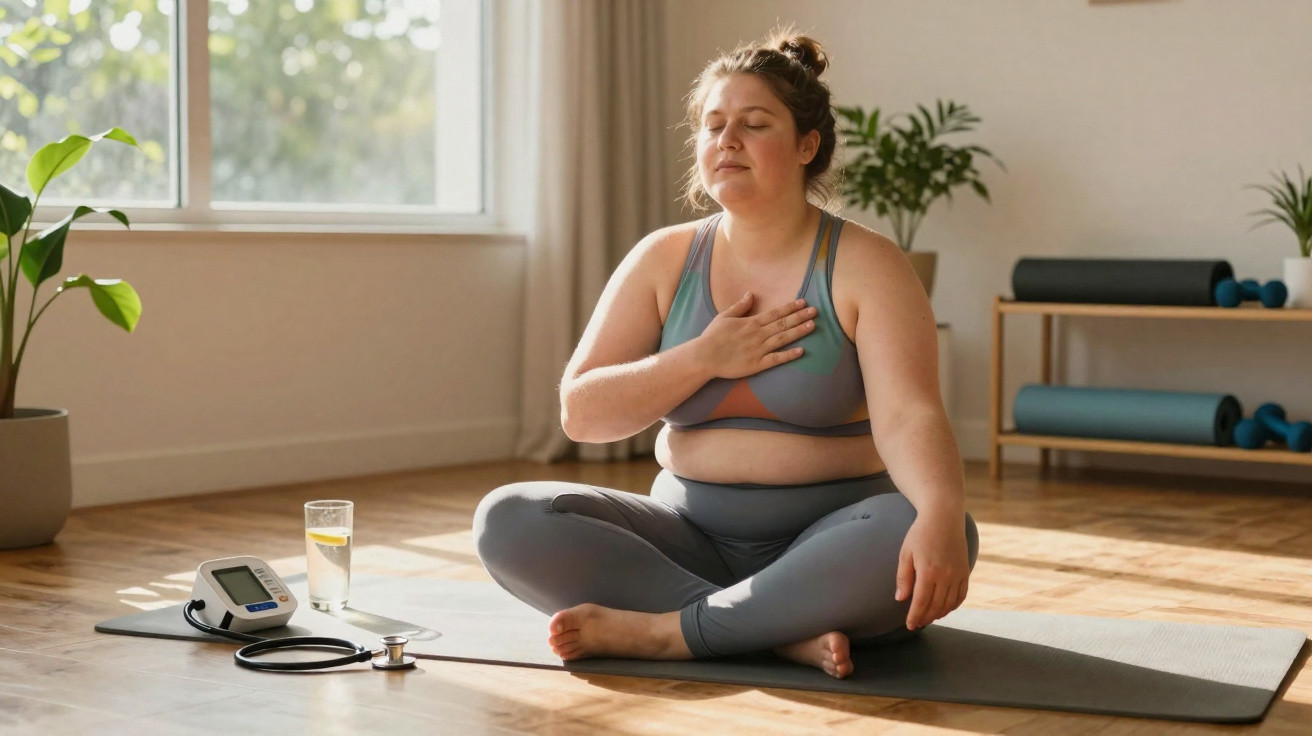
Yoga could help reduce blood pressure in adults with excess weight, with new evidence showing an average measurable fall in the top reading.
For adults who are overweight, this may offer an accessible, lower-impact way to support heart health when more demanding exercise feels unattainable.
Evidence from 30 yoga trials
A review of 30 yoga trials found its strongest result in blood pressure: both the upper and lower readings declined.
Tracking these outcomes among 2,689 adults, Widya Wasityastuti of Universitas Gadjah Mada (UGM) found that practising yoga was associated with lower blood pressure in adults with a higher body mass.
The lower reading dropped by 2.06, in the standard unit used for blood pressure measurement, supporting the same cardiovascular trend. This does not, however, make yoga a treatment that can stand alone.
Even so, the findings are useful and raise a valuable question about why and how gentle practice may influence the body beneficially.
How yoga may lower blood pressure
Yoga may alter blood pressure by bringing together movement, breathing and calm focus in a routine requiring low-to-moderate effort.
Slow breathing may settle the nervous system, helping blood vessel walls to relax and lowering the force generated by each heartbeat.
Gentle postures also make muscles work without intense bursts of effort, potentially improving blood flow through the vessels.
This effect on blood vessels is important, as a worldwide analysis associated a high body mass index-a height-to-weight screening measure-with 5.02 million deaths in 2019.
Limited effects on lipid levels
Beyond blood pressure, the trials showed more modest shifts in low-density lipoprotein cholesterol (LDL), the particle commonly associated with plaque in the arteries.
In the pooled findings, LDL was 0.08 mmol/L lower, while high-density lipoprotein cholesterol (HDL), often known as the “good” cholesterol, was 0.06 mmol/L higher.
Triglycerides, another type of blood fat, showed a clearer reduction, whereas total cholesterol did not change enough to be notable.
For an individual patient, this pattern suggests yoga might contribute to healthier readings, but it cannot take the place of diet, medicines or more vigorous exercise where these are required.
Mixed clues from glucose measures
Indicators of blood sugar produced a less consistent picture, particularly when researchers relied on brief readings taken before or after eating.
Measures linked to insulin resistance, where cells do not respond to insulin’s signal, shifted more favourably than simple glucose snapshots.
Fasting and after-meal glucose levels did decrease normally, which may be due to many participants having normal starting values.
As people with diabetes or heart disease were excluded, these findings cannot show how yoga works for those groups.
Early evidence of lower inflammation
Excess body fat can leave immune activity mildly activated within the body, gradually irritating blood vessels.
The yoga trials recorded lower inflammatory markers-blood indicators of immune activity-including several proteins associated with stress in blood vessels.
These results align with the blood pressure findings, since a calmer vessel lining may make circulation less resistant.
However, fewer studies assessed these markers, making the inflammation story more difficult to identify than the blood pressure effects.
Yoga routines are not standardised
The amount of time spent practising had a greater effect on results than a casual reader might assume, because yoga does not follow one standard format.
The higher-quality trials generally used at least 12 weeks of yoga, with 60-minute sessions held three or more times each week.
This amounts to at least 180 minutes a week, compared with the World Health Organization (WHO) recommendation of at least 150 minutes.
Since yoga usually involves low-to-moderate effort, more prolonged practice may be necessary before changes in energy use and blood vessels accumulate.
Regional variation in the findings
Most of the available evidence came from Asia: 23 studies were conducted there, including 21 in India.
People taking part in Asian trials experienced clearer changes in blood pressure and lipids than participants in the United States, Germany and Australia.
Cultural factors may explain part of this difference, as yoga styles can vary in intensity, breathing techniques and meditative emphasis.
However, the smaller evidence base outside Asia also means the contrast could result from too few non-Asian studies.
Limitations of the study
A number of limitations prevent these results becoming a straightforward recommendation for every adult with a higher weight attending a clinic.
The researchers defined higher weight through body mass index, which largely obscured muscle mass and fat distribution.
Many trials also raised questions about participant allocation, missing information or blood pressure measurement, all of which can skew findings in either direction.
Because participants with significant illnesses were excluded, clinicians should regard yoga as a complementary treatment, rather than an alternative to established care.
Yoga as a supportive tool
For patients, the practical issue is cardiometabolic health-the way the heart and metabolism function together-rather than yoga’s familiar association with wellbeing.
“Our review suggests that yoga may offer a helpful additional option for improving some aspects of cardiometabolic health in adults with obesity, particularly blood pressure,” wrote Wasityastuti.
He also said that yoga is widely regarded as a mindfulness practice, but the findings suggest it may additionally support certain cardiometabolic health measures in adults with higher body mass.
Anyone with uncontrolled high blood pressure, dizziness or joint pain should nevertheless consult a clinician before attempting demanding postures.
Yoga received attention in this review because small, recurring shifts in blood pressure, blood fats and stress biology may become meaningful over time.
Future trials require more clearly defined routines, wider populations and improved measurement before doctors can prescribe an exact yoga dosage.






Comments
No comments yet. Be the first to comment!
Leave a Comment