
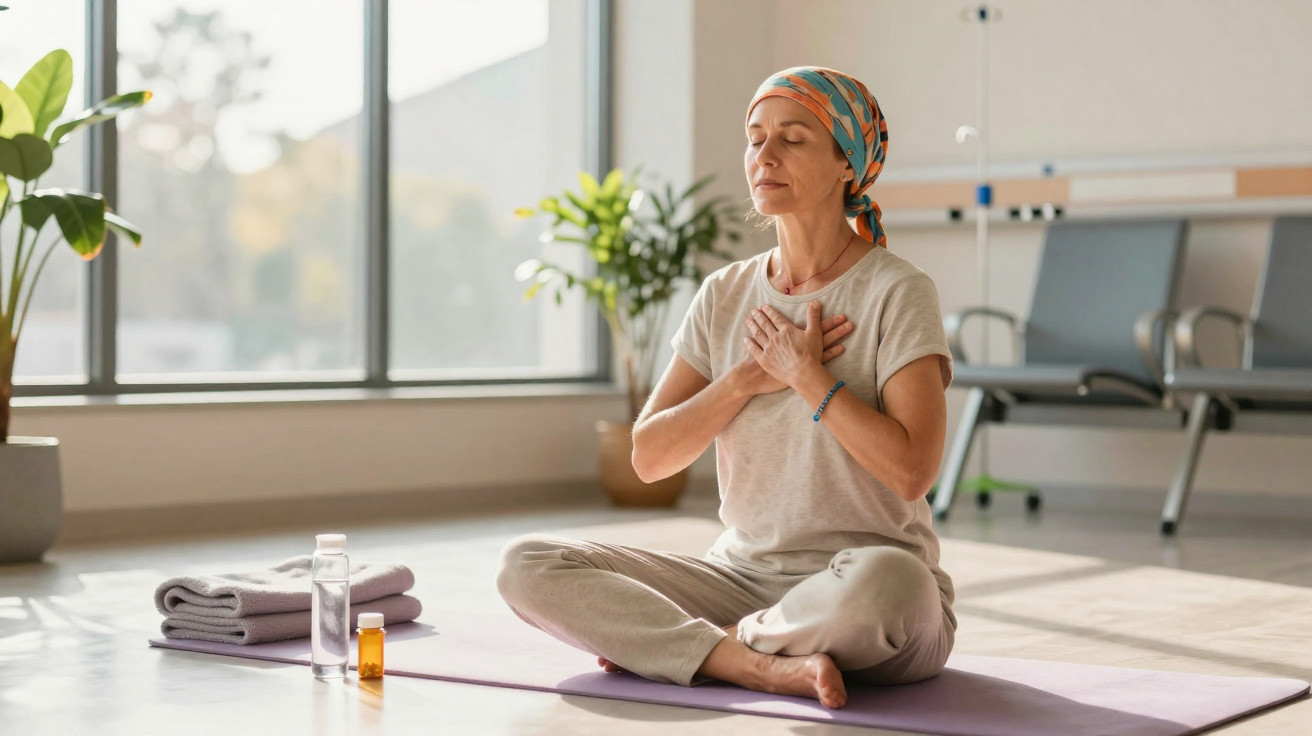
Cancer treatment has advanced greatly over the years, meaning more people are surviving cancer and living for longer. However, the period of recovery after treatment can be more difficult than many anticipate.
Even once chemotherapy, surgery or radiotherapy has finished, survivors may continue to experience disrupted sleep, anxiety, reduced energy and emotional strain.
Doctors commonly address these concerns individually with medicines. Researchers now suggest that a straightforward type of yoga could help ease several of these symptoms simultaneously.
A new study presented at the American Society of Clinical Oncology meeting found that gentle yoga improved both the physical and emotional wellbeing of cancer survivors.
The findings indicate that unhurried movement, breathing and mindfulness may become a valuable element of cancer recovery care.
Cancer recovery can linger
Many cancer survivors do not immediately feel “normal” when their treatment comes to an end. Tiredness may persist for months.
Anxiety can also continue, particularly ahead of medical scans or follow-up appointments. Sleep difficulties are widespread as well.
These problems are interlinked. Inadequate sleep may heighten anxiety, which in turn can worsen fatigue. Limited energy can also affect a person’s mood and everyday life.
Researchers at the Wilmot Cancer Institute set out to find out whether a single activity could improve several of these concerns at once.
Yoga improved four symptoms
The study identified improvements in four key areas: mood, anxiety, fatigue and insomnia.
“It’s four bangs for your buck, and it can do a world of wonder for symptoms,” said Karen Mustian, PhD, dean’s professor of Surgery and associate director of Population Science at Wilmot, who served as the senior author.
“People tend to enjoy it, and our research shows that after one month of restorative yoga, a person may see major improvements.”
Researchers said the results matter because most treatments are designed to target just one symptom at a time.
Gentle movement made a difference
The researchers also emphasised that yoga styles differ. Their study examined gentle Hatha yoga and restorative yoga.
Both approaches involve slow movements, stretching, breathing practices and mindfulness. Rapid yoga classes and sessions in heated studios were not included in the research.
“Just doing downward dog without the breathing and mindfulness is simply calisthenics,” Mustian said. “It’s the synergy of mind-body movement that brings positive effects.”
This is significant because many cancer survivors may not feel sufficiently strong for demanding exercise. Gentle yoga provides a safer, more comfortable alternative.
Testing yoga across America
The trial involved 410 adult cancer survivors from across the United States. Before taking part, none practised yoga regularly.
One group received their usual follow-up medical care, while the other group received the same care and attended yoga sessions for four weeks. Participants took part in three yoga sessions weekly, amounting to 180 minutes.
Before and after the programme, researchers used questionnaires to assess mood, anxiety and sleep quality.
The findings indicated that reduced anxiety may also have contributed to better sleep. Rather than addressing only one concern, yoga seemed to improve several related symptoms together.
Yoga offered relief without medication
Many cancer survivors already use multiple medicines. These may include drugs for pain, hormone therapy, heart health or side effects linked to treatment.
Introducing further medication for insomnia or anxiety can sometimes lead to additional side effects or interactions with other drugs.
Researchers believe this is one reason yoga warrants serious consideration. When practised correctly, it does not disrupt cancer treatment and has little associated risk.
Yuri Choi, Ph.D., a research assistant professor of Surgery and Cancer Control, led the analysis of the study. She said that patients interested in restorative or Hatha yoga should speak with their doctors and select classes in which they feel at ease.
Changing how cancer heals
Two decades ago, many doctors did not view yoga or exercise as serious components of cancer care. The main emphasis was on treating tumours and raising survival rates.
That perspective has gradually shifted.
“This is not going away,” Mustian said. “It’s only going to become a more important part of how we treat cancer patients across the entire continuum of care.”
Today, many cancer centres offer integrative oncology programmes, combining medical treatment with supportive therapies including exercise and mindfulness.
More survivors need support
The number of cancer survivors is continuing to increase. In January 2025, more than 18 million people in the United States were living with cancer or had survived it. That figure could reach 22 million by 2035.
This expanding population requires improved ways to manage long-term effects after treatment.
A brief yoga programme may be simpler and less costly to provide than developing a new medicine. This could make it valuable to hospitals and healthcare systems in the future.
Expanding access and research
Researchers say further work is needed. Future research will explore how to improve access for Black and Latino patients, as well as younger cancer survivors.
The team also plans to investigate whether yoga programmes might lower healthcare costs and potentially influence long-term survival.
“There is no single gold standard behavioral treatment available to survivors for treating overall mood disturbance, anxiety, fatigue, and insomnia,” Choi said. “We helped to fill that gap and look forward to conducting more innovative studies.”
Yoga is changing cancer recovery
Cancer recovery is no longer viewed as beginning only when treatment has concluded. More doctors now consider supportive care to be part of healing from the outset.
Yoga is not a new practice. What has changed is the scientific evidence supporting it. Researchers are now assessing how breathing, stretching and mindfulness influence cancer survivors.
The results suggest that gentle yoga, despite its simplicity, may help people rebuild strength, sleep more soundly and feel more in control throughout recovery.






Comments
No comments yet. Be the first to comment!
Leave a Comment